

Project forecasting integrates qualitative insights with quantitative models to anticipate challenges, allocate resources efficiently, and minimize risks. Accurate predictions of timelines and budgets enhance decision-making, foster stakeholder communication, and significantly influence project success.
Project forecasting is essential for navigating the complexities of any project. It helps you anticipate challenges and allocate resources efficiently. By integrating qualitative insights with quantitative models, you can make informed decisions that minimize risks. But how do you ensure your forecasts remain accurate and relevant as conditions change? Understanding the key components and techniques can make all the difference in achieving project success. Let’s explore what you need to know.
Understanding the Importance of Project Forecasting
When you consider the future of your project, understanding the importance of project forecasting becomes essential. It helps you anticipate potential challenges and allocate resources effectively. By accurately predicting timelines and budgets, you can minimize risks and enhance decision-making.
Without proper forecasting, you might find yourself facing unexpected delays and overspending, which can derail your project’s success.
Additionally, good forecasting fosters better communication among your team and stakeholders, ensuring everyone is on the same page. When your projections are clear, it builds trust and confidence in your leadership.
Ultimately, embracing project forecasting isn’t just a good practice; it’s a crucial step that can significantly influence your project’s outcome and overall success.

Key Components of Effective Forecasting
To achieve effective project forecasting, you’ll need to focus on several key components that drive accuracy and reliability.
First, gather high-quality data; this includes historical performance metrics and industry benchmarks.
Next, ensure you have clear project objectives and scope, as these guide your forecasting efforts.
Collaboration is essential, so involve team members from different disciplines to gain diverse insights.
Additionally, regularly review and update your forecasts to reflect any changes in project parameters or external factors.
Finally, utilize appropriate tools and software to streamline the forecasting process and enhance data visualization.
Common Forecasting Techniques
Having established the key components of effective forecasting, it’s important to explore the common techniques that can enhance your project predictions.
One popular method is the qualitative approach, where you gather insights from experts and stakeholders to gauge project outcomes.
Another technique is quantitative forecasting, which relies on historical data and statistical models to predict future trends.
You might also consider the Delphi method, a structured process that gathers anonymous input from experts through multiple rounds of questioning.
Additionally, scenario planning can help you envision various outcomes based on different assumptions.
Each of these techniques has its strengths, and choosing the right one depends on your project’s unique context and available data.
Utilizing Data Analytics in Forecasting
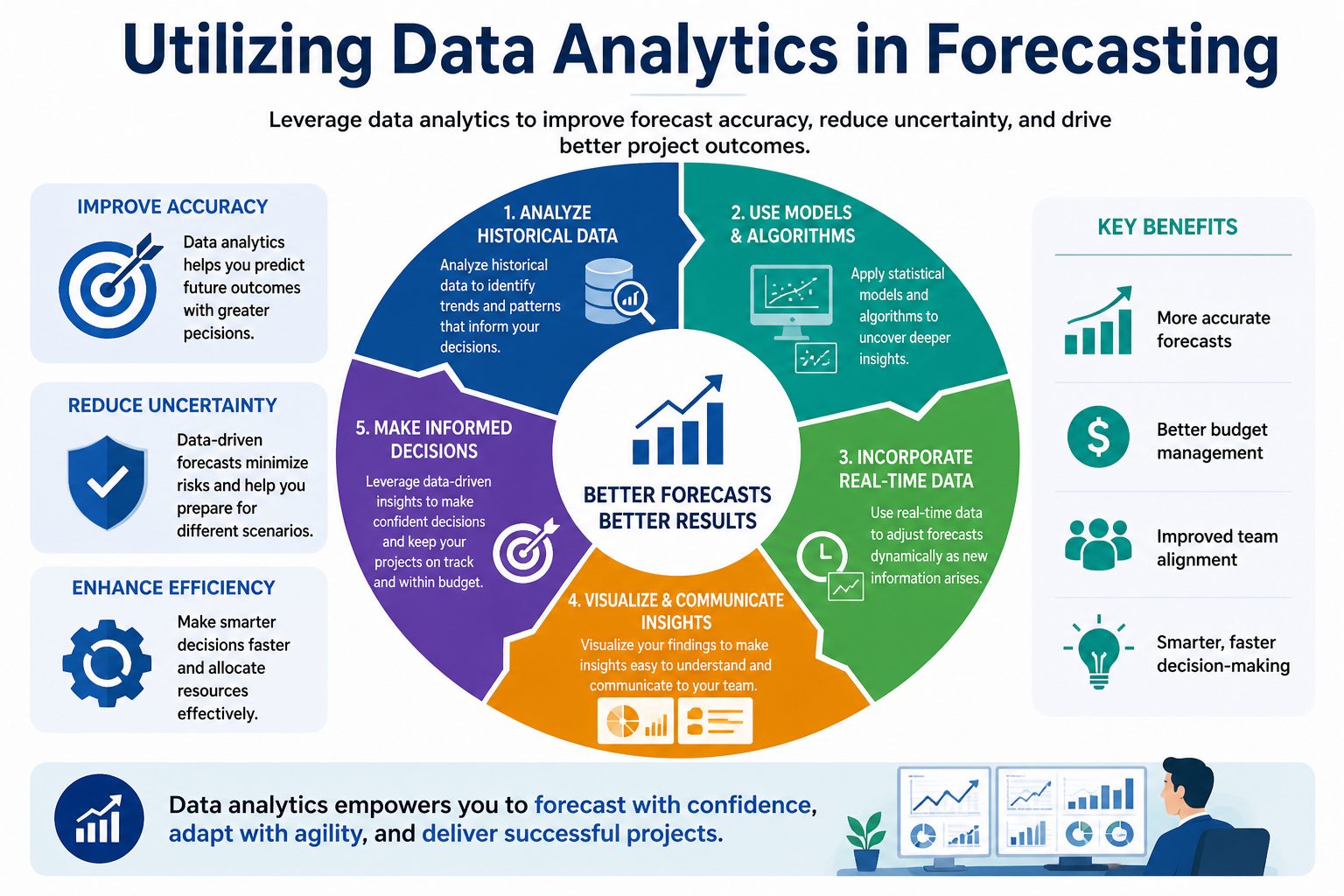
As you dive into project forecasting, leveraging data analytics can significantly enhance the accuracy of your predictions. By analyzing historical data, you can identify trends and patterns that inform your decision-making.
You’ll want to utilize statistical models and algorithms to dissect the data, gaining insights that may not be immediately apparent. This approach allows you to forecast potential outcomes more reliably, reducing uncertainties.
Additionally, incorporating real-time data can help you adjust your forecasts dynamically as new information arises. Don’t forget to visualize your findings, making it easier to communicate insights to your team.
Ultimately, using data analytics empowers you to make informed decisions, ensuring your projects stay on track and within budget. Embrace this powerful tool for better forecasting outcomes.
Tools for Enhanced Project Forecasting
Effective project forecasting relies on the right tools to streamline your processes and enhance accuracy.
You’ll want to explore project management software, like Asana or Trello, which can help you visualize timelines and allocate resources efficiently.
Additionally, using forecasting tools like Microsoft Excel or specialized software such as Forecast Pro can refine your predictions through data analysis.
Integrating collaboration tools, such as Slack or Microsoft Teams, fosters communication and keeps everyone aligned on project goals.
Don’t forget about time-tracking apps to monitor progress and adjust plans as necessary.
Identifying and Managing Risks
While you may have a solid project plan in place, identifying and managing risks is crucial to ensure success. Start by conducting a thorough risk assessment to pinpoint potential challenges that could derail your project.
Engage your team in brainstorming sessions to gather diverse perspectives on possible risks. Once you’ve identified these risks, categorize them by likelihood and impact.
Develop a risk management plan that outlines strategies to mitigate these risks, ensuring everyone knows their responsibilities. Regularly review and update this plan as your project progresses, adapting to new challenges as they arise.
Communication is key; keep your team informed about risks and solutions. By proactively managing risks, you’ll increase your project’s chances of success and minimize disruptions.
Setting Realistic Timelines and Budgets
Managing risks lays the groundwork for setting realistic timelines and budgets. When you assess potential obstacles, you can better gauge how long tasks will take and how much they’ll cost.
Start by breaking down your project into smaller tasks and estimating the time and resources needed for each. Use historical data and input from your team to refine these estimates.
Don’t forget to factor in contingency plans for unexpected issues. Setting aside a percentage of your budget for unforeseen expenses can save you from financial strain later.
Regularly review and adjust your timelines and budgets as the project progresses. This flexibility allows you to respond to changes effectively, ensuring you stay on track and within budget.
The Role of Stakeholder Communication
How can clear communication with stakeholders transform your project’s success? It keeps everyone aligned and fosters trust, ensuring that all parties understand their roles and responsibilities.
When you share updates and gather feedback regularly, you enable stakeholders to voice concerns early, preventing small issues from escalating into major setbacks.
Effective communication also helps in setting realistic expectations, which is crucial for maintaining stakeholder support throughout the project lifecycle.
By actively engaging stakeholders, you can leverage their insights and expertise, enriching your project’s direction.
Ultimately, transparent communication builds a collaborative environment where everyone feels valued and invested, leading to more successful project outcomes. Additionally, fostering a culture of interdepartmental collaboration can enhance stakeholder engagement and project success.
Continuous Improvement in Forecasting Practices
Strong stakeholder communication lays the groundwork for effective project management, making it easier to implement continuous improvement in forecasting practices.
To enhance your forecasting, regularly gather feedback from stakeholders and team members. This feedback helps you identify gaps in your current methods and adjust your approach accordingly.
Utilize data analytics tools to monitor your forecasting accuracy, allowing you to spot trends and anomalies quickly. Don’t hesitate to experiment with new techniques or technologies—what works today mightn’t be effective tomorrow.
Ensure you’re documenting lessons learned and best practices, so you can build on your successes. By fostering a culture of continuous improvement, you’ll empower your team to adapt, innovate, and ultimately achieve more accurate forecasts. Additionally, fostering employee engagement can significantly enhance the effectiveness of your forecasting practices.
Conclusion
In conclusion, mastering project forecasting is essential for your team’s success. By understanding its importance and utilizing effective techniques, you can allocate resources wisely and manage risks proactively. Embrace data analytics and leverage the right tools to enhance your forecasting capabilities. Keep communication open with stakeholders and continuously refine your practices. With these strategies in place, you’ll foster trust and confidence while steering your projects toward successful outcomes.

Frequently Asked Questions
What is project forecasting in project management?
Project forecasting is the process of predicting the future performance of a project by analyzing current progress and historical data. It helps project managers estimate outcomes related to cost, timeline, resources, and risks, allowing for proactive decision-making and better control over project success.
Why is project forecasting important for project success?
Project forecasting is important because it enables teams to identify risks early, allocate resources efficiently, and stay within budget and schedule. By anticipating potential issues, organizations can make timely adjustments and improve overall project outcomes.
What methods are commonly used in project forecasting?
Common project forecasting methods include qualitative techniques (such as expert judgment and surveys) and quantitative techniques (such as trend analysis, time series analysis, and statistical modeling). These approaches help teams generate more accurate predictions based on data and experience.
When should project forecasting be performed?
Project forecasting is most effective once a project has progressed enough to provide reliable data, typically around 20% to 40% completion. At this stage, project managers can use actual performance data to create more accurate predictions and refine their plans.
What factors are considered in project forecasting?
Key factors in project forecasting include cost, duration, resource availability, risks, and quality of deliverables. By evaluating these elements, project managers can determine whether a project is on track and make necessary adjustments to improve performance and outcomes.