
A Process Improvement Course teaches methodologies like Lean and Six Sigma to analyze workflows, eliminate inefficiencies, and boost productivity. Participants gain practical skills in data-driven problem-solving and continuous improvement to enhance organizational agility and customer satisfaction.
Have you ever noticed inefficiencies in your organization’s workflows? A Process Improvement Course could provide the tools you need to tackle those issues head-on. By exploring methodologies like Lean and Six Sigma, you’ll learn how to analyze and optimize processes effectively. But what specific skills can you expect to gain, and how will they apply to your daily work? Let’s take a closer look at the benefits and techniques you’ll explore.
Understanding Process Improvement
Understanding process improvement is crucial for anyone looking to enhance efficiency and effectiveness within an organization. It involves analyzing current workflows, identifying inefficiencies, and implementing changes to optimize performance.
You’ll learn to recognize bottlenecks that slow down productivity and develop strategies to streamline operations. By focusing on continuous improvement, you can foster a culture that encourages innovation and adaptability.
Emphasizing data-driven decision-making helps you measure outcomes and evaluate the success of your initiatives. Engaging team members in the process ensures that everyone is aligned with goals and committed to making improvements. Additionally, you will explore the principles of DMAIC methodology to systematically tackle process challenges.
Ultimately, mastering process improvement equips you with the tools to drive positive change and create a more agile organization ready to tackle future challenges.

Key Methodologies and Tools Used in Process Improvement
When it comes to process improvement, several key methodologies and tools can propel your efforts forward. Lean focuses on eliminating waste and optimizing efficiency, while Six Sigma aims to reduce variation and improve quality.
You can also consider the dmaic framework, which stands for Define, Measure, Analyze, Improve, and Control, guiding you through structured problem-solving. Tools like process mapping can help visualize workflows, making it easier to identify bottlenecks.
Kaizen promotes continuous improvement through small, incremental changes. Additionally, using software tools like BPMN (Business Process Model and Notation) can enhance your analysis and documentation. Understanding customer-centric approach is vital in ensuring that process improvements align with customer needs and expectations.
Key Benefits of a Process Improvement Course
By enrolling in a process improvement course, you’ll gain valuable skills that can transform your organization’s efficiency. You’ll learn to identify bottlenecks, streamline workflows, and enhance productivity.
These skills not only help in reducing waste but also improve customer satisfaction, as processes become quicker and more reliable. Additionally, you’ll develop analytical thinking, enabling you to solve complex problems effectively.
Collaborating with peers in the course will expand your network and expose you to diverse perspectives. You’ll also gain practical tools and methodologies that can be directly applied to your workplace. Furthermore, this course emphasizes data-driven decision-making, which is crucial for effective process improvement.
Ultimately, this course empowers you to lead change and foster a culture of continuous improvement, ensuring your organization remains competitive in a rapidly evolving market.
Overview of Lean Methodology
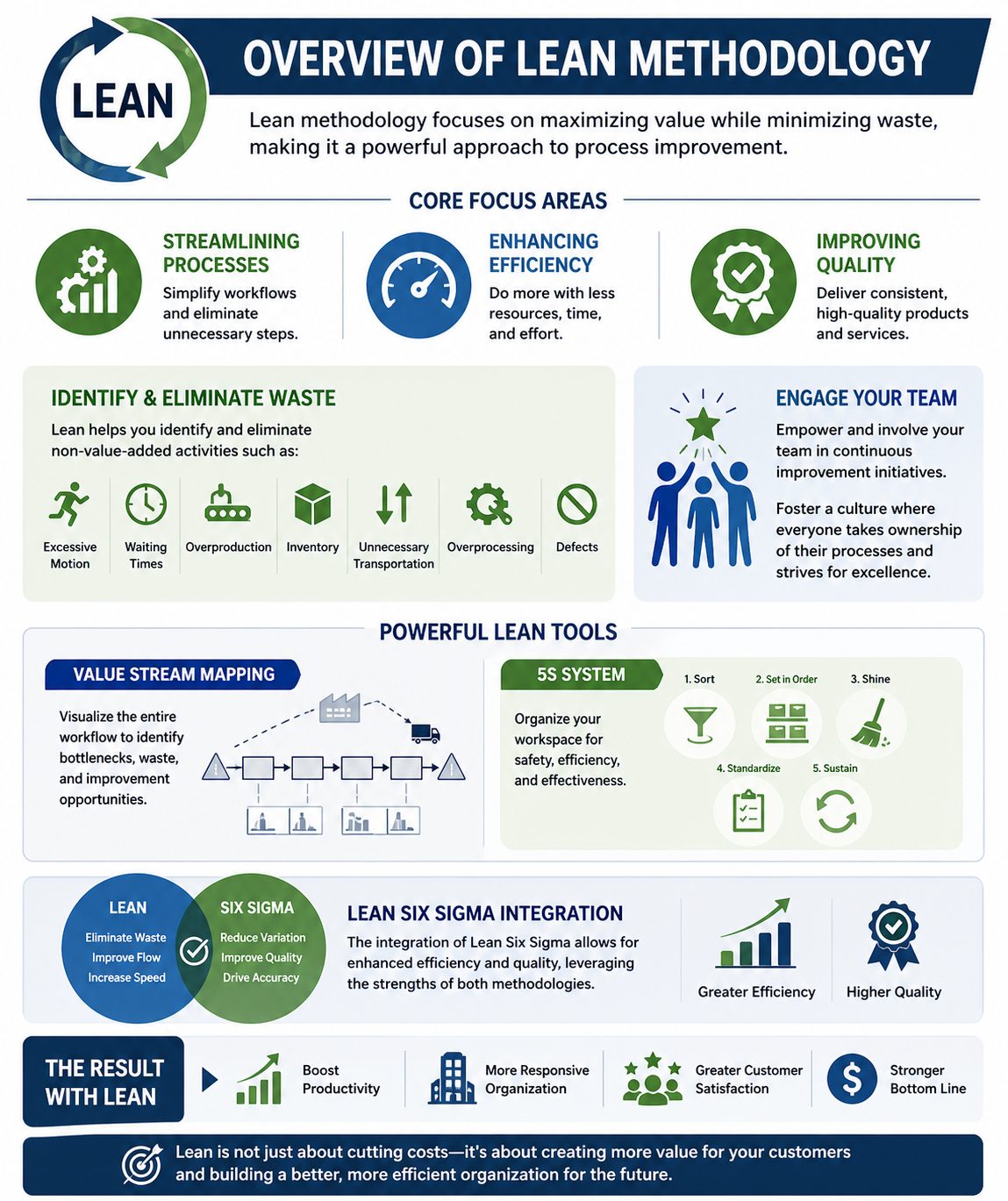
Lean methodology focuses on maximizing value while minimizing waste, making it a powerful approach to process improvement.
You’ll find that it emphasizes streamlining processes, enhancing efficiency, and improving quality by eliminating non-value-added activities. By adopting Lean principles, you can identify areas of waste, such as excessive motion, waiting times, or overproduction.
You’ll also learn to engage your team in continuous improvement initiatives, fostering a culture where everyone takes ownership of their processes.
Tools like value stream mapping and the 5S system help you visualize workflows and organize your workspace effectively. The integration of Lean Six Sigma allows for enhanced efficiency and quality, leveraging the strengths of both methodologies.
With Lean, you’ll not only boost productivity but also create a more responsive organization, ultimately leading to greater customer satisfaction and a stronger bottom line.
How to Choose the Right Process Improvement Course for You
How can you find the best process improvement course tailored to your needs? Start by identifying your goals. Are you looking to improve specific skills or gain a broader understanding?
Next, research different courses. Check their content, duration, and format to ensure they fit your learning style, whether online or in-person. Look for courses that offer practical applications and hands-on projects, as these can enhance your learning experience.
Additionally, read reviews and testimonials from past students to gauge the course’s effectiveness. Lastly, consider the instructor’s background and expertise; a knowledgeable trainer can make a significant difference. Moreover, ensure the course covers fundamental Six Sigma principles, as these concepts are crucial for effective process improvement.
Introduction to Six Sigma
While many organizations aim for efficiency, Six Sigma takes a data-driven approach to enhance quality and reduce defects in processes. By utilizing statistical methods, you can identify variations that negatively impact your performance.
The core idea is to achieve near perfection, aiming for no more than 3.4 defects per million opportunities. You’ll find that Six Sigma emphasizes teamwork, problem-solving, and a structured methodology, often encapsulated in the dmaic framework: Define, Measure, Analyze, Improve, and Control.
This approach ensures that you’re not just addressing symptoms but tackling root causes. As you embark on this journey, remember that each step you take toward implementing Six Sigma principles can lead to significant improvements in both efficiency and customer satisfaction. Additionally, understanding key principles of Six Sigma will enhance your ability to apply its methodologies effectively.
Identifying Bottlenecks in Processes
In the quest for process improvement, recognizing bottlenecks is vital to enhancing efficiency and quality. You need to examine each step of your workflow carefully.
Start by mapping out the entire process to visualize where delays occur. Look for signs of congestion, such as excessive wait times or resource shortages. Engaging your team is crucial; their insights can help identify hidden issues.
Don’t overlook the data—collect metrics to pinpoint where slowdowns happen. Once you spot bottlenecks, prioritize them based on their impact on the overall process. Additionally, applying root cause analysis can help you understand the fundamental reasons behind these bottlenecks, leading to more effective solutions.
Tools and Techniques for Process Analysis
Effective process analysis hinges on the right tools and techniques to uncover inefficiencies and drive improvements.
To start, consider flowcharts; they visually map out processes, making it easier to spot bottlenecks. Next, you might use value stream mapping to identify areas that add little or no value.
Additionally, root cause analysis helps you dig deeper into problems by identifying their origins. Don’t overlook the importance of data analysis tools, which can provide insights into performance metrics. Furthermore, utilizing quality tools can enhance decision-making and streamline processes. Lastly, engage in brainstorming sessions with your team to generate fresh ideas and perspectives.

Implementing Effective Solutions
Implementing effective solutions requires a clear plan and decisive action. First, identify the specific issue you want to address and gather your team for brainstorming sessions.
Next, prioritize potential solutions based on impact and feasibility. Once you’ve selected the best option, assign tasks and set deadlines to ensure accountability.
Communication is key; keep everyone informed about progress and any changes to the plan. As you execute the solution, monitor its effectiveness through measurable metrics. Additionally, utilizing tools from Six Sigma methodologies can enhance your ability to analyze and improve processes effectively.
If you encounter obstacles, be flexible and ready to adjust your approach. Finally, celebrate small wins to maintain team morale and motivation.
Real-World Applications of Process Improvement
Many organizations have successfully harnessed process improvement techniques to enhance efficiency and drive results.
For instance, in manufacturing, you can streamline production lines by reducing waste and optimizing workflows, which leads to faster delivery times.
In healthcare, implementing lean methodologies can minimize patient wait times and improve overall care quality.
You might also see process improvement in the tech industry, where agile practices help teams respond quickly to changes and deliver software updates more efficiently.
Retail businesses often adopt these techniques to enhance customer service and inventory management. Moreover, integrating statistical analysis into decision-making processes can significantly boost the effectiveness of these improvements.
Measuring Success in Process Improvement
To truly understand the impact of process improvement techniques, you need to measure their success effectively. Start by establishing clear metrics that align with your goals. These could include time saved, cost reductions, or quality enhancements.
Use quantitative data to track progress over time, and don’t forget to gather qualitative feedback from team members involved in the process. Regularly review these metrics to identify trends and areas needing further attention.
It’s also crucial to communicate these results with your team to foster a culture of accountability and engagement. By measuring success accurately, you not only see the benefits of your efforts but also create a roadmap for future improvements. This ensures your process improvement initiatives remain impactful and relevant, while also providing essential metrics to guide your decision-making.
Continuous Improvement and Its Importance
While you might see immediate benefits from process improvements, it’s the commitment to continuous improvement that truly drives long-term success.
Embracing a culture of ongoing enhancement helps you stay competitive and adapt to changing market demands. By regularly assessing your processes, you identify inefficiencies and areas for growth, allowing you to make data-driven decisions.
This proactive approach fosters innovation and empowers your team to contribute ideas, enhancing morale and engagement. Moreover, continuous improvement leads to better customer satisfaction, as you consistently refine your offerings. Additionally, implementing the PDCA cycle enables a structured approach to ensure sustained success in your improvement efforts.
Conclusion
By taking a process improvement course, you equip yourself with the tools to streamline operations and boost efficiency. You’ll learn to identify bottlenecks, apply Lean and Six Sigma methodologies, and implement solutions that drive real change. As you embrace a culture of continuous improvement, you’ll not only enhance productivity but also elevate customer satisfaction. So, take the leap, invest in your skills, and transform your organization for the better!

Frequently Asked Questions
What is a process improvement course?
A process improvement course teaches structured methods for analyzing, optimizing, and enhancing workflows within an organization. It typically covers methodologies like Lean, Six Sigma, and continuous improvement, helping participants understand how to reduce inefficiencies and improve overall performance.
Who should take a process improvement course?
This type of course is ideal for business professionals, managers, team leaders, and anyone involved in operations or workflow management. It is also valuable for individuals looking to improve problem-solving skills and drive efficiency in any industry or role.
What skills will you gain from a process improvement course?
Participants gain skills in identifying inefficiencies, mapping processes, analyzing data, and implementing improvement strategies. They also learn how to use tools like value stream mapping, root cause analysis, and performance metrics to make informed decisions.
How does a process improvement course benefit organizations?
Organizations benefit through increased efficiency, reduced costs, improved quality, and better customer satisfaction. By applying process improvement techniques, businesses can eliminate waste, streamline workflows, and achieve more consistent and reliable results.
Is process improvement a one-time effort or ongoing practice?
Process improvement is an ongoing practice that involves continuous evaluation and refinement of workflows. Organizations regularly monitor performance, gather feedback, and make adjustments to maintain efficiency and adapt to changing business needs.