
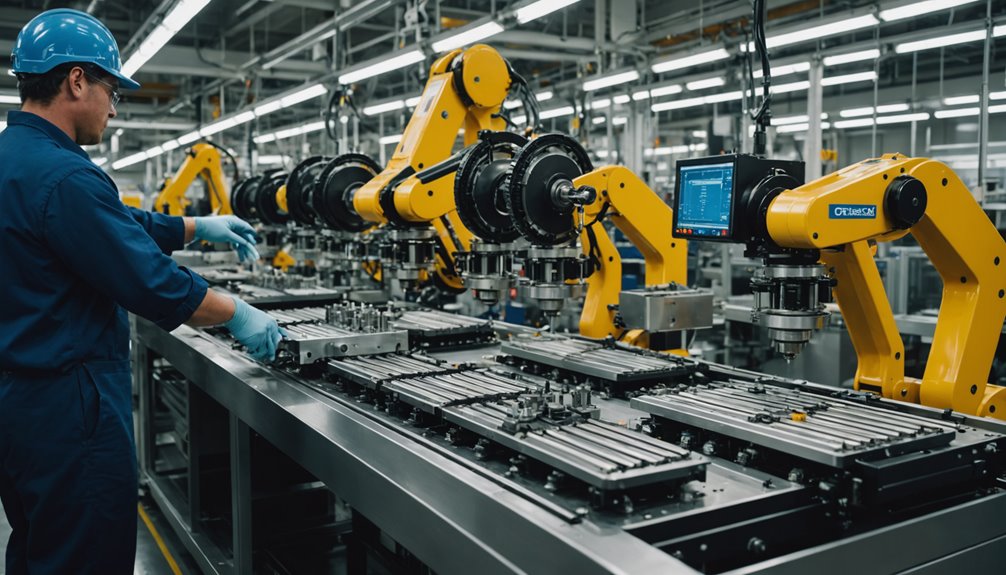
Jidoka is a lean manufacturing principle that integrates automation with human oversight, enabling machines to detect and halt production for defects to ensure quality and empower workers.
You might think of automation as a way to streamline production, but have you considered the role of human oversight in this process? Jidoka, or autonomation, blends machine efficiency with human judgment to enhance quality control. It's a principle that not only empowers workers but also transforms how production is approached. As we explore its historical roots and key components, you'll discover how Jidoka can redefine your understanding of effective manufacturing practices.
Understanding Jidoka: The Concept of Autonomation
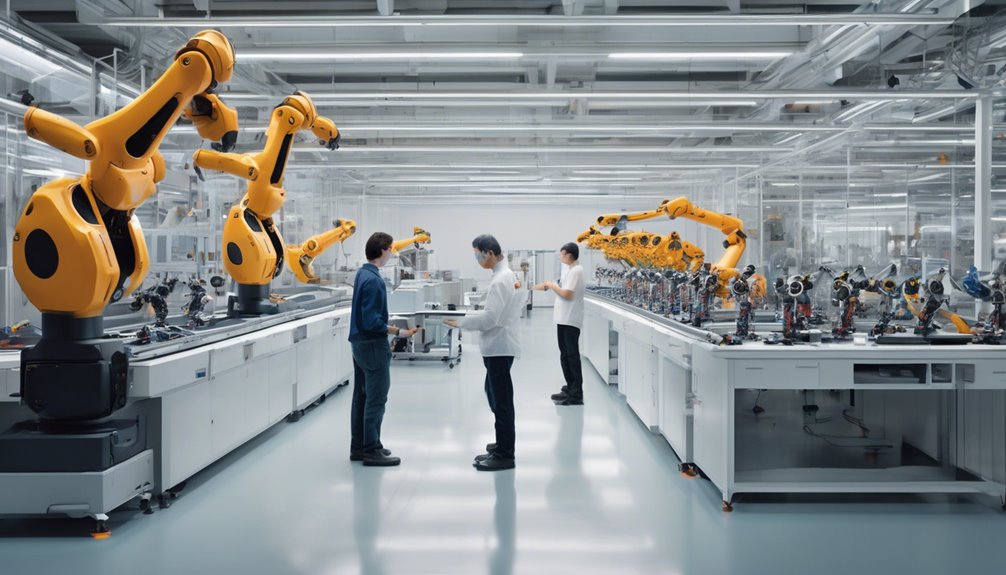
Jidoka, often translated as "autonomation," is a key principle in lean manufacturing that combines automation with human oversight.
You'll find that this approach empowers machines to detect problems and stop production when issues arise, allowing you to maintain quality control. Instead of relying solely on operators, Jidoka encourages you to create systems where machines can assist in problem-solving.
This means you can focus more on improving processes rather than constantly monitoring production lines. By integrating Jidoka, you enhance efficiency and reduce waste, leading to a more responsive manufacturing environment.
Embracing this principle means you're not just automating tasks; you're also ensuring that your team remains integral to the production process, achieving a balance between technology and human insight.
The Historical Background of Jidoka in Lean Manufacturing
The roots of Jidoka trace back to the early 20th century, when visionary thinkers like Sakichi Toyoda began experimenting with automated systems in textile manufacturing. His innovations laid the groundwork for Toyota's production philosophy, emphasizing quality and efficiency.
The concept gained momentum as the Toyota Production System evolved, integrating Jidoka to empower machines and workers alike to detect and address issues immediately. This shift led to a culture where preventing defects became a priority, fostering continuous improvement.
Key Principles and Components of Jidoka
While many may associate Jidoka with automation, its key principles focus on empowering both machines and people to ensure quality at every stage of production.
One core component is the ability to stop the line whenever a defect is detected, giving you the power to address issues immediately. This fosters a culture of accountability and encourages continuous improvement.
Another principle is the integration of intelligent machines that can detect abnormalities, ensuring they assist rather than hinder the process.
You'll also find that Jidoka emphasizes training and skill development, enabling workers to contribute effectively.
Implementing Jidoka in Modern Manufacturing Environments
As you look to implement Jidoka in modern manufacturing environments, it's crucial to start by fostering a culture that prioritizes quality and accountability.
Encourage your team to take ownership of their work and empower them to stop the production line if they spot an issue. This not only prevents defects but also promotes continuous improvement.
Next, invest in training programs that teach employees about Jidoka principles, enabling them to identify and address problems effectively.
Establish clear communication channels to share insights and lessons learned across all levels of the organization.
Finally, regularly review and refine your processes, ensuring that everyone remains committed to the Jidoka philosophy.
The Role of Technology in Enhancing Jidoka Practices
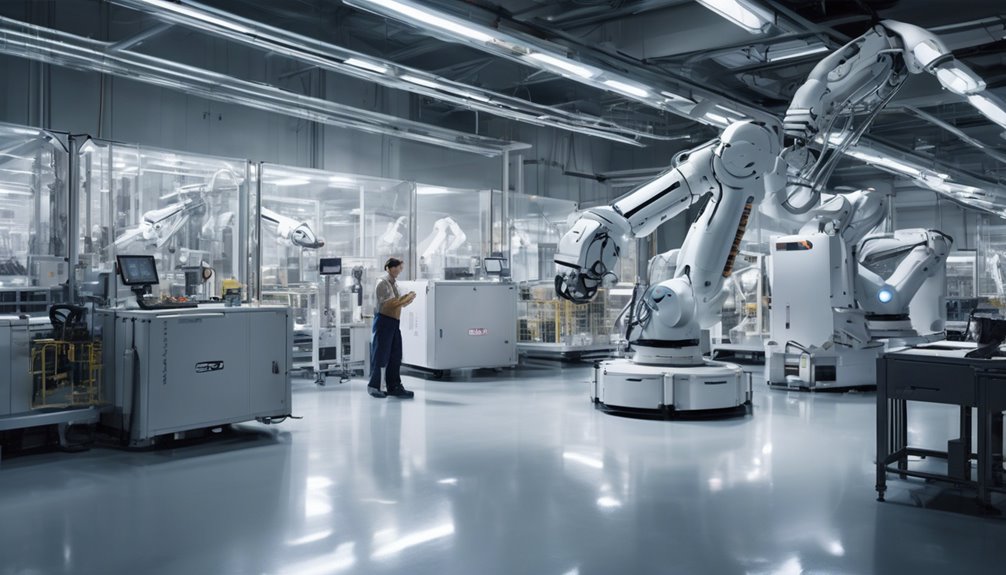
Integrating technology into Jidoka practices can significantly enhance your manufacturing processes. By utilizing automation and real-time data analytics, you can quickly identify and address issues before they escalate.
Smart sensors can monitor equipment performance, alerting you to potential malfunctions, while machine learning algorithms can analyze patterns to prevent future problems.
Additionally, incorporating digital dashboards allows for better visibility into production flows, enabling you to make informed decisions on the spot.
Collaborative robots, or cobots, can also assist in repetitive tasks, freeing up your workforce to focus on more complex issues.
With these technological advancements, you can streamline operations, promote a culture of continuous improvement, and ultimately foster a more efficient manufacturing environment.
Benefits of Jidoka for Quality and Efficiency
Implementing Jidoka in your manufacturing processes brings significant benefits for both quality and efficiency. By empowering workers to stop production when issues arise, you ensure that problems are addressed immediately, preventing defects from propagating through the system.
This proactive approach leads to higher quality products and reduces waste, saving you time and resources. Moreover, Jidoka fosters a culture of continuous improvement, encouraging your team to identify and resolve inefficiencies regularly.
As a result, your production flow becomes smoother, leading to quicker turnaround times and increased customer satisfaction. Ultimately, embracing Jidoka allows you to create a more reliable and effective manufacturing environment, combining high-quality outputs with optimized processes that drive overall business success.
Case Studies: Successful Jidoka Implementation in Various Industries
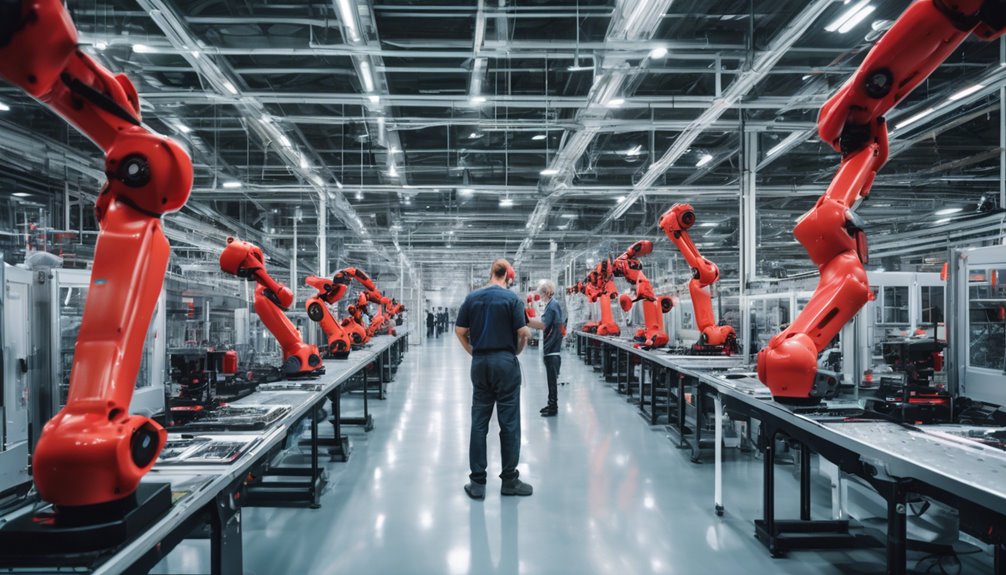
When companies adopt Jidoka, they often witness remarkable transformations in their operations across various industries.
For instance, in automotive manufacturing, one company reduced defect rates by 30% after implementing Jidoka principles, empowering workers to halt production for quality issues.
In electronics, another firm improved efficiency by 25% by integrating automated inspection systems, ensuring immediate feedback loops.
In food processing, a Jidoka approach led to a 40% decrease in downtime by enabling operators to quickly identify and address machine malfunctions.
These examples show how Jidoka not only enhances quality and efficiency but also fosters a culture of continuous improvement.
Conclusion
Incorporating Jidoka into your manufacturing process can transform your approach to quality and efficiency. By blending automation with human insight, you empower your team to take charge and address issues proactively. This not only reduces waste but also fosters a culture of accountability and continuous improvement. As you embrace Jidoka, you'll likely see significant benefits in both productivity and product quality, setting your organization up for long-term success in a competitive landscape.