

Smed, or Single-Minute Exchange of Die, is a lean manufacturing methodology that systematically reduces equipment setup times to under ten minutes, thereby increasing production efficiency and flexibility.
You might be surprised to learn how much setup time impacts your manufacturing efficiency. Smed, or Single-Minute Exchange of Die, offers a structured approach to reduce these delays. By focusing on internal and external activities, you can streamline changeovers significantly. But what are the key principles behind this methodology, and how can they be effectively implemented in your organization? Let's explore the fundamentals and the potential benefits that await.
Understanding Smed: The Basics

Smed, or Single-Minute Exchange of Die, is a methodology designed to reduce setup times in manufacturing processes.
You'll find that Smed focuses on streamlining the changeover between different production runs, allowing you to produce more efficiently. By minimizing downtime, you can enhance productivity and reduce costs.
The core principle involves analyzing each step of the setup process, identifying waste, and implementing strategies to eliminate it. You'll learn to separate internal and external setup tasks, performing as many tasks as possible while the machine is still running.
This way, you cut down the overall changeover time significantly. Embracing Smed not only increases your operational efficiency but also boosts your competitiveness in a fast-paced market.
The History and Evolution of Smed
The development of Smed traces back to the 1950s, driven by the need for greater efficiency in production. At that time, manufacturers faced increasing pressure to reduce setup times and improve workflow.
You can trace its roots to Japan, where pioneers like Shigeo Shingo introduced the concept as part of the Toyota Production System. By focusing on quick changeovers, companies began to see significant improvements in productivity and reduced waste.
Over the decades, Smed evolved, incorporating various techniques and tools that further streamlined processes. As industries embraced these principles, Smed's influence spread globally, adapting to different sectors.
Today, it's recognized as a critical methodology in lean manufacturing, emphasizing the importance of efficiency and continuous improvement in business operations.
Key Principles of Smed

When aiming to enhance production efficiency, understanding the key principles of Smed can make a significant difference.
First, separate internal and external setup activities. Internal tasks occur when machines are stopped, while external tasks can be done while running.
Next, convert as many internal tasks to external ones as possible. This minimizes downtime.
Third, streamline and simplify setup procedures. Analyze each step, eliminating unnecessary actions.
Additionally, standardize tools and equipment to reduce variation and promote efficiency.
Finally, measure and monitor setup times to identify areas for improvement.
Benefits of Implementing Smed
Implementing Smed can lead to remarkable improvements in production efficiency, ensuring that you maximize your operational potential. By reducing setup times, you'll notice a significant increase in your production output, allowing you to respond faster to market demands.
This flexibility not only enhances your competitiveness but also boosts customer satisfaction.
Additionally, Smed encourages team engagement and collaboration, fostering a culture of continuous improvement. You'll likely find that employees feel more empowered and invested in their work, which can lead to higher morale and lower turnover rates.
Ultimately, these benefits translate into lower operational costs, improved resource utilization, and a stronger overall bottom line.
Embracing Smed positions your organization for sustainable growth and success in an ever-evolving marketplace.
Smed in Manufacturing: A Case Study
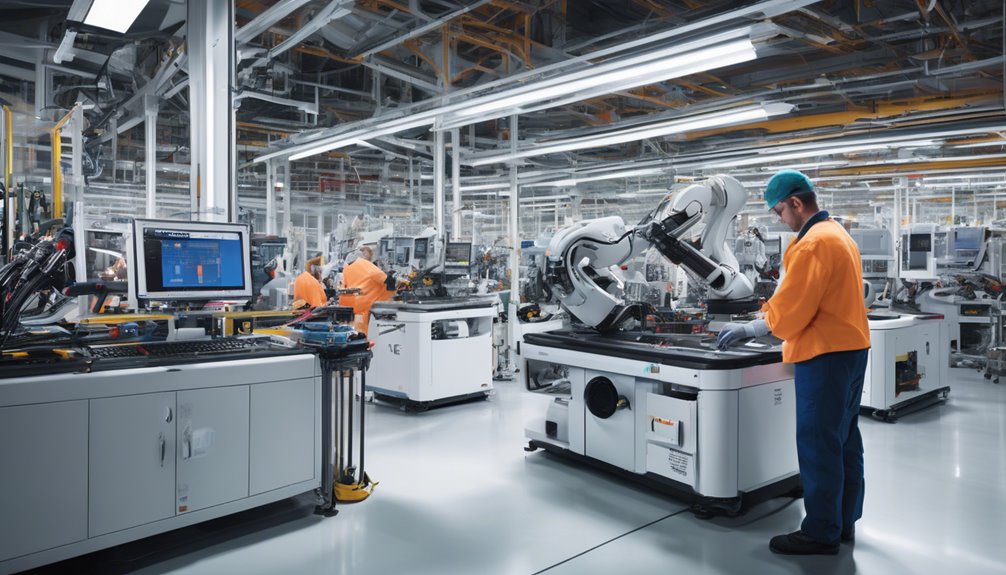
SMED has proven its effectiveness in various manufacturing settings, showcasing how streamlined processes can transform operations.
In a recent case study, a mid-sized automotive parts manufacturer sought to reduce setup times on their assembly line. By implementing SMED principles, you can identify and separate internal and external setup tasks. This manufacturer achieved a dramatic reduction in setup time from 120 minutes to just 30 minutes.
By involving your team in the process, you fostered a culture of continuous improvement. You also documented best practices, which led to further reductions in downtime.
As a result, production efficiency increased, and lead times decreased significantly. This case illustrates the tangible benefits of SMED, encouraging you to consider its implementation for your own manufacturing processes.
Smed in Service Industries
In today's fast-paced service industries, efficiency is crucial for maintaining a competitive edge. Implementing Single-Minute Exchange of Die (SMED) principles can significantly streamline processes, reduce wait times, and enhance customer satisfaction.
By minimizing the time it takes to switch between tasks or services, you can respond more effectively to customer demands and market changes. For instance, in hospitality, adopting SMED can help staff quickly transition between different service styles or menu offerings.
In retail, it allows for faster inventory turnover and improved checkout processes. Embracing SMED not only boosts productivity but also fosters a culture of continuous improvement, empowering your team to innovate and adapt.
Ultimately, leveraging SMED principles can transform your service delivery and elevate your business performance.
Challenges in Adopting Smed

While adopting SMED principles can bring numerous benefits, organizations often face several challenges that can hinder successful implementation.
One major hurdle is resistance to change among employees. Many might be comfortable with existing processes and hesitant to embrace new methods.
Additionally, you may encounter a lack of understanding about SMED concepts, leading to misapplication. It's also possible that resources, such as time and training, aren't readily available, which can stall progress.
Furthermore, integrating SMED into existing workflows can be complex, especially if your operations are deeply entrenched in traditional practices.
Lastly, without strong leadership support, sustaining momentum for SMED initiatives becomes difficult.
Overcoming these challenges is crucial for reaping the full benefits of SMED in your organization.
Tools and Techniques for Effective Smed
Successfully implementing SMED requires more than just overcoming resistance; it also involves leveraging specific tools and techniques that can streamline the process.
Start by mapping out your current setup and identifying bottlenecks. Use time studies to pinpoint exactly how long each step takes. Standardize procedures to minimize variability.
Consider using visual aids like color-coded tools or labels to enhance organization and speed up transitions. Implement quick-change tooling and fixtures to reduce setup times significantly.
Don't forget about training your team; ensure everyone knows their roles during changeovers.
Finally, encourage a culture of continuous improvement, where feedback is valued and adjustments are made regularly.
Real-World Success Stories of Smed Implementation

As companies embrace SMED, many have witnessed remarkable transformations in their operations.
For instance, a leading automotive manufacturer reduced its changeover time from hours to minutes, significantly increasing productivity.
You might find inspiration in a food processing plant that implemented SMED techniques, enabling them to switch between product lines swiftly, ultimately boosting their output and reducing waste.
Another success story includes a packaging company that decreased setup times by 75%, allowing for greater flexibility in meeting customer demands.
These real-world examples illustrate how SMED not only streamlines processes but also enhances overall efficiency.
Future Trends in Smed and Process Optimization
With the rapid advancements in technology and manufacturing processes, the future of SMED and process optimization looks promising.
You'll likely see an increasing integration of automation and artificial intelligence, enabling quicker changeovers and more efficient workflows. Predictive analytics will help you identify bottlenecks before they occur, allowing for proactive adjustments.
Additionally, real-time data monitoring will enhance decision-making, ensuring your operations adapt swiftly to market demands. Emphasizing sustainability, companies will focus on optimizing resources while reducing waste.
Collaborative tools will improve communication among teams, fostering innovative ideas that streamline processes. As you embrace these trends, you'll not only enhance efficiency but also boost overall productivity, paving the way for a more agile manufacturing environment.
Stay ahead by adapting to these emerging practices!
Conclusion
Incorporating Smed into your manufacturing processes can transform how you approach changeovers and boost overall efficiency. By understanding its principles and overcoming implementation challenges, you can achieve significant cost savings and stay competitive. As you look to the future, embracing Smed will not only streamline your operations but also foster a culture of continuous improvement within your team. So, take the leap and optimize your resources to meet market demands effectively. Your organization's success depends on it!