


Capacity planning aligns resources with future demand by analyzing current capabilities and market forecasts, enabling efficient production and cost management. This strategic process helps avoid overproduction or underproduction while improving decision-making and customer satisfaction.
When it comes to capacity planning, you need to understand it’s about aligning your resources with future demand. It’s a strategic process that can significantly impact your organization’s efficiency and cost management. But what exactly does this mean for your operations? As you explore the nuances of capacity planning, you’ll discover its critical role in decision-making and resource allocation. The implications might surprise you.
What Is Capacity Planning?
Capacity planning is the process of determining the production capacity needed to meet demand. It involves analyzing your current resources and predicting future needs based on market trends, sales forecasts, and customer demands.
You’ll want to assess your workforce, equipment, and materials to ensure you can meet this demand efficiently. By understanding your capacity, you can avoid overproduction or underproduction, both of which can lead to increased costs or missed revenue opportunities.
You’ll also need to consider factors like lead times and potential bottlenecks in the production process. Ultimately, effective capacity planning helps you align your resources with market needs, enabling you to operate smoothly and maintain customer satisfaction without unnecessary strain on your operations.

The Importance of Capacity Planning in Business
When you prioritize capacity planning in your business, you not only enhance operational efficiency but also position yourself to meet customer demands effectively.
This proactive approach helps you anticipate resource needs, reducing the risk of over- or under-utilization. By understanding your capacity, you can streamline operations, minimize waste, and cut costs.
Additionally, effective capacity planning fosters better decision-making, allowing you to allocate resources where they’re needed most. You’ll also improve your response time to market changes, ensuring you stay competitive.
Ultimately, this strategic focus leads to satisfied customers and increased profitability. Embracing capacity planning isn’t just a task; it’s a critical investment in your business’s future success and resilience.
Key Components of Capacity Planning
Understanding the key components of capacity planning can transform your operational strategy.
First, you need to assess current capacity by evaluating resources, such as equipment and workforce. Next, analyze demand forecasts to anticipate future needs. This helps you identify gaps between available capacity and expected demand.
Another crucial aspect is flexibility; your plans should allow for adjustments in response to unexpected changes. Additionally, you’ll want to consider lead times, as they affect how quickly you can ramp up or down based on demand fluctuations.
Finally, don’t forget performance metrics; tracking these will help you refine your capacity planning process over time.
Types of Capacity Planning
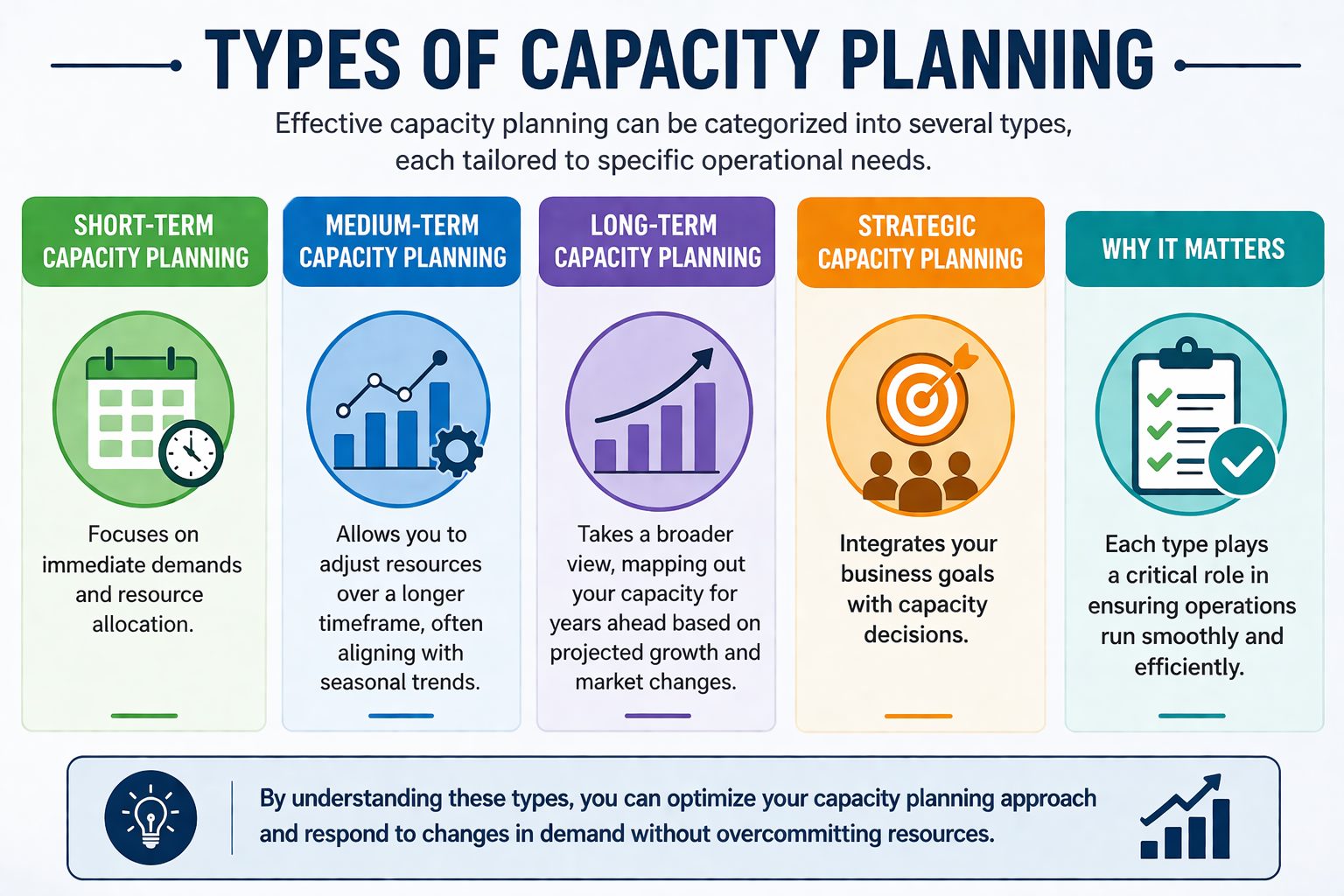
Effective capacity planning can be categorized into several types, each tailored to specific operational needs.
You might encounter short-term capacity planning, which focuses on immediate demands and resource allocation.
Then there’s medium-term planning, allowing you to adjust resources over a longer timeframe, often aligning with seasonal trends.
Long-term planning takes a broader view, mapping out your capacity for years ahead based on projected growth and market changes.
Additionally, you could consider strategic capacity planning, integrating your business goals with capacity decisions.
Each type plays a critical role in ensuring your operations run smoothly and efficiently, helping you respond to changes in demand without overcommitting resources.
Understanding these types allows you to optimize your capacity planning approach effectively.
Factors Influencing Capacity Planning
Capacity planning isn’t just about selecting the right type for your needs; it’s also influenced by various factors that can impact your operations.
First, consider demand fluctuations. Understanding seasonal trends or unexpected spikes in demand can help you adjust capacity accordingly.
Next, evaluate your resources—both human and technological. If your workforce or equipment isn’t up to par, it can limit your capacity.
Additionally, market conditions play a vital role; changes in the economy or competitive landscape can necessitate adjustments.
Don’t forget regulatory requirements, which can affect how much capacity you can legally operate.
Lastly, your organization’s long-term goals should guide your planning.
Capacity Planning Strategies
When it comes to optimizing your operations, implementing the right capacity planning strategies is crucial. First, assess your current capacity against your projected demand. This helps you identify gaps and areas for improvement.
Next, consider adopting a flexible capacity strategy, allowing you to scale resources up or down based on fluctuations in demand. Utilizing a hybrid approach can also be beneficial, combining both in-house resources and outsourcing to meet changing needs.
Additionally, regularly reviewing your capacity plans ensures you’re adapting to market trends and operational changes. Finally, encourage collaboration across teams to align your capacity planning with overall business goals.

Tools and Techniques for Capacity Planning
To successfully manage your resources, it’s essential to leverage various tools and techniques for capacity planning. Start by utilizing forecasting software, which helps you predict future demand based on historical data.
You can also use modeling tools to simulate different scenarios and assess how changes in one area might impact overall capacity. Spreadsheet applications are great for tracking resource allocation and analyzing performance metrics.
Additionally, implementing project management tools can streamline workflows and ensure optimal resource use. Don’t forget to consider capacity management software, which provides real-time insights into resource utilization.
Common Challenges in Capacity Planning
Managing resources effectively with various tools can still present significant challenges in capacity planning. You might struggle with unpredictable demand fluctuations, making it tough to maintain optimal resource levels.
Additionally, aligning your team’s skill sets with the required capacity can be a daunting task. Overestimating or underestimating needs can lead to wasted resources or missed opportunities.
It’s also crucial to communicate effectively across departments, as misalignment can hamper your planning efforts. Furthermore, you’ll often face budget constraints that limit your ability to expand or adapt.
Finally, keeping up with market trends and changes adds another layer of complexity. By recognizing these challenges, you can better prepare and develop strategies to enhance your capacity planning process.
The Role of Technology in Capacity Planning
As organizations seek to optimize their resources, technology plays a vital role in enhancing capacity planning.
You’ll find that advanced software solutions streamline data collection and analysis, allowing you to make informed decisions. Real-time monitoring tools help you track resource utilization and identify bottlenecks before they escalate.
Predictive analytics can forecast demand, enabling you to adjust capacity proactively. Cloud-based platforms facilitate collaboration among teams, ensuring everyone stays aligned with capacity goals.
Automation reduces manual tasks, increasing efficiency and accuracy in planning processes.
Best Practices for Effective Capacity Planning
While effective capacity planning can seem daunting, adopting best practices can simplify the process and lead to better outcomes.
First, regularly assess your current capacity and demand to identify trends. Use data analytics to forecast future needs, ensuring you’re prepared for fluctuations.
Collaborate with your team to gather insights and align goals, making the planning process more efficient. Don’t forget to incorporate flexibility; you may need to adjust your plans as circumstances change.
Additionally, document your processes to create a reference for future planning cycles.
Finally, review and refine your strategy periodically, learning from past experiences.
Conclusion
In conclusion, effective capacity planning is crucial for your business’s success. By understanding its importance and the key components involved, you can make informed decisions that align resources with demand. Embracing the right tools and techniques will help you navigate common challenges and leverage technology to enhance efficiency. By following best practices, you can optimize your operations, reduce costs, and support sustainable growth, ensuring your organization is always ready to meet future demands.

Frequently Asked Questions
What is capacity planning in operations management?
Capacity planning is the process of determining the resources—such as people, equipment, and time—needed to meet current and future demand. It helps organizations balance workload with available capacity to ensure efficient operations and avoid overuse or underuse of resources.
Why is capacity planning important for businesses?
Capacity planning is important because it ensures that organizations can meet customer demand without delays or excess costs. It improves efficiency, prevents bottlenecks, supports better decision-making, and helps maintain consistent service levels while adapting to market changes.
What are the main types of capacity planning?
The main types of capacity planning include short-term, medium-term, and long-term planning. Short-term focuses on immediate resource needs, medium-term aligns with trends like seasonality, and long-term planning prepares for future growth and demand changes.
How does capacity planning differ from resource planning?
Capacity planning focuses on understanding how much work an organization can handle overall, while resource planning deals with allocating specific resources—such as staff or equipment—to tasks or projects. Both are closely related but serve different roles in operational planning.
What challenges can occur in capacity planning?
Common challenges include inaccurate demand forecasting, changing market conditions, limited visibility into team workload, and difficulty balancing resource availability with project demands. These challenges can lead to overcommitment or underutilization if not properly managed.