

In Lean manufacturing, understanding the eight types of waste is crucial for improving efficiency. You might find that overproduction and waiting are more common than you think. As you explore these wastes, consider how they impact your operations. Each type has its own unique challenges and opportunities for improvement. What if you could identify these issues in your own processes? The insights could be transformative. Let's look closer at each type.
Overproduction

Overproduction occurs when you produce more goods than necessary or before they're needed, leading to wasted resources and increased costs.
You might think producing in bulk will save time and money, but it can backfire. Excess inventory ties up your cash flow and may require additional storage space. You're also at risk of products becoming obsolete or spoiled.
This not only drains your resources but also complicates your operations. To combat overproduction, focus on demand-driven production strategies. Analyze customer needs and align your output accordingly. Implementing just-in-time methods can help you minimize waste and improve efficiency. By keeping your production levels in sync with demand, you'll optimize your resources and boost profitability. Additionally, embracing continuous improvement can further enhance your operational efficiency and customer satisfaction.
Waiting
While you mightn't immediately think of waiting as a form of waste, it significantly impacts efficiency and productivity. When you or your team members are stuck waiting—whether for materials, information, or approvals—time slips away, and projects stall.
This downtime can lead to frustration and decreased morale. You may find that bottlenecks create ripple effects, delaying subsequent tasks and ultimately affecting customer satisfaction.
To combat this waste, identify the root causes of waiting in your processes. Streamline communication, ensure timely deliveries, and foster a culture of accountability.
Transport
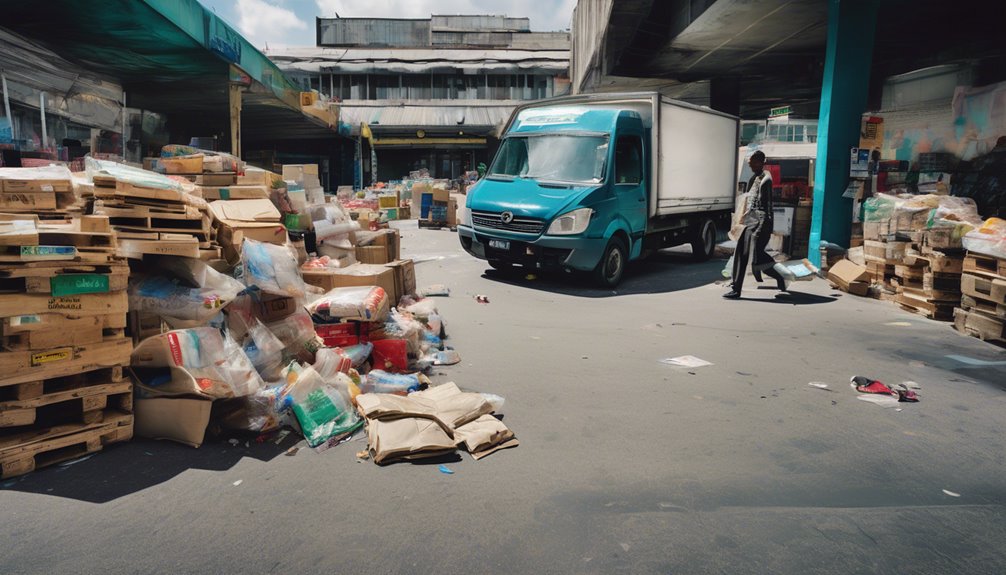
Transport waste refers to the unnecessary movement of materials or products throughout your processes. This kind of waste can lead to increased costs and delays, impacting your overall efficiency.
You might find yourself moving items between workstations too frequently or using excessive transportation methods, whether it's forklifts or trucks. Each trip takes time and resources, detracting from value-added activities.
To reduce transport waste, analyze your workflow and layout. Aim for a streamlined process where materials are positioned closer to where they're needed.
Consider implementing just-in-time delivery systems to cut down on unnecessary movements. By minimizing transport waste, you'll enhance productivity, lower costs, and improve overall operational efficiency, allowing your team to focus on creating value. Incorporating Lean principles can further optimize your processes and reduce waste effectively.
Extra Processing
Extra processing occurs when you add more steps or features to a product than necessary, often leading to wasted time and resources. This waste can manifest in various ways, like over-engineering a product or implementing unnecessary quality checks.
You might feel tempted to include additional features that you think enhance value, but they can complicate the process and confuse customers instead.
To combat extra processing, focus on what truly adds value to the customer. Regularly review your processes and eliminate any steps that don't contribute to the final product. Incorporating lean principles can help streamline your workflow and eliminate unnecessary steps.
Simplifying your workflow not only saves time but also boosts efficiency. Remember, less is often more; streamlining your processes can lead to better outcomes with fewer resources.
Inventory
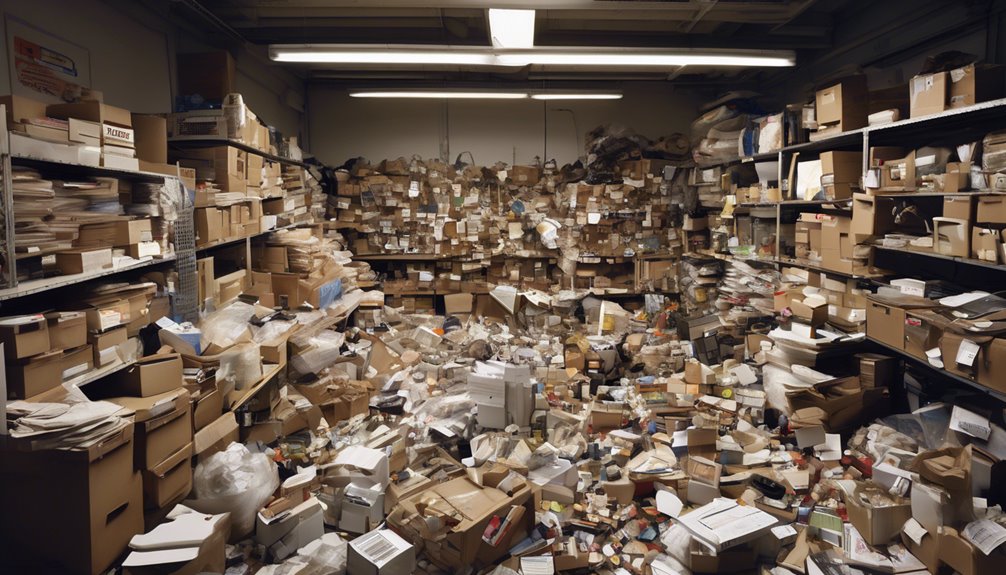
Managing inventory effectively is another key aspect of lean practices. Excess inventory ties up capital and space, leading to waste. You need to assess your stock levels regularly, ensuring you have just enough to meet demand without overstocking.
Implementing just-in-time (JIT) principles can help you reduce excess inventory and increase responsiveness to customer needs. You should also track inventory turnover rates; this will highlight slow-moving items that may need reevaluation or promotion.
Streamlining your supply chain is crucial, too. Collaborate with suppliers to improve lead times and reduce ordering costs. By focusing on these strategies, you can minimize inventory waste, improve cash flow, and enhance overall efficiency in your operations.
Embrace these lean practices to create a more agile inventory system.
Motion
Although it's often overlooked, reducing unnecessary motion in the workplace can significantly enhance productivity and efficiency. You mightn't realize how much time you waste on repetitive movements, such as walking back and forth to fetch tools or materials. By organizing your workspace and placing frequently used items within reach, you can minimize these motions.
Evaluate your daily tasks and identify any unnecessary movements that disrupt your workflow. Set up standardized workstations and streamline processes to ensure everything's easily accessible.
Defects
When defects occur in your processes, they not only lead to wasted resources but also diminish customer satisfaction.
Every error or flaw in your products means you're throwing away time, materials, and money. You may have to rework or replace items, which slows down your production and affects delivery times. This can frustrate customers who expect quality and reliability.
To combat defects, focus on understanding the root causes. Implement quality checks and continuous improvement strategies to catch issues early. Train your team to recognize potential problems and empower them to take corrective actions. Utilizing data-driven methodology can significantly enhance your ability to identify and eliminate defects.
Underutilized Talent
Unlocking the potential of your team can significantly boost productivity and innovation. When you overlook your employees' skills and talents, you're wasting valuable resources. Each team member brings unique strengths, and tapping into those can lead to greater efficiency and creativity.
Encourage open communication and foster an environment where ideas are shared freely. You can also provide training and development opportunities to help employees grow and utilize their skills fully.
Regularly assess team dynamics and align tasks with individual strengths to maximize their contributions. By recognizing and leveraging underutilized talent, you not only enhance overall performance but also boost morale and engagement. Moreover, fostering a culture of accountability can further empower employees to take ownership of their roles and contribute to innovative solutions.
Conclusion
By recognizing and eliminating the eight types of waste in lean manufacturing—overproduction, waiting, transport, extra processing, inventory, motion, defects, and underutilized talent—you can significantly enhance your operations. Each waste you tackle not only boosts efficiency but also saves costs and improves productivity. Embrace lean principles to create a more streamlined, responsive environment that benefits everyone involved. Start identifying these wastes today and watch your organization thrive as you foster a culture of continuous improvement.