
When you encounter a right skewed graph, you'll notice its distinct shape, with a long tail stretching to the right. This skewness often suggests that extreme values are influencing your data, making it crucial to understand its implications. As you explore the characteristics and real-life examples of right skewed distributions, you'll uncover the hidden insights that can impact decision-making in various fields. What might these insights reveal about your data?
Right skewed graphs show most data clustered on the left with a long tail to the right, often caused by extreme values that pull the mean higher than the median. Recognizing this pattern is essential for accurate data interpretation in fields like economics, medicine, and social sciences.
Understanding Right Skewed Graphs
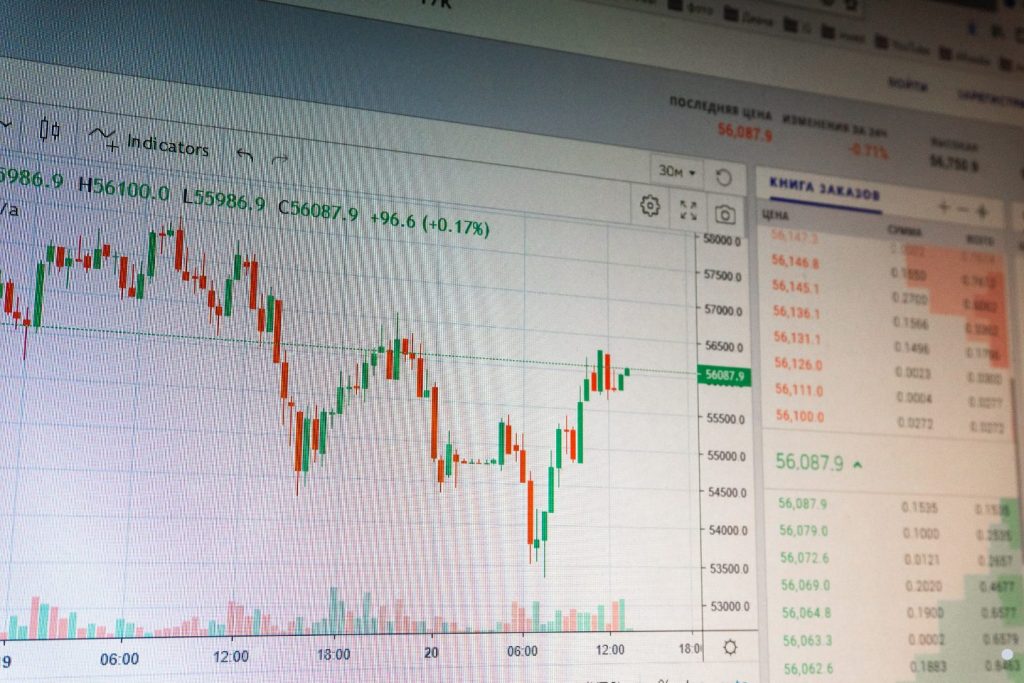
When you encounter a right skewed graph, you'll notice that most of the data points cluster on the left side, while a few extend towards the right. This distribution indicates that a majority of the values are lower, with some outliers that increase the mean.
Understanding this concept helps you interpret data correctly, especially in fields like economics, biology, or social sciences. For example, income levels in a community may show a right skew, highlighting that most people earn below a certain threshold while a few individuals earn significantly more.
Characteristics of Right Skewed Distributions
Right skewed distributions have several distinct characteristics that set them apart from other types of data distributions.
In these distributions, you'll notice that the tail on the right side is longer or fatter than the left side. This indicates that a few extreme values are pulling the mean to the right. Often, the mean is greater than the median, reflecting this shift.
You might also find that most data points cluster on the left side, creating a concentration of lower values. Additionally, the mode, or the most frequently occurring value, typically appears to the left of both the median and the mean.
Understanding these traits helps you analyze and interpret right skewed data effectively.
Examples of Right Skewed Data in Real Life
While many data sets can exhibit right skewness, several real-life scenarios clearly illustrate this phenomenon. One common example is income distribution; a small number of individuals earn exceptionally high salaries, while most earn modest incomes, resulting in a right-skewed graph.
Similarly, property prices in a city can show right skewness, with a few high-value homes pulling the average price upward.
In the field of medicine, the distribution of hospital stays often skews right, as most patients have shorter stays, but a few require extended treatment.
Lastly, the ages at which people retire can also be right-skewed, with many retiring around the standard age but some working much longer.
These examples help you understand right-skewed data in everyday life.
Visualizing Right Skewed Graphs
Visualizing a right skewed graph can be enlightening, as it reveals how data is distributed across a range.
You'll notice that most values cluster on the left side, creating a long tail extending to the right. This tail indicates that while most data points are lower, a few higher values stretch the distribution.
When you plot your data, focus on the shape of the graph. The peak represents the mode, while the tail shows the presence of larger values.
Understanding this can help you interpret data trends and make informed decisions. By analyzing the frequency of values, you can gain insights into the behavior of the dataset, which is crucial for effective data-driven strategies.
Impact of Outliers on Right Skewed Data
Outliers can significantly influence right skewed data, often distorting your perception of the dataset's true nature. When you include these extreme values, they can pull the mean upward, making it appear higher than what most of your data points suggest. This shift can lead you to draw incorrect conclusions about trends or patterns.
Additionally, outliers can exaggerate the variability within your dataset, masking the real distribution of values. If you're not careful, you might underestimate the data's central tendency, which can skew your analyses.
To maintain accuracy, it's crucial to identify and assess the impact of these outliers. By doing so, you'll gain a clearer understanding of the right skewed distribution and make more informed decisions based on your data.
Statistical Measures for Right Skewed Distributions
When analyzing right skewed distributions, it's essential to use specific statistical measures that accurately reflect the data's characteristics. The mean, often pulled toward the tail, mightn't represent the typical value well; instead, rely more on the median as it provides a better central tendency.
Additionally, consider using the mode to identify the most frequently occurring value, which can be particularly useful in understanding the data's peak. For variability, the interquartile range (IQR) is preferable, as it focuses on the central 50% of your data, mitigating the impact of outliers.
Lastly, skewness and kurtosis can give deeper insights into the distribution's shape and tail behavior, helping you interpret the data effectively.
Applications of Right Skewed Graphs in Various Fields
Right skewed graphs find valuable applications across various fields, particularly in areas where data naturally displays this distribution pattern.
In finance, you might encounter income distribution, where a small number of individuals earn significantly more than the majority. This insight helps in developing targeted policies.
In environmental science, right skewed data often appears in measures of pollution or resource distribution, indicating that a few locations may experience extreme levels.
Similarly, in healthcare, patient wait times can be right skewed, highlighting that while most patients are seen promptly, a few face long delays, guiding resource allocation.
Techniques for Transforming Right Skewed Data
Sometimes, transforming right skewed data is essential for accurate analysis and interpretation. You can use several techniques to achieve this.
One common method is the logarithmic transformation, where you apply the natural log to each data point. This often normalizes the distribution.
Another approach is the square root transformation, which can also help reduce skewness.
If you're dealing with extreme values, consider the Box-Cox transformation, which is flexible and allows you to find the best transformation parameter.
Lastly, try the Yeo-Johnson transformation if your data includes zero or negative values.
These techniques can improve your data's normality, making it easier to apply statistical tests and draw reliable conclusions. Choose the method that best fits your dataset's characteristics.
Interpreting Right Skewed Graphs for Decision-Making
Understanding how to interpret right skewed graphs is crucial for effective decision-making, especially in fields like finance, healthcare, and social sciences.
When you analyze these graphs, pay attention to the mean and median. In right skewed distributions, the mean is usually higher than the median, indicating that extreme values on the right are influencing the average. This can lead you to misinterpret the data if you rely solely on the mean.
Focus on the median for a more accurate representation of central tendency. Additionally, identify the potential outliers on the right side, as they can significantly impact your conclusions.
Conclusion
In conclusion, understanding right skewed graphs is crucial for interpreting data accurately. By recognizing their characteristics and the impact of outliers, you can make informed decisions in various fields like finance and healthcare. Remember, the mean, median, and mode can guide you in understanding the distribution's shape. With the right techniques, you can even transform skewed data for better analysis. Embracing these insights empowers you to draw meaningful conclusions from your data.