

A structured project prioritization scoring model uses weighted criteria like strategic alignment, impact, resource availability, risk, and stakeholder support to quantify and compare initiatives, ensuring resources focus on the most valuable projects.
When it comes to managing multiple projects, prioritization is crucial. You need a clear method to evaluate which initiatives deserve your resources and attention. The Project Prioritization Scoring Model offers a structured way to do just that. By focusing on key criteria and quantifying your assessments, you can streamline decision-making. But how do you effectively implement this model to ensure it truly meets your organization’s needs? Let’s explore the essential components.
Understanding the Importance of Project Prioritization
Project prioritization is crucial for effective resource management and achieving strategic goals. When you prioritize projects, you ensure that your team focuses on the most valuable initiatives first, aligning efforts with your organization’s objectives.
This process helps you allocate resources efficiently, reducing waste and maximizing impact. You’ll find that by assessing projects based on their potential benefits, urgency, and alignment with goals, you can make informed decisions that drive success.
Prioritization also fosters clearer communication within your team, as everyone understands what’s essential and why. Ultimately, mastering project prioritization not only enhances productivity but also boosts morale, as team members see their contributions directly impacting the organization’s success.
Embrace this skill to elevate your project management approach.
Key Criteria for Evaluating Projects
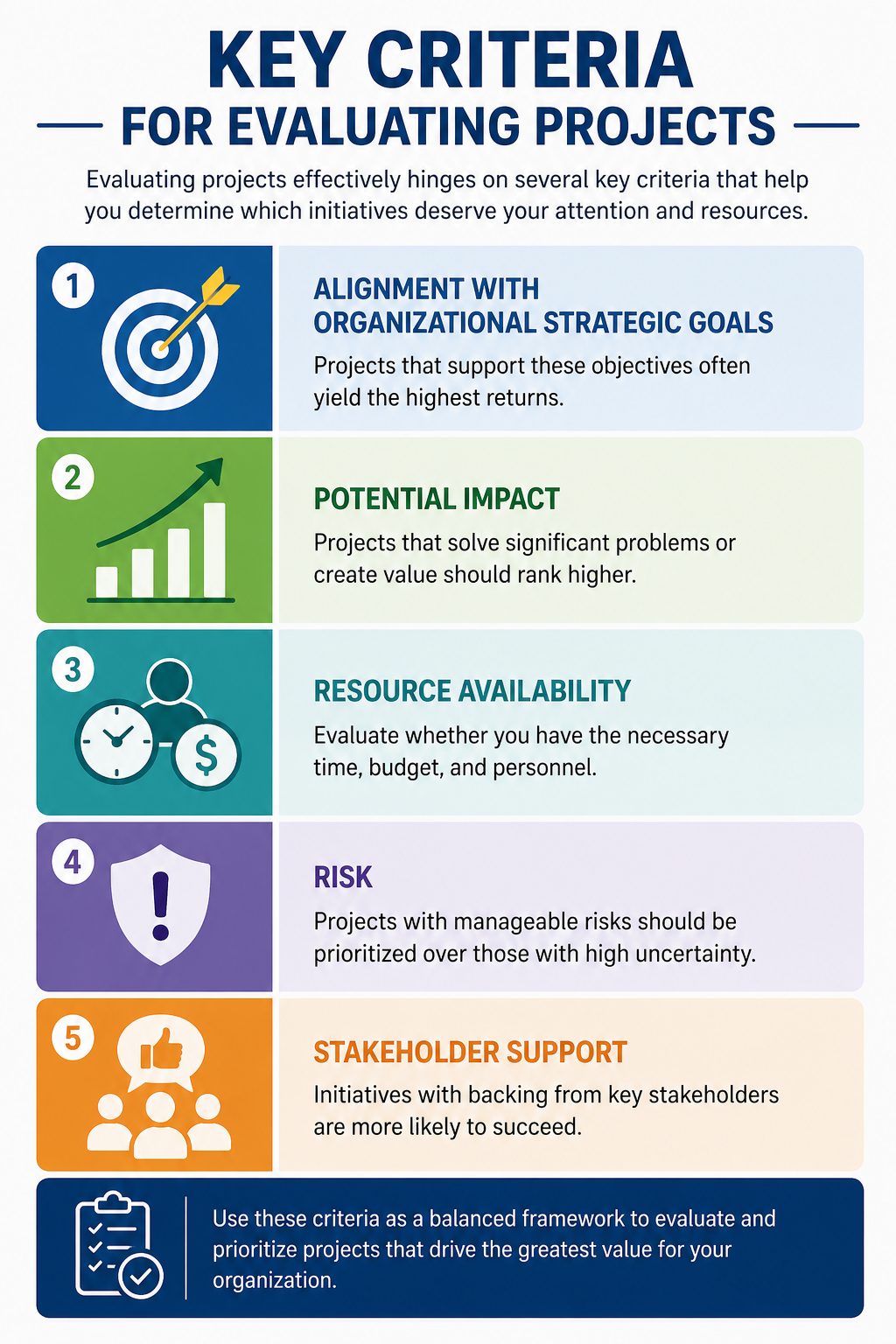
Evaluating projects effectively hinges on several key criteria that help you determine which initiatives deserve your attention and resources.
First, consider alignment with your organization’s strategic goals; projects that support these objectives often yield the highest returns.
Next, assess the potential impact—projects that solve significant problems or create value should rank higher.
Resource availability is another crucial factor; evaluate whether you have the necessary time, budget, and personnel.
Additionally, think about risk; projects with manageable risks should be prioritized over those with high uncertainty.
Finally, consider stakeholder support; initiatives with backing from key stakeholders are more likely to succeed.
Developing a Scoring System
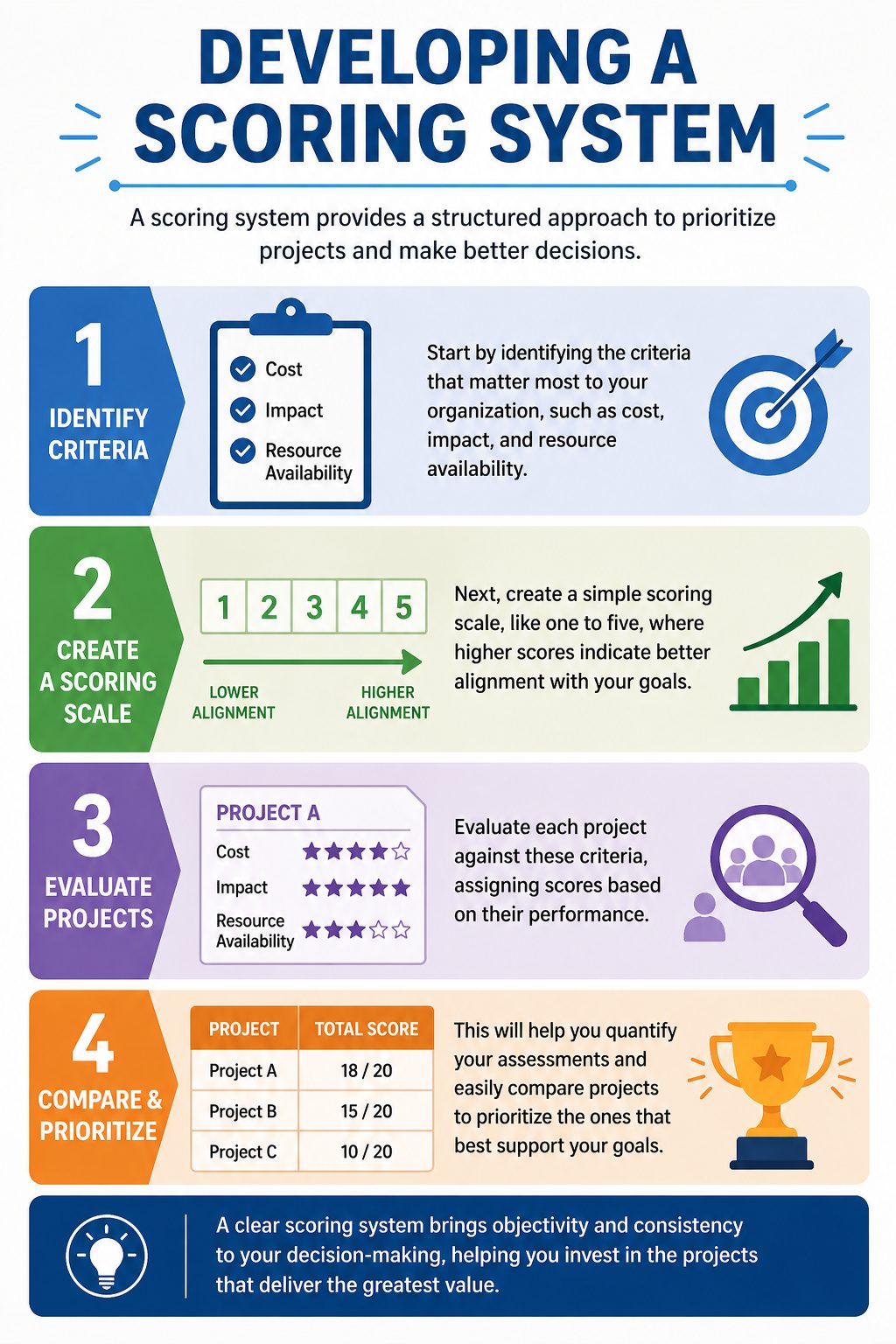
When you’re looking to prioritize projects effectively, developing a scoring system can provide a structured approach to decision-making.
Start by identifying the criteria that matter most to your organization, such as cost, impact, and resource availability. Next, create a simple scoring scale, like one to five, where higher scores indicate better alignment with your goals.
You can then evaluate each project against these criteria, assigning scores based on their performance. This will help you quantify your assessments and easily compare projects.
Assigning Weights to Evaluation Criteria
After establishing a scoring system, the next step involves assigning weights to each evaluation criterion. Weights determine the importance of each criterion relative to the others, helping you focus on what truly matters for your projects.
Start by discussing with your team to identify which criteria should carry more weight based on your organization’s goals. Consider factors like strategic alignment, potential ROI, and resource availability.
Assign numerical values to reflect these priorities, ensuring the total weight equals 100%. This approach allows you to balance diverse aspects, making your evaluation process more objective and effective.
Analyzing and Ranking Projects
Once you’ve assigned weights to your evaluation criteria, you can begin analyzing and ranking your projects based on the scores they receive.
Start by calculating the total score for each project, multiplying each criterion score by its corresponding weight. This will give you a clear picture of how each project performs against your defined criteria.
Next, list the projects in descending order of their total scores. Higher scores indicate better alignment with your priorities.
It’s essential to review these rankings critically; consider any external factors that might influence project feasibility or strategic importance.
This process not only helps you visualize where each project stands but also aids in fostering discussions around resource allocation and project selection.
Making Informed Decisions Based on Scores
While analyzing project scores provides valuable insights, making informed decisions involves more than just looking at numbers. You need to consider the context behind those scores.
Engage with your team to understand the nuances of each project, including potential risks and stakeholder impact. Don’t forget to evaluate resource availability and alignment with strategic goals.
It’s crucial to balance quantitative scores with qualitative factors, as they can significantly influence project success. Trust your instincts, but back them up with data to ensure a well-rounded decision-making process. Additionally, incorporating Six Sigma methodologies can enhance your decision-making by providing structured approaches to evaluate and improve project outcomes.
Continuous Improvement of the Scoring Model
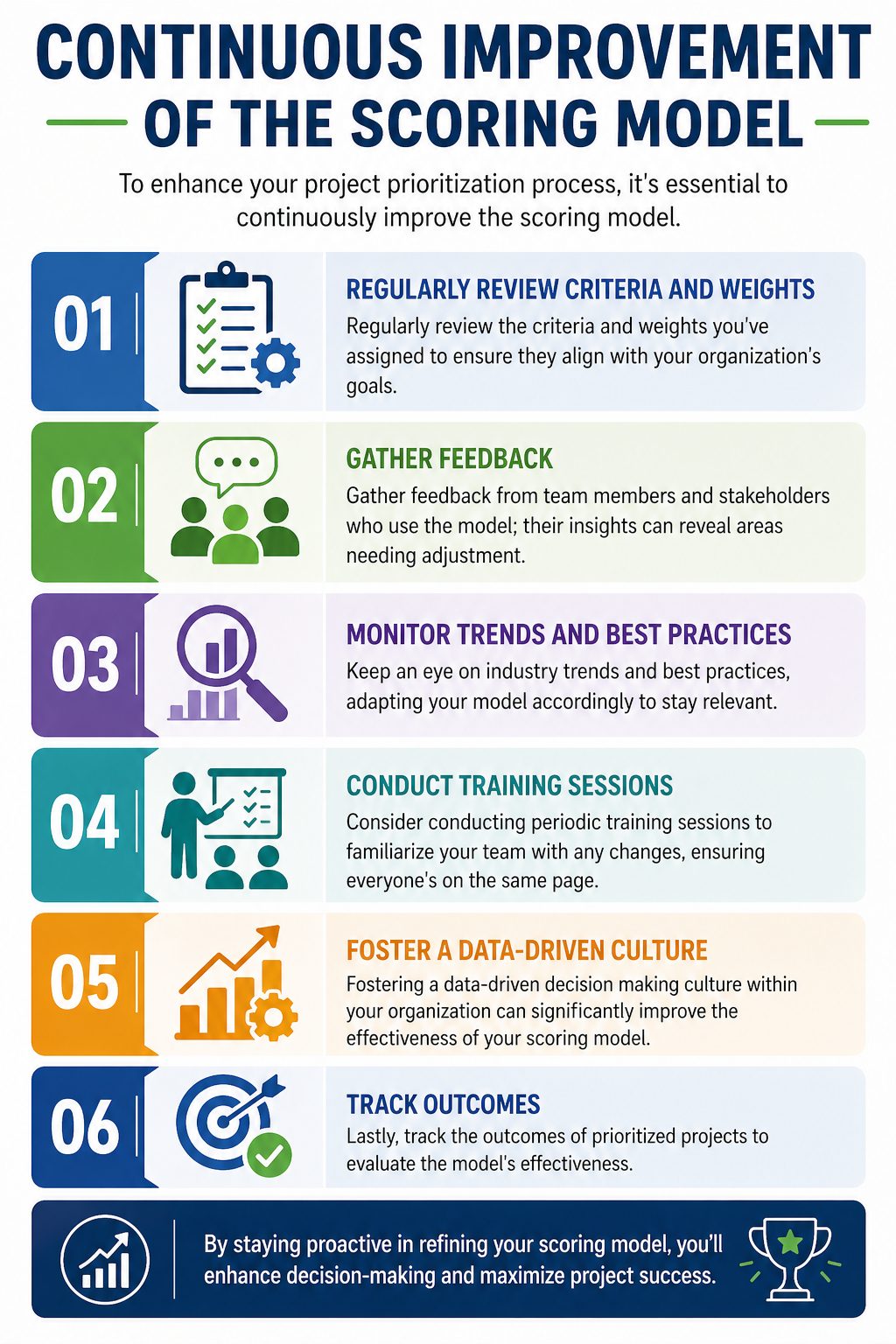
To enhance your project prioritization process, it’s essential to continuously improve the scoring model. Regularly review the criteria and weights you’ve assigned to ensure they align with your organization’s goals.
Gather feedback from team members and stakeholders who use the model; their insights can reveal areas needing adjustment. Keep an eye on industry trends and best practices, adapting your model accordingly to stay relevant.
Consider conducting periodic training sessions to familiarize your team with any changes, ensuring everyone’s on the same page. Additionally, fostering a data-driven decision making culture within your organization can significantly improve the effectiveness of your scoring model.
Lastly, track the outcomes of prioritized projects to evaluate the model’s effectiveness. By staying proactive in refining your scoring model, you’ll enhance decision-making and maximize project success.
Conclusion
In conclusion, using a project prioritization scoring model empowers you to make informed decisions that align with your organization’s goals. By evaluating projects based on key criteria and assigning scores, you can effectively rank initiatives and allocate resources efficiently. This structured approach not only enhances team communication but also drives productivity. Remember, regularly revisiting and improving your scoring model ensures it stays relevant and effective, helping you navigate future projects with confidence.
Frequently Asked Questions
What is project prioritization scoring model training?
Project prioritization scoring model training teaches professionals how to evaluate, compare, and rank projects using structured criteria such as strategic alignment, impact, cost, risk, and resource availability. It helps organizations make smarter decisions when multiple initiatives compete for limited resources.
Who should take a project prioritization scoring model course?
This type of course is ideal for project managers, portfolio managers, business analysts, executives, team leaders, and anyone responsible for selecting, funding, or managing projects. It is especially useful for organizations handling multiple priorities at the same time.
What skills are learned in project prioritization scoring model training?
Participants typically learn how to define evaluation criteria, assign weighted scores, compare projects objectively, rank initiatives, and improve resource allocation. Many programs also cover decision-making frameworks and stakeholder communication.
Why is a project prioritization scoring model important?
A scoring model creates a more objective and transparent way to choose projects. It helps reduce bias, aligns project choices with business goals, and ensures that time, budget, and staff are focused on the most valuable opportunities.
How can project prioritization scoring model knowledge support career growth?
Understanding prioritization models can strengthen leadership, planning, and analytical skills. These capabilities are valuable in project management, operations, consulting, and executive roles where strategic decision-making and portfolio management are essential.