

Lean and Six Sigma are complementary methodologies that combine waste elimination with variability reduction to streamline processes, improve quality, and drive continuous organizational improvement.
If you're looking to improve efficiency and quality in your organization, understanding Lean and six sigma is essential. These methodologies work together to streamline processes and reduce errors, ultimately enhancing customer satisfaction. By identifying waste and minimizing variability, you can create a culture of continuous improvement. But how exactly do these principles fit together, and what tools can you leverage to make a real impact? Let's explore further.
Understanding Lean Principles

Understanding Lean Principles is crucial if you want to streamline processes and eliminate waste in any organization. Lean focuses on maximizing value by reducing waste—anything that doesn't add value to the customer.
Start by identifying value from the customer's perspective; this helps you understand what truly matters. Next, map your processes to pinpoint areas of waste, such as excess motion, waiting times, and unnecessary steps.
Utilize tools like the 5S method to organize your workspace efficiently. Encourage a culture of continuous improvement, where every team member is empowered to suggest changes. This approach aligns with Lean's emphasis on waste reduction to create more efficient processes.
The Fundamentals of Six Sigma
While Lean focuses on eliminating waste, Six Sigma aims to reduce variability and improve quality in processes.
At its core, Six Sigma employs a data-driven approach to identify defects and minimize errors. You'll learn about the dmaic framework—Define, Measure, Analyze, Improve, and Control—which guides you through problem-solving systematically.
By leveraging statistical tools, you can analyze data and uncover root causes of issues. Implementing Six Sigma helps you create a culture of continuous improvement, empowering teams to make informed decisions. Additionally, you will explore the DMADV model, which is essential for developing new products aligned with customer requirements.
As you gain proficiency, you'll also encounter various Six Sigma roles, like Green Belts and Black Belts, who drive projects and mentor others.
Ultimately, mastering Six Sigma can significantly enhance your organization's efficiency and customer satisfaction.
How Lean and Six Sigma Complement Each Other

Lean and Six Sigma work hand in hand to create a more efficient and effective organization. By integrating Lean's focus on eliminating waste with Six Sigma's emphasis on reducing variability, you can streamline processes while maintaining quality.
Lean helps you identify and remove non-value-adding activities, making workflows smoother. Meanwhile, Six Sigma provides tools to analyze data and solve problems, ensuring that the improvements you make are sustainable.
When you apply both methodologies together, you not only enhance productivity but also boost customer satisfaction. You'll find that Lean's speed complements Six Sigma's precision, creating a balanced approach that drives continuous improvement.
This synergy ultimately leads to a culture of excellence within your organization, fostering long-term success. Additionally, this approach emphasizes data-driven decision-making, which is crucial for sustaining improvements and achieving optimal results.
Key Tools and Techniques in Lean and Six Sigma
To achieve significant improvements in your processes, you need to leverage a variety of key tools and techniques from both Lean and Six Sigma.
Start with Value Stream Mapping to identify waste and streamline workflows. Implement 5S for workplace organization, ensuring efficiency and clarity.
Use the DMAIC framework—Define, Measure, Analyze, Improve, Control—to tackle problems systematically. For data analysis, apply statistical tools like control charts and Pareto analysis to pinpoint issues.
Root Cause Analysis helps you dig deeper into problems, ensuring you address the real causes, not just symptoms.
Finally, engage your team through Kaizen events for continuous improvement. By integrating these tools, you'll foster a culture of efficiency and excellence in your organization. Additionally, incorporating lean tools can significantly enhance your processes by driving waste reduction and improving overall performance.
Real-World Applications and Success Stories
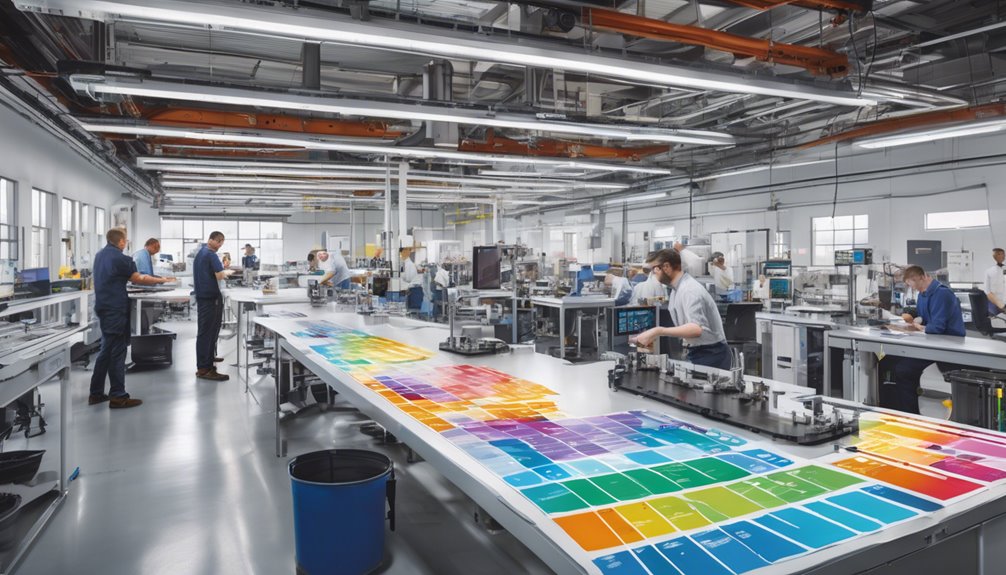
Many organizations have transformed their operations through the adoption of Lean and Six Sigma methodologies, showcasing impressive results.
For instance, a well-known automotive company reduced its production time by 30% by eliminating waste and streamlining processes.
In healthcare, a hospital improved patient care by decreasing wait times through process mapping and data analysis.
Even in the service sector, a financial institution enhanced customer satisfaction by cutting down on transaction errors.
You can see how companies like these consistently achieve higher efficiency and lower costs, leading to increased profitability.
These success stories demonstrate that with commitment and the right tools, you can drive significant improvements in your organization, making Lean and Six Sigma powerful allies in your quest for operational excellence. Additionally, the continuous improvement philosophy encourages organizations to regularly assess and refine their processes for sustained success.
Steps to Integrate Lean and Six Sigma in Your Organization
When you're ready to integrate Lean and Six Sigma into your organization, starting with a clear plan is crucial.
First, assess your current processes to identify areas needing improvement. Engage your team by communicating the benefits and involving them in the planning stage.
Next, provide training on Lean and Six Sigma principles so everyone understands the tools and techniques. Set measurable goals and select a pilot project to test your strategies.
Monitor progress closely and gather data to evaluate success. Encourage continuous feedback and make adjustments as necessary.
Finally, celebrate achievements and share results across the organization to build momentum. Additionally, consider how the data-driven decision-making aspect of Six Sigma can enhance your integration efforts.
Conclusion
By embracing Lean and Six Sigma, you can transform your organization's efficiency and quality. These methodologies not only help you identify and eliminate waste but also reduce variability and improve outcomes. When you integrate their principles, you create a culture of continuous improvement that drives productivity and enhances customer satisfaction. Start exploring how to implement these powerful tools today, and watch your organization thrive as you commit to excellence in every aspect of your operations.