

Agile methodology prioritizes flexibility and iterative development for dynamic projects, whereas Six Sigma focuses on data-driven process improvement and defect reduction in stable environments.
When considering project management approaches, you might find yourself weighing Agile against six Sigma. Each methodology offers unique strengths tailored to different project environments. Agile thrives in dynamic settings where flexibility is crucial, while Six Sigma excels in stable conditions focused on quality improvement. Understanding these distinctions can guide your choice, but the real question is—how do you determine which method fits your needs best?
Understanding Agile Methodology

Agile methodology is a flexible approach to project management that emphasizes collaboration and adaptability. You'll find that Agile encourages iterative progress, allowing teams to respond to changes quickly.
Instead of sticking to a rigid plan, you work in short cycles called sprints, which helps you deliver functional components more frequently. This way, you can gather feedback and make necessary adjustments without waiting for the project's end.
Agile fosters communication among team members, ensuring everyone's on the same page. It's not just about completing tasks; it's about enhancing the overall project by incorporating insights and improvements along the way.
Key Principles of Six Sigma
While both Agile and Six Sigma aim to enhance project outcomes, Six Sigma focuses on reducing defects and improving processes through data-driven methodologies.
The key principles of Six Sigma include a strong emphasis on customer satisfaction, defining clear goals, and utilizing statistical tools for analysis. You'll learn to identify and eliminate the root causes of process variability, ensuring that your processes consistently meet quality standards.
By adopting the DMAIC framework—Define, Measure, Analyze, Improve, and Control—you can systematically improve your processes. Additionally, Six Sigma promotes a culture of continuous improvement, encouraging collaboration among team members. This approach can enhance business performance through data-driven decision-making, ultimately leading to more efficient workflows, reduced costs, and improved overall performance in your projects.
Agile Vs Six Sigma: Core Differences
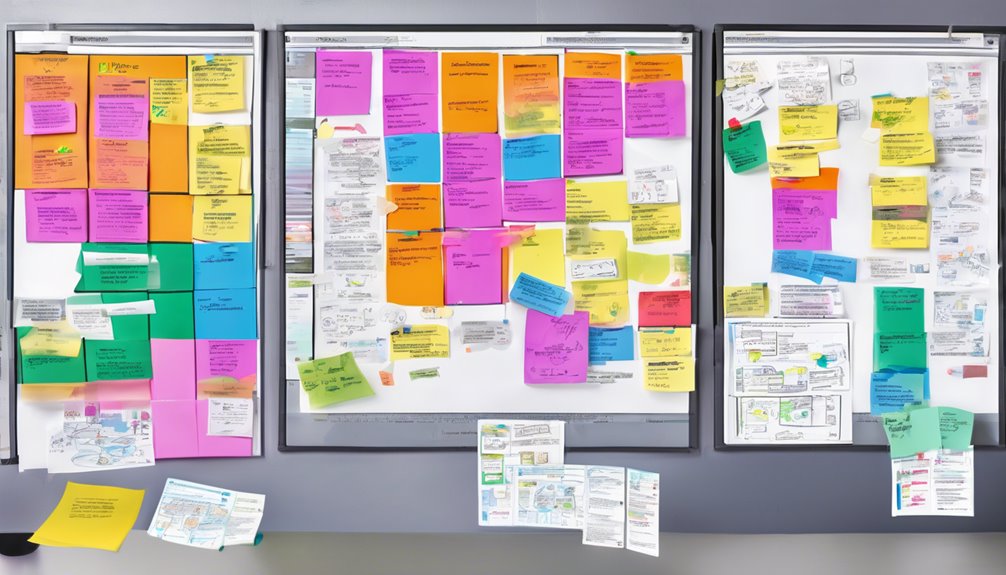
When comparing Agile and Six Sigma, it's clear that each methodology serves distinct purposes and addresses different aspects of project management.
Agile focuses on flexibility, promoting iterative development and responsiveness to change. It encourages collaboration among team members and stakeholders, allowing for quick adjustments based on feedback.
In contrast, Six Sigma emphasizes process improvement and defect reduction through data-driven decision-making. It relies on statistical analysis to identify problems and implement solutions systematically.
While Agile thrives in dynamic environments, Six Sigma is best suited for stable processes requiring consistency and quality control. Additionally, Six Sigma's data-driven methodology enables organizations to make informed decisions based on statistical analysis and improve overall process performance.
Ultimately, choosing between them depends on your project's unique needs and goals, as each methodology offers valuable tools for different scenarios.
Benefits of Agile in Project Management
In project management, embracing Agile can significantly enhance your team's efficiency and responsiveness. Agile promotes collaboration and adaptability, allowing your team to quickly adjust to changing requirements.
You'll benefit from shorter development cycles, enabling you to deliver incremental value and gather feedback early on. This iterative approach fosters continuous improvement, helping you identify and resolve issues promptly.
Moreover, Agile encourages a customer-centric mindset, ensuring that the final product aligns with client expectations. By empowering your team members to take ownership of their tasks, you'll boost morale and motivation.
Regular communication through daily stand-ups and sprint reviews keeps everyone aligned and focused. Ultimately, Agile equips your team with the tools and flexibility needed to thrive in today's fast-paced project landscape.
Advantages of Six Sigma for Quality Improvement

Six Sigma offers a powerful framework for quality improvement, enabling organizations to identify and eliminate defects in processes. By utilizing data-driven methodologies, you can significantly reduce variability, ensuring that your products or services meet customer expectations consistently.
This approach focuses on process optimization, leading to increased efficiency and reduced costs. As you implement Six Sigma, you'll foster a culture of continuous improvement, empowering employees to take ownership of quality.
The structured problem-solving techniques, like DMAIC (Define, Measure, Analyze, Improve, Control), help you systematically tackle challenges. Moreover, Six Sigma's emphasis on customer satisfaction ensures that you're always aligned with market needs.
Ultimately, adopting Six Sigma not only enhances quality but also boosts your organization's reputation and competitiveness in the marketplace. Additionally, the integration of Lean Six Sigma can further help in eliminating waste and enhancing efficiency.
When to Use Agile Methodology
While project requirements often change, Agile methodology shines in environments where flexibility and rapid response are crucial.
If you're working on projects with uncertain or evolving requirements, Agile lets you adapt quickly. It's perfect for software development, marketing campaigns, and product launches where customer feedback is essential.
When you need to foster collaboration among cross-functional teams, Agile promotes continuous communication and iterative progress.
Additionally, if you're aiming for faster delivery without sacrificing quality, Agile allows you to release increments of your product regularly.
Ultimately, use Agile when you want to embrace change, enhance customer satisfaction, and maintain a competitive edge in fast-paced markets.
You'll find that this approach keeps you responsive and aligned with your stakeholders' needs.
When to Implement Six Sigma

When you're facing issues with process inefficiencies, high defect rates, or customer dissatisfaction, implementing Six Sigma can be a game-changer. This methodology focuses on reducing variation and improving quality, making it ideal when you notice consistent problems affecting your bottom line.
If your team struggles with long cycle times or excessive waste, Six Sigma's structured approach can help identify root causes and streamline operations. Additionally, if you're looking to enhance customer satisfaction through improved product reliability, Six Sigma provides the tools to measure performance and drive continuous improvement. By employing the DMAIC framework, organizations can systematically address issues and foster a culture of continuous improvement.
Combining Agile and Six Sigma for Optimal Results
By integrating Agile and Six Sigma methodologies, you can harness the strengths of both approaches to drive efficiency and innovation. Agile focuses on flexibility and rapid iteration, while Six Sigma emphasizes data-driven decision-making and quality control.
Combining these methodologies allows you to adapt quickly to changes while maintaining high standards of quality. You can implement Agile sprints to develop new features rapidly and apply Six Sigma's DMAIC framework to analyze and improve processes continuously.
This fusion helps you identify bottlenecks and eliminate waste, resulting in faster delivery times and improved customer satisfaction. Ultimately, leveraging both methodologies creates a balanced approach that enhances productivity and fosters a culture of continuous improvement, making your projects more successful and sustainable. Additionally, understanding the concept of Lean Six Sigma can further enhance your ability to drive operational excellence by merging waste reduction with quality improvement.
Conclusion
In conclusion, both Agile and Six Sigma offer valuable approaches to project management and process improvement. Depending on your project's needs, you might choose Agile for its flexibility and quick adaptability or Six Sigma for its data-driven precision and focus on quality. Understanding when to apply each methodology can lead to successful outcomes. By even combining the strengths of both, you can optimize your processes and enhance overall performance, ensuring you meet your goals effectively.