
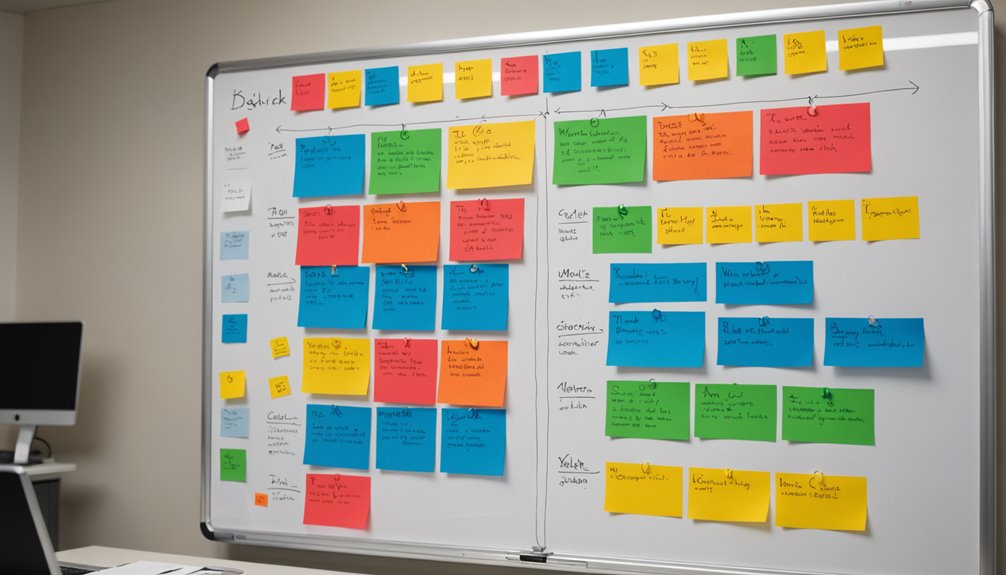
You might find that managing your tasks feels overwhelming at times. That's where the Task Prioritization Matrix comes in. It helps you categorize your tasks based on urgency and importance, making it easier to focus on what truly matters. But how do you effectively use this matrix to enhance your productivity? Let's explore the key components that can transform your approach to task management.
Understanding the Task Prioritization Matrix

The Task Prioritization Matrix is a powerful tool that helps you determine which tasks deserve your immediate attention. By categorizing tasks based on urgency and importance, this matrix allows you to visualize your workload effectively.
You can quickly identify what needs to be tackled first, ensuring you focus on high-impact activities. Instead of feeling overwhelmed, you'll gain clarity on your priorities. This structured approach not only enhances productivity but also boosts your confidence in decision-making.
As you become familiar with the matrix, you'll find it easier to allocate your time and resources wisely. Ultimately, mastering this tool will lead to better time management and improved outcomes in both your personal and professional life.
The Four Quadrants of the Matrix
Each task you face can be placed into one of four quadrants in the Task Prioritization Matrix, which helps you make sense of your responsibilities.
The first quadrant is for tasks that are both urgent and important; these need your immediate attention.
The second quadrant includes important but not urgent tasks, allowing you to plan and strategize effectively.
The third quadrant features urgent but less important tasks, often distractions that can be delegated or minimized.
Lastly, the fourth quadrant is for tasks that are neither urgent nor important; these can usually be eliminated or postponed.
How to Categorize Your Tasks

To effectively categorize your tasks, start by assessing their urgency and importance. Identify tasks that are urgent and important, as these should be your top priority.
Next, look at tasks that are important but not urgent; these can be scheduled for later. Then, consider tasks that are urgent but not important—delegate these if possible.
Finally, identify tasks that are neither urgent nor important; these can often be eliminated or postponed. As you categorize, use a visual tool like a matrix to help you see where each task fits.
This clarity will guide your focus and help you manage your time better, ensuring you tackle what truly matters first.
Benefits of Using the Matrix
Using a task prioritization matrix transforms how you approach your workload. It helps you visualize your tasks, making it easier to distinguish between what's urgent and what's important.
By categorizing your tasks, you focus your energy on high-impact activities, increasing your productivity. You'll reduce the stress of decision-making, as the matrix provides a clear framework for prioritization.
Additionally, you'll find greater satisfaction in completing tasks that truly matter, leading to improved motivation. The matrix also fosters better time management, allowing you to allocate resources effectively.
Tips for Effective Task Prioritization

While it might seem daunting at first, effective task prioritization can significantly enhance your productivity and focus.
Start by listing all your tasks, then categorize them based on urgency and importance. Use a simple method, like the Eisenhower Matrix, to visualize what needs your immediate attention.
Set clear deadlines to keep you accountable and motivated. Break larger tasks into smaller, manageable steps to avoid feeling overwhelmed.
Don't forget to regularly review and adjust your priorities as circumstances change. Lastly, learn to say no when necessary; it's crucial to protect your time and energy.
Common Mistakes to Avoid
Even with effective task prioritization strategies in place, it's easy to slip into common pitfalls that can undermine your efforts. One major mistake is failing to regularly reassess your priorities. Tasks can shift in urgency, and sticking to outdated priorities can lead to missed deadlines.
Another mistake is overloading your to-do list, which can create overwhelm and reduce your productivity. Aim for a manageable number of tasks each day. Additionally, don't fall into the trap of focusing solely on urgent tasks at the expense of important ones; this can derail your long-term goals.
Lastly, avoid neglecting to delegate tasks when possible; sharing the workload can enhance efficiency and free up your time for high-priority items.
Real-Life Applications of the Matrix

When you apply the task prioritization matrix in real-life scenarios, you'll quickly see how it transforms your productivity.
Whether you're managing a project at work or juggling personal tasks, this matrix helps you focus on what really matters. By categorizing tasks based on urgency and importance, you can tackle high-impact activities first, ensuring that your efforts lead to meaningful results.
You'll also find that it reduces decision fatigue; instead of feeling overwhelmed, you'll have a clear roadmap to follow.
Additionally, you can apply the matrix to daily routines, helping you allocate time effectively between work, family, and self-care.
The more you use it, the more intuitive your prioritization becomes, leading to greater satisfaction and achievement in your daily life.
Tools and Resources for Implementation
To effectively implement the task prioritization matrix, you'll want to explore various tools and resources that can streamline the process.
Start by using digital tools like Trello or Asana, which allow you to create boards for your tasks and visually prioritize them. You can also utilize templates available in Excel or Google Sheets, which provide a structured format for your matrix.
Don't overlook project management software that includes built-in prioritization features. Additionally, consider mobile apps like Todoist for on-the-go task management.
Tutorials and webinars can offer insights into best practices, while blogs and forums can connect you with others who've successfully implemented the matrix.
These resources will support your journey toward more effective task management.
Case Studies: Success Stories With the Matrix

By implementing the task prioritization matrix, numerous organizations have transformed their productivity and decision-making processes.
For instance, a tech startup saw a 40% increase in project completion rates by categorizing tasks based on urgency and importance. They streamlined their workflow, ensuring that team members focused on high-impact activities.
Similarly, a nonprofit organization utilized the matrix to allocate resources effectively, resulting in a 30% boost in fundraising efforts. By prioritizing tasks, they maximized their outreach and engagement.
In both cases, the matrix fostered a culture of clarity and accountability. You can leverage these success stories in your own organization, enhancing collaboration and efficiency by adopting this powerful tool.
The matrix might just be the game-changer you need!
Conclusion
Incorporating the Task Prioritization Matrix into your routine can transform how you tackle your tasks. By clearly identifying what's urgent and important, you'll focus on what truly matters, boosting your productivity and reducing stress. Remember to regularly revisit your tasks and stay flexible in your approach. With practice, you'll make smarter decisions and see significant improvements in your time management. Start using the matrix today, and watch your effectiveness soar!