
In today’s competitive business world, companies are always looking for ways to improve and stay ahead. One proven method is Six Sigma, a system focused on quality management and reducing errors. But what sets apart companies that truly excel with Six Sigma? The answer lies in understanding the characteristics of a successful Six Sigma culture.
This culture isn’t just about having the right tools and processes; it’s about building a team where everyone, from senior management to the team leader, is committed to continuous improvement. Imagine a workplace where every business process is fine-tuned for efficiency, led by experts like master black belts who guide the way. In such an environment, quality isn’t just a goal—it’s a way of life.
Read more about Characteristics of a Successful Six Sigma Culture
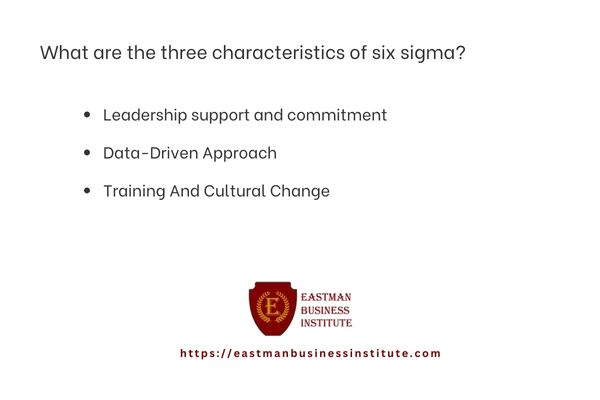
Let’s look into what makes this culture so effective and how it can transform your company.
More Things To Know About Characteristics of a Successful Six Sigma Culture

Understanding Six Sigma
Six Sigma, often denoted as 6σ, is a data-driven methodology that aims to improve the quality of processes by identifying and removing defects or errors. It focuses on minimizing variability and achieving near-perfect results by utilizing statistical tools and techniques.
In a Six Sigma culture, employees are trained to become problem solvers, equipped with the skills to analyze data, implement improvements, and sustain the improvements made. The ultimate goal of Six Sigma is to meet customer requirements consistently and efficiently.
Brief History of Six Sigma
Six Sigma methodology, originally developed by Motorola in the 1980s, aimed to improve processes by reducing defects to a level of 3.4 per million opportunities. This approach gained further prominence when General Electric adopted it in the 1990s under CEO Jack Welch.
Since then, Six Sigma has become synonymous with quality improvement and efficiency in different industries worldwide. Organizations embracing Six Sigma cultures focus on data-driven decision-making, process optimization, and a commitment to continuous improvement.
Understanding the historical context of Six Sigma provides insights into its transformational impact on modern business practices.
Principles of Six Sigma
Exploring the core principles of Six Sigma enables organizations to improve quality, streamline processes, and drive continuous improvement.
The six sigma principles are centered around customer focus, data-driven decision making, and process improvement methodologies.
By understanding these principles, you can align your team towards achieving measurable results and fostering a sigma culture within your organization.
Emphasizing the importance of defining, measuring, analyzing, improving, and controlling processes helps in minimizing defects and variations.
Implementing these principles empowers employees at all levels to actively participate in problem-solving and decision-making processes, leading to increased efficiency and customer satisfaction.
Incorporating the core values of Six Sigma can transform your organization into a high-performing, quality-driven entity.
Key Characteristics of a Successful Six Sigma Culture
To cultivate a successful Six Sigma culture, you need to prioritize:
- Continuous improvement
- Data-driven decision-making
- A customer-centric approach
- Proactive problem-solving
- Cross-functional collaboration
These key characteristics are necessary for fostering a culture that’s focused on quality, efficiency, and customer satisfaction.
Commitment to Continuous Improvement
A key characteristic of a successful Six Sigma culture is the unwavering dedication to continuous improvement.
In a Six Sigma culture, fostering a mindset that constantly seeks out ways to improve processes, eliminate defects, and optimize efficiency is paramount.
Embracing a culture where every team member is encouraged to contribute ideas for improvement and where ongoing learning and development are valued leads to sustained success.
By prioritizing continuous improvement, organizations can adapt to changing market demands, stay ahead of competitors, and deliver exceptional products and services to customers.
This commitment to continuous improvement not only drives operational excellence but also instills a sense of pride and ownership among employees, creating a positive and dynamic work environment within the Six Sigma culture.
Data-Driven Decision Making
Embracing data-driven decision making is a foundational element within a successful Six Sigma culture. In Lean Six Sigma methodologies, decisions aren’t based on intuition or gut feelings but on concrete data analysis.
By utilizing data-driven decision making, organizations can identify root causes of problems, track progress, and measure the impact of process improvements accurately. Data serves as the compass guiding the direction of projects and initiatives, ensuring that resources are allocated effectively and results are tangible.
Through the systematic collection, analysis, and interpretation of data, Lean Six Sigma teams can make informed decisions leading to sustainable improvements. This approach fosters a culture of accountability and transparency, where actions are backed by evidence, driving continuous improvement in organizational performance.
Customer-Centric Approach
Incorporate customer feedback and preferences into your decision-making process to cultivate a customer-centric approach within your Six Sigma culture. By focusing on customer satisfaction, you can drive process improvement that directly aligns with what your customers value most.
Understanding their needs and expectations allows you to prioritize projects that have the most significant impact on enhancing their experience. Implementing Six Sigma methodologies with a customer-centric mindset guarantees that every improvement made is aimed at delivering value and exceeding customer expectations.
Proactive Problem Solving
To foster a culture of successful Six Sigma implementation, proactive problem-solving must be ingrained as a foundational mindset within the organization.
In a Six Sigma culture, problem-solving isn’t reactive but proactive. It involves identifying potential issues before they escalate, analyzing root causes, and implementing preventive measures. This approach helps organizations stay ahead of problems, improve processes, and improve overall efficiency.
By encouraging employees at all levels to actively seek out and address issues, a culture of continuous improvement is nurtured. Effective problem-solving within a Six Sigma culture is data-driven, utilizing tools like DMAIC (Define, Measure, Analyze, Improve, Control) to systematically tackle challenges.
Embracing proactive problem-solving is necessary for organizations aiming to achieve and sustain excellence in their operations.
Cross-Functional Collaboration
Cross-functional collaboration is a fundamental pillar of a successful Six Sigma culture, fostering synergy among diverse expertise for optimized problem-solving and process improvement.
In Six Sigma teams, individuals from different departments come together, pooling their unique skills and perspectives to tackle complex issues. This collaborative approach not only improves problem-solving but also promotes a culture of knowledge sharing and continuous learning within the organization.
Emphasis on Training and Development
For a successful Six Sigma culture, prioritizing training and development is vital to guarantee continuous improvement and proficiency among team members. Six Sigma training equips employees with the necessary tools and methodologies to identify areas for improvement, analyze data effectively, and implement solutions that drive quality and efficiency.
Specifically, obtaining a green belt certification is a valuable step towards mastering Six Sigma principles and techniques. Through structured training programs and hands-on projects, individuals can improve their problem-solving skills, statistical knowledge, and project management abilities.
Investing in the development of employees at all levels of the organization fosters a culture of learning and innovation, ultimately leading to sustained success in achieving operational excellence and exceeding customer expectations.
Importance of Continuous Improvement in Six Sigma
Embracing a mindset of constant improvement is necessary in fostering a successful Six Sigma culture. Continuous improvement lies at the core of Six Sigma principles, driving organizations to aim for excellence in all aspects of their operations.
In a Six Sigma culture, the emphasis on continuous improvement guarantees that processes are constantly reviewed, refined, and optimized to achieve maximum efficiency and quality. This commitment to ongoing improvement enables companies to adapt to changing market demands, stay ahead of competitors, and deliver superior products and services to customers.
How to Foster a Culture of Continuous Improvement
Cultivating a culture of continuous improvement within your organization is key to fostering a successful Six Sigma environment. To promote a thriving Six Sigma culture, encourage all team members to actively seek out opportunities for improvement and innovation.
Emphasize the importance of data-driven decision-making and the implementation of best practices. Provide regular training sessions and workshops to equip employees with the necessary tools and techniques to drive continuous improvement initiatives.
Foster a supportive environment where employees feel empowered to suggest and implement changes. Recognize and celebrate small wins along the way to maintain motivation and momentum. By embedding a mindset of continuous improvement in your organizational culture, you pave the way for long-term success in achieving your Six Sigma goals.
Data-Driven Decision Making
Data analysis is vital in Six Sigma methodologies as it serves as the basis for decision-making. Through effective data analysis, trends, root causes of problems, and areas for improvement can be identified within processes. This allows for the measurement of current performance, setting benchmarks, and tracking progress towards goals. In Six Sigma, decisions are grounded in solid data-driven evidence rather than gut feelings or opinions. This approach ensures that changes are implemented based on facts rather than assumptions, leading to more informed and impactful decision-making processes.
Embracing a data-driven mindset is necessary for success in Six Sigma, as it enables organizations to make decisions based on evidence rather than intuition. This approach fosters a culture of continuous improvement and helps drive meaningful change within processes. By leveraging data effectively, organizations can achieve higher levels of efficiency, quality, and customer satisfaction. Ultimately, the use of data in decision-making is a key principle of Six Sigma that drives success and sustainable results.
Tools for Data-Driven Decision Making in Six Sigma
Utilize an array of statistical tools to improve your data-driven decision-making process in Six Sigma. Six Sigma tools play a vital role in analyzing and interpreting data to make informed decisions.
Tools such as Pareto charts help prioritize issues based on their impact, while control charts monitor process stability over time. Regression analysis can identify relationships between variables, aiding in problem-solving.
Tools like Histograms and Scatter Diagrams visually represent data for better understanding. By utilizing these Six Sigma tools effectively, you can make sure that your decision-making process is grounded in data-driven insights.
Utilize these tools to streamline your analysis, improve processes, and drive continuous improvement within your organization.
Customer-Centric Approach
To excel in implementing a customer-centric approach within Six Sigma, you must prioritize understanding the role of the customer in the process.
By actively incorporating customer feedback techniques, you can improve the quality of your Six Sigma initiatives and drive better business outcomes.
Understanding the Customer’s Role in Six Sigma
Understanding the customer’s pivotal role in Six Sigma is vital for fostering a customer-centric approach within the organization. In Six Sigma, the customer’s role is central as their needs and expectations drive process improvements. By focusing on what matters most to the customer, organizations can deliver products and services that align with customer preferences, leading to increased satisfaction and loyalty.
The customer’s feedback provides valuable insights into areas that require improvement, guiding the Six Sigma projects towards impactful solutions. Incorporating the customer’s perspective throughout the Six Sigma methodology guarantees that the end results aren’t just statistically significant but also resonate with the end-users, ultimately contributing to the overall success of the organization’s quality initiatives.
Techniques for Incorporating Customer Feedback in Six Sigma
To effectively incorporate customer feedback in Six Sigma, consider leveraging specific techniques that directly engage with the end-users’ perspectives and preferences. Implement methods such as surveys, focus groups, and direct customer interviews to gather valuable insights into their needs and expectations.
Utilize tools like Voice of the Customer (VOC) analysis to understand customer requirements thoroughly. By analyzing feedback data through tools like Quality Function Deployment (QFD), you can prioritize improvements that align with customer priorities.
Incorporating customer feedback at every stage of the Six Sigma process guarantees that projects are customer-centric and result in products or services that meet or exceed customer expectations. This customer-focused approach drives continuous improvement and improves overall business performance.
Impact of a Customer-Centric Approach on Business Outcomes
Implementing a customer-centric approach in your business operations greatly impacts overall outcomes and fosters sustainable growth. By prioritizing the needs and preferences of your customers, you can improve customer satisfaction, loyalty, and retention rates.
This approach empowers you to tailor products and services to meet specific customer demands, leading to increased sales and profitability. Focusing on a customer-centric strategy allows you to gain valuable insights into consumer behavior and market trends, enabling you to make informed business decisions.
As a result, you can build a strong reputation, differentiate yourself from competitors, and create a loyal customer base. Ultimately, embracing a customer-centric approach can drive long-term success and positively influence your business outcomes.
Proactive Problem Solving
When tackling the topic of Proactive Problem Solving in Six Sigma, remember the importance of anticipating and addressing issues before they escalate. Utilize a variety of tools and techniques to stay ahead of potential problems, ensuring smooth operations.
Learn from real-world examples through case studies that showcase the effectiveness of proactive problem-solving approaches in Six Sigma environments.
Importance of Proactive Problem Solving in Six Sigma
Embracing proactive problem-solving approaches is important for fostering a successful Six Sigma culture. In a Six Sigma environment, it’s necessary to address issues before they escalate, ensuring continuous improvement and efficiency.
By proactively identifying and resolving potential problems, teams can prevent defects and streamline processes effectively. This proactive mindset not only improves overall quality but also increases customer satisfaction.
Encouraging employees to anticipate challenges and implement solutions promptly is at the core of a thriving Six Sigma culture. Proactive problem solving empowers teams to stay ahead of issues, minimize risks, and drive sustainable results.
A proactive approach to problem-solving is a cornerstone of success within the Six Sigma framework.
Tools and Techniques for Proactive Problem Solving
To effectively tackle proactive problem solving within a Six Sigma culture, familiarity with different tools and techniques is important. Six Sigma methodologies provide a structured approach to problem-solving, emphasizing data-driven decisions and continuous improvement.
Lean Six Sigma tools, such as root cause analysis and value stream mapping, help identify inefficiencies and streamline processes. The Lean Six Sigma Yellow Belt certification equips individuals with foundational knowledge of these tools, enabling them to actively participate in problem-solving projects.
Utilizing tools like Pareto charts, fishbone diagrams, and control charts can aid in identifying, analyzing, and monitoring issues to make sustainable solutions. By incorporating these tools and techniques into your problem-solving approach, you can effectively drive proactive problem-solving initiatives within a Six Sigma culture.
Cross-Functional Collaboration
To build a successful Six Sigma culture, you must understand the vital role of cross-functional collaboration. Implementing effective strategies to promote collaboration across departments is key to achieving Six Sigma goals.
The benefits of such collaboration include improved communication, streamlined processes, and better problem-solving capabilities.
Role of Cross-Functional Collaboration in Six Sigma
Cross-functional collaboration plays a pivotal role in driving successful Six Sigma implementation within organizations. In a robust Six Sigma culture, different departments work together towards common goals, leveraging their unique expertise to improve processes and eliminate defects.
This collaboration breaks down silos, promotes communication across functions, and guarantees that all stakeholders are aligned in their efforts to improve quality and efficiency. By involving individuals with diverse backgrounds and skill sets in Six Sigma projects, organizations can benefit from a holistic approach that considers different perspectives and identifies innovative solutions.
Cross-functional teams bring together the best minds from different areas of the business, fostering creativity and promoting a shared sense of ownership in achieving continuous improvement.
Strategies for Promoting Cross-Functional Collaboration
Encouraging diverse teams to collaborate seamlessly is key to fostering effective cross-functional relationships within an organization. In a successful Six Sigma culture, it’s important to implement strategies that promote cross-functional collaboration.
One effective strategy is to establish clear communication channels, ensuring that information flows freely between departments. Encouraging team members to participate in cross-functional projects can also help break down silos and foster a culture of collaboration.
Providing training on the importance of cross-functional teamwork and recognizing and rewarding individuals who excel in collaborating across departments can further strengthen these relationships. By prioritizing cross-functional collaboration in the context of a Six Sigma culture, organizations can drive continuous improvement and achieve greater success in their projects.
Benefits of Cross-Functional Collaboration in Six Sigma
In a successful Six Sigma culture, reaping the benefits of cross-functional collaboration can greatly improve project outcomes and overall organizational performance. By encouraging different departments to work together towards common goals, Six Sigma initiatives can benefit from diverse perspectives, expertise, and resources.
Cross-functional collaboration promotes a deeper understanding of processes, leading to more effective problem-solving and decision-making. It fosters a culture of teamwork and communication, breaking down silos and promoting a shared commitment to quality and efficiency.
Through collaboration, organizations can streamline processes, reduce waste, and drive continuous improvement across functions. Embracing cross-functional collaboration within the Six Sigma culture can result in higher success rates for projects, increased customer satisfaction, and ultimately, a more competitive and successful organization.
Emphasis on Training and Development
Understanding the pivotal role of training and development is necessary for fostering a robust Six Sigma culture within an organization.
In Six Sigma, training and development play a critical role in ensuring that employees have the necessary skills and knowledge to drive process improvements effectively. By providing thorough training programs, employees can learn the methodologies, tools, and techniques necessary for identifying and eliminating defects in processes.
This investment in training not only improves individual capabilities but also contributes to a collective understanding of the Six Sigma principles across the organization.
Effective training and development initiatives create a common language and mindset, aligning all team members towards the shared goal of achieving continuous improvement and operational excellence in line with the Six Sigma culture.
Types of Six Sigma Training Programs
Exploring different types of Six Sigma training programs is important for developing a well-rounded understanding of how training and development initiatives can improve organizational performance.
Two common types of Six Sigma training programs are the Six Sigma Green Belt and Six Sigma Yellow Belt certifications. The Six Sigma Green Belt program provides a deeper exploration into the methodology, tools, and techniques, preparing individuals to lead projects and implement improvements within their specific areas.
The Six Sigma Yellow Belt program offers a foundational understanding of Six Sigma principles, equipping individuals to contribute to project teams and support Green Belt and Black Belt professionals.
Both training programs play a critical role in building a skilled workforce capable of driving continuous improvement within the organization.
Impact of Training and Development on Six Sigma Success
To truly succeed in implementing Six Sigma within your organization, the impact of training and development can’t be overstated. Investing in thorough Six Sigma training programs for your employees is vital for the success of your initiatives.
Proper training guarantees that your team members understand the methodologies, tools, and principles of Six Sigma, enabling them to effectively identify and solve problems within your processes. Equipped with the necessary skills and knowledge, employees can contribute more efficiently to projects, driving improvements, and achieving tangible results.
Ongoing development opportunities also help to keep your team updated with the latest industry trends and best practices, further enhancing the impact of Six Sigma on your organization’s success. Prioritize continuous learning and skill improvement to increase the benefits of your Six Sigma implementation.
Implementing a Successful Six Sigma Culture
When implementing a successful Six Sigma culture, you need to focus on the steps involved, the challenges you might face, and tips for overcoming those challenges. Understanding the necessary steps, anticipating potential obstacles, and being prepared with solutions will set you up for success in establishing a robust Six Sigma culture within your organization.
Steps to Implement a Six Sigma Culture
To instill a successful Six Sigma culture within your organization, focus on implementing key steps that drive continuous improvement and efficiency.
Start by clearly defining the goals and objectives of your Six Sigma initiative to align everyone towards the same vision.
Next, provide thorough training to equip employees with the necessary tools and knowledge to implement Six Sigma methodologies effectively.
Encourage active participation and involvement from all levels of the organization to foster a culture of collaboration and accountability.
Establish regular performance reviews and feedback mechanisms to track progress and identify areas for improvement.
Challenges in Implementing a Six Sigma Culture
Implementing a successful Six Sigma culture often poses different challenges that organizations must address to drive continuous improvement effectively. One of the primary challenges is resistance to change. Employees may be hesitant to adopt new processes or methodologies, especially if they’ve been accustomed to a different way of working.
Another common challenge is the lack of leadership support. Without buy-in from top management, it can be difficult to allocate resources, set priorities, and sustain momentum for Six Sigma initiatives. Inadequate training and education on Six Sigma principles and tools can hinder successful implementation.
Overcoming these challenges requires clear communication, strong leadership, and a commitment to fostering a culture of continuous improvement.
Tips for Overcoming Implementation Challenges
Overcoming implementation challenges in fostering a successful Six Sigma culture requires proactive communication and unwavering commitment from all levels of the organization. To tackle these challenges effectively, establish clear goals and objectives from the outset.
Provide sufficient training for employees at all levels to guarantee they understand the principles and methodologies of Six Sigma. Encourage a culture of continuous improvement by recognizing and rewarding employees who actively participate in Six Sigma projects.
Address resistance to change by clearly communicating the benefits of implementing Six Sigma practices. Establish regular check-ins and reviews to monitor progress and make necessary adjustments.
Evaluating the Success of a Six Sigma Culture
When evaluating the success of a Six Sigma culture, consider key performance indicators for measuring its effectiveness.
Utilize tools specifically designed to gauge the success of your Six Sigma initiatives.
Key Performance Indicators for Six Sigma Success
To measure the success of a Six Sigma culture, identifying key performance indicators is necessary. These indicators are critical for evaluating the effectiveness of implementing Six Sigma methodologies within an organization.
Key performance indicators (KPIs) such as defect rates, process cycle times, cost savings, and customer satisfaction scores are commonly used to gauge the impact of a Six Sigma culture. By monitoring these KPIs, you can track progress, identify areas for improvement, and make certain that the organization is moving towards its quality and efficiency goals.
Regularly analyzing and interpreting these metrics will provide valuable insights into the overall success and sustainability of the Six Sigma initiatives within your company.
Tools for Measuring Six Sigma Success
Measuring the success of a Six Sigma culture requires utilizing specific tools to evaluate its effectiveness and impact within an organization.
One important tool is the tracking of key performance indicators (KPIs) related to Six Sigma projects. These KPIs can include metrics such as project completion time, cost savings achieved, and improvements in quality.
Evaluating the performance of the Sigma team is necessary in determining the culture’s success. Regular reviews of team dynamics, problem-solving abilities, and project outcomes can provide valuable insights into the effectiveness of the Six Sigma initiatives.
Frequently Asked Questions
How Can a Company Overcome Resistance to Change When Implementing Six Sigma Culture?
To overcome resistance to change when implementing Six Sigma culture, you must communicate openly, involve employees in the process, provide training and support, show the benefits of change, and lead by example.
What Are Some Common Challenges That Companies Face When Trying to Maintain a Data-Driven Decision-Making Approach in Six Sigma Culture?
When aiming to maintain a data-driven decision-making approach in Six Sigma culture, common challenges include resistance to change, lack of top management support, inadequate training, and difficulties in data collection and analysis. Stay focused and adaptable.
How Can a Company Ensure That Its Six Sigma Culture Remains Customer-Centric in a Rapidly Changing Market?
To keep your Six Sigma culture customer-centric in a fast-changing market, focus on gathering real-time feedback, adapting quickly, and aligning projects with customer needs. Welcome flexibility, innovation, and continuous improvement to stay relevant.
What Strategies Can Be Used to Encourage Cross-Functional Collaboration in a Six Sigma Culture?
To encourage cross-functional collaboration in a Six Sigma culture, you should foster open communication, establish shared goals, and provide opportunities for teams to work together. Encouraging teamwork and breaking down silos can improve collaboration.
How Do Companies Measure the Long-Term Impact and ROI of Implementing a Successful Six Sigma Culture?
To measure the long-term impact and ROI of implementing a successful Six Sigma culture, you track key metrics like cost savings, process improvements, customer satisfaction, and employee engagement. Regularly analyze data to gauge effectiveness.
| Glossary of Related Terms | |
|---|---|
| Related Term | Definition |
| Company Culture | The shared values, beliefs, and practices of the members of an organization. |
| Generative AI | Artificial intelligence systems capable of generating text, images, or other media based on input data. |
| Green Belt Professionals | Individuals who have received Green Belt certification in Lean Six Sigma, signifying proficiency in improving processes and efficiency within an organization. |
| DevOps Foundation | A foundational certification for individuals seeking to understand DevOps principles, practices, and the benefits of implementing DevOps in an organization. |
| Certified Associate in Project | A certification for individuals demonstrating fundamental project management knowledge and skills, often referred to as the CAPM (Certified Associate in Project Management). |
| Certified Lean | A certification indicating expertise in Lean methodology, focused on maximizing value by reducing waste and improving processes. |