
When it comes to managing projects effectively, sprint project management offers a structured yet flexible approach. You’ll find that breaking work into sprints helps teams respond to changes quickly and gather valuable feedback. But what does a typical sprint look like, and how can you overcome common challenges? Let’s explore the key elements that make this methodology not just effective, but essential for modern project management.
Understanding Sprint Project Management
When you dive into Sprint Project Management, you’ll discover it’s all about breaking down projects into manageable chunks, or sprints, that typically last two to four weeks. This approach helps you maintain focus and adapt to changes quickly.
Each sprint begins with planning, where you define goals and select tasks to tackle. During the sprint, you and your team work collaboratively, holding daily stand-up meetings to discuss progress and address challenges.
At the end of the sprint, you review the completed work, gather feedback, and reflect on the process. This iterative cycle not only enhances productivity but also fosters continuous improvement, allowing you to deliver value consistently.
Embracing this method can transform how you approach project management, leading to greater success.

Key Principles of Agile Methodology
Sprint Project Management thrives on the principles of Agile methodology, which prioritize flexibility and collaboration.
You’ll find that Agile encourages iterative progress, allowing you to adapt quickly to change. It emphasizes delivering small, incremental updates, so you can gather feedback early and often. This ensures that you’re meeting your team’s and stakeholders’ needs effectively.
Another key principle is cross-functional teamwork. By fostering collaboration among diverse skill sets, you enhance problem-solving and innovation.
Agile also values customer involvement throughout the process, ensuring you’re aligned with their expectations. Lastly, maintaining a sustainable pace helps prevent burnout and keeps the team motivated.
Embracing these principles will empower you to navigate project challenges with confidence and agility.
The Structure of a Sprint
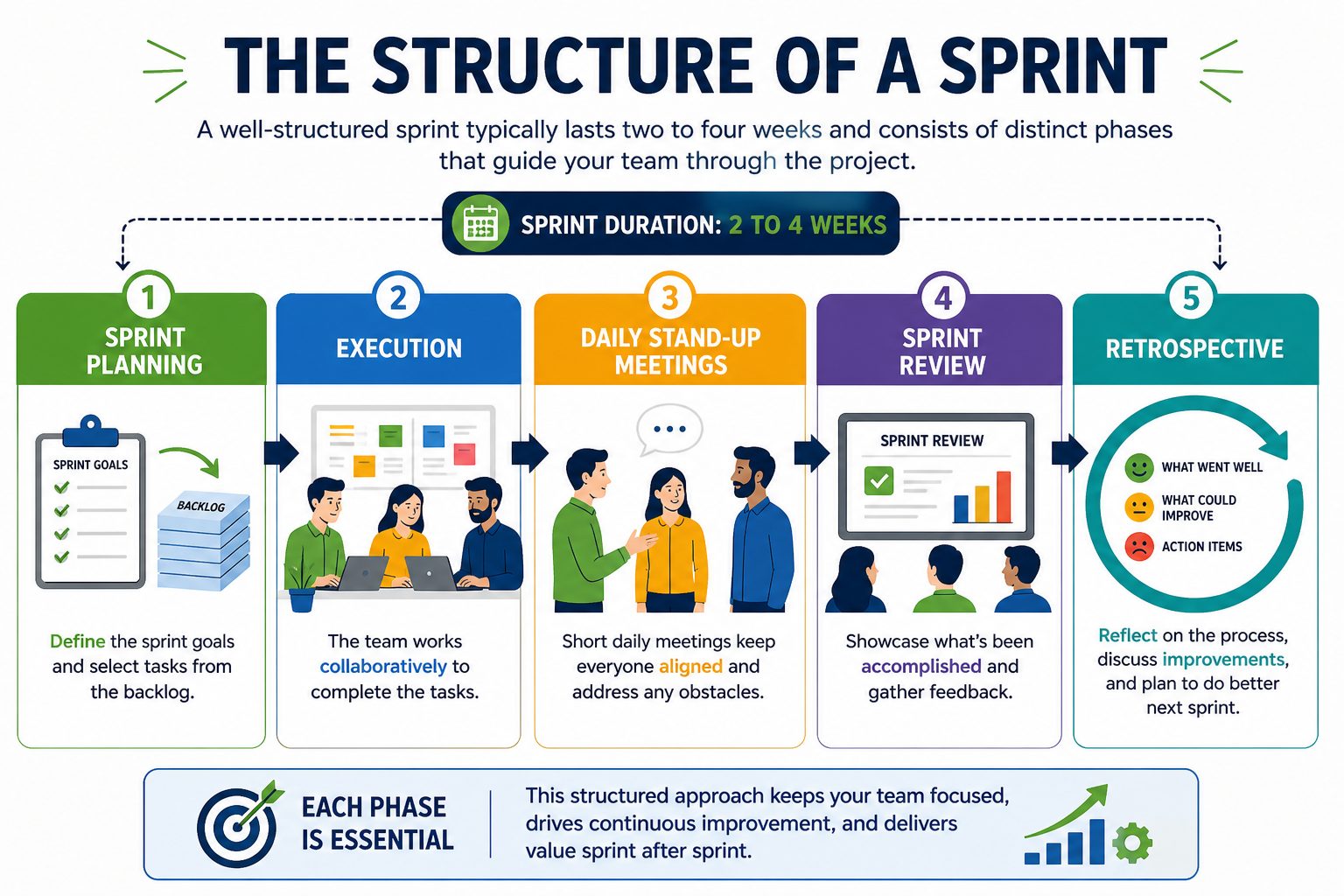
A well-structured sprint typically lasts two to four weeks and consists of distinct phases that guide your team through the project.
You start with sprint planning, where you define the goals and select tasks from the backlog. Next, you move into the execution phase, where your team works collaboratively to complete the tasks.
Daily stand-up meetings help keep everyone aligned and address any obstacles. After execution, you’ll conduct a sprint review to showcase what’s been accomplished and gather feedback.
Finally, you hold a retrospective to reflect on the process, discussing what went well and what could improve. Each phase is essential, ensuring your team maintains focus and continuously evolves throughout the project.
Roles and Responsibilities in Sprint Teams
In any effective sprint team, understanding roles and responsibilities is crucial for success. As a team member, you’ll likely find yourself in specific roles that contribute to the sprint’s objectives.
The Scrum Master helps facilitate the process, ensuring everyone adheres to the framework and removes obstacles. The Product Owner prioritizes the backlog, clarifying requirements and making key decisions.
Your role as a developer involves delivering high-quality work, collaborating with others to solve problems and achieve sprint goals. Communication is vital; you should share progress and challenges openly.
Benefits of Implementing Sprint Project Management
When teams adopt sprint project management, they often experience increased efficiency and focus.
You’ll find that breaking projects into manageable sprints allows for clearer goals and quicker feedback. This iterative approach helps you adapt to changes rapidly, ensuring you’re always aligned with customer needs.
Communication improves, too, as daily stand-up meetings foster collaboration among team members. You’ll also notice enhanced accountability, since everyone knows their responsibilities within each sprint.
Plus, by regularly reviewing progress, you can celebrate small wins that boost morale. Implementing sprint project management helps you streamline processes, prioritize tasks effectively, and ultimately deliver higher-quality results faster.
With these benefits in play, your team can thrive and innovate in a dynamic work environment.

Common Challenges and Solutions
While sprint project management offers numerous benefits, it also presents common challenges that teams need to navigate. One major issue is scope creep, where additional tasks sneak in, disrupting your sprint. To combat this, establish a clear definition of done and stick to it.
Communication gaps can also arise, leading to misunderstandings. Regular check-ins can help keep everyone aligned.
Another challenge is maintaining team motivation, especially during tough sprints. Celebrate small wins to boost morale and keep energy levels high.
Lastly, adapting to changing priorities can be tough. Develop a flexible mindset, and prioritize tasks effectively to stay on track.
Tools and Techniques for Effective Sprint Management
Effective sprint management relies on a variety of tools and techniques that streamline processes and enhance team collaboration.
Start by using project management software like Jira or trello to track tasks and visualize progress. These platforms allow you to assign responsibilities and set deadlines clearly.
Daily stand-ups are another effective technique; they keep everyone aligned and focused on priorities. Incorporating burndown charts helps you monitor work completed against your sprint goals, ensuring you stay on track.
Utilizing retrospectives at the end of each sprint lets your team reflect on successes and areas for improvement.
Lastly, encourage open communication through team chat tools like slack, fostering an environment where everyone feels comfortable sharing ideas and feedback.
Best Practices for Successful Sprint Implementation
Successful sprint implementation hinges on adopting best practices that align with your team’s goals and workflow. First, clearly define your sprint objectives and ensure everyone understands them.
Next, prioritize tasks effectively; use techniques like MoSCoW or the Eisenhower Matrix to guide decisions. Regular stand-up meetings keep communication open and address any blockers promptly.
Encourage team collaboration and foster a culture of feedback to improve processes continuously. Additionally, always review sprint outcomes through retrospectives, identifying areas for improvement.
Finally, maintain flexibility; be prepared to adapt your approach based on what works best for your team. By integrating these practices, you’ll enhance your sprint’s effectiveness and drive your project toward success.
Conclusion
Incorporating sprint project management into your workflow can transform how your team approaches projects. By embracing Agile principles, you’ll foster collaboration, adaptability, and continuous improvement. Remember to define your sprint structure clearly, assign roles effectively, and leverage the right tools. While challenges may arise, staying focused on your goals and employing best practices will help you overcome them. Ultimately, this approach not only enhances project efficiency but also boosts team morale and engagement.

Frequently Asked Questions
What is sprint project management?
Sprint project management is an Agile approach that breaks work into short, time-boxed cycles called sprints, typically lasting one to four weeks. During each sprint, teams focus on completing a defined set of tasks or goals, enabling faster delivery and continuous improvement.
How does sprint project management differ from traditional project management?
Unlike traditional methods that follow a linear sequence of phases, sprint project management is iterative and flexible. Teams deliver work in smaller increments, adapt quickly to changes, and continuously refine processes based on feedback instead of waiting until the end of a project.
What are the key phases of a sprint cycle?
A typical sprint cycle includes sprint planning, daily stand-up meetings, sprint review, and sprint retrospective. These phases help teams set goals, track progress, evaluate results, and identify improvements for future sprints.
Who should take a sprint project management course?
Sprint project management courses are ideal for project managers, team leaders, Agile practitioners, and professionals involved in product development or process improvement. They are also beneficial for anyone looking to improve collaboration, efficiency, and adaptability in fast-paced environments.
What are the benefits of using sprint project management?
Sprint project management improves productivity by breaking large projects into manageable tasks, encourages continuous feedback, and allows teams to adapt quickly to changes. It also promotes collaboration, faster delivery of results, and better alignment with business goals.