


Six Sigma Green Belt certification requires a basic understanding of statistics and quality management, along with access to a project for applying DMAIC methodology and statistical tools. Completing training that covers process improvement, collaboration, and data-driven problem-solving is essential for certification success.
If you’re considering pursuing a six sigma Green Belt certification, you’ll need to understand the key requirements that set you up for success. This includes grasping the fundamental principles of quality management and having a background in statistics. But that’s just the beginning; there are other essential components to consider. What else do you need to know to effectively navigate this certification journey?
Understanding Six Sigma Methodology
Six Sigma is a powerful methodology designed to improve processes and reduce defects. You’ll find that it focuses on data-driven decision-making and emphasizes quality control.
By using statistical tools, you can identify variations in processes and eliminate root causes of defects. Understanding the DMAIC framework—Define, Measure, Analyze, Improve, Control—is essential for effective implementation. This structured approach helps you systematically tackle problems and enhance performance.
As you adopt Six Sigma, you’ll learn to view processes through a critical lens, fostering a culture of continuous improvement. Collaboration with cross-functional teams will enhance your understanding, allowing you to apply the principles effectively. Ultimately, mastering Six Sigma methodology equips you to drive significant improvements in your organization’s processes and outcomes. Additionally, continuous improvement is a vital philosophy that supports long-term success and adaptability in your organization.

Prerequisites for Six Sigma Green Belt Certification
Before you pursue Six Sigma Green Belt certification, it’s important to understand the prerequisites that can help you succeed in your journey.
First, you should have a basic understanding of statistics and quality management principles. Familiarity with process improvement methodologies will also serve you well.
While formal education isn’t always necessary, a high school diploma or equivalent is often recommended. Additionally, experience in a related field, such as manufacturing or project management, can enhance your understanding of Six Sigma concepts.
It’s also beneficial to have access to a project or process where you can apply your skills. Lastly, a willingness to collaborate and communicate with team members is crucial for success in your Six Sigma endeavors. Furthermore, a solid grasp of basic principles of Six Sigma can provide a strong foundation for your learning and application of the concepts.
Essential Training Components
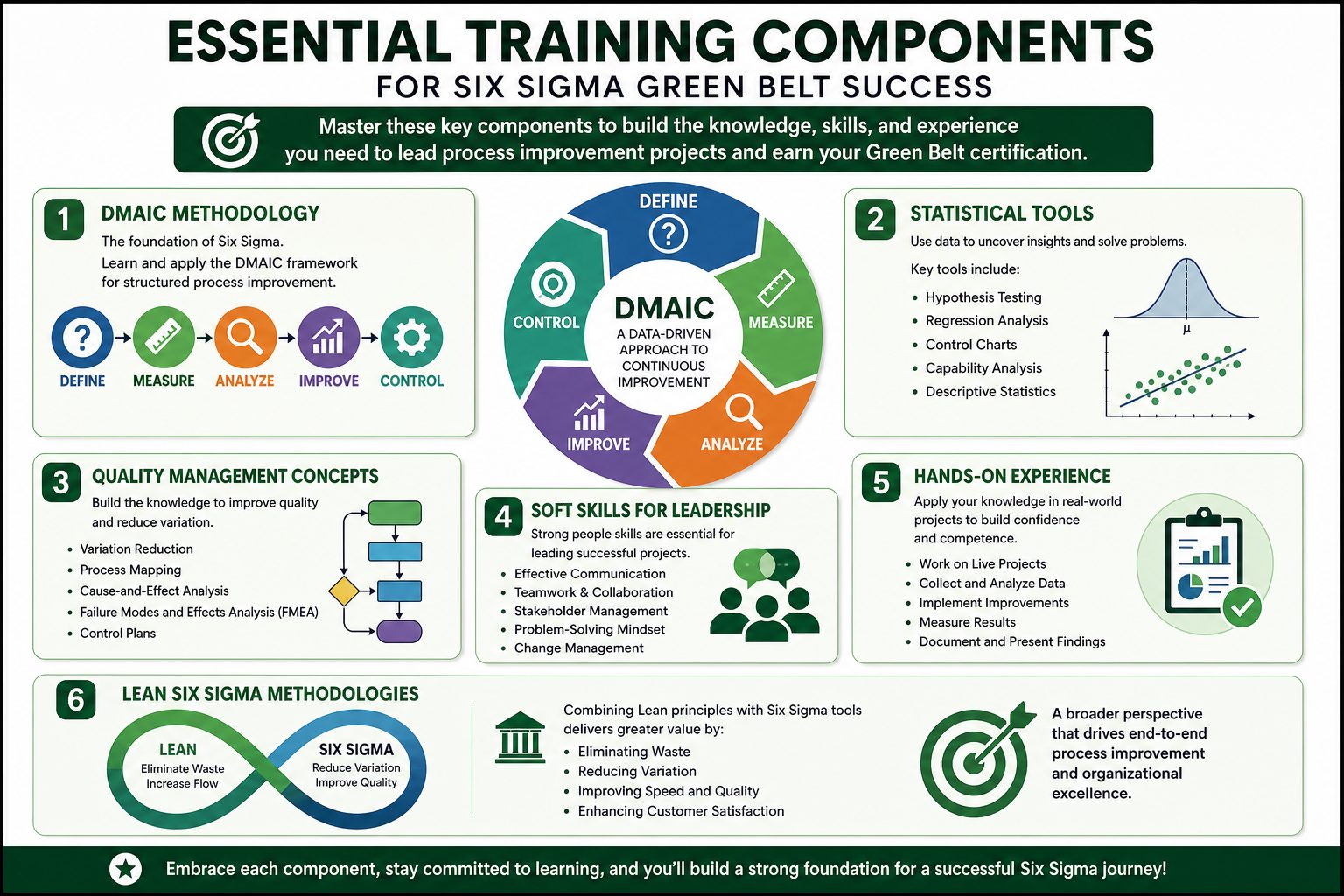
To successfully navigate your Six Sigma Green Belt training, you’ll need to focus on several essential components that lay the groundwork for your certification.
First, familiarize yourself with the DMAIC methodology—Define, Measure, Analyze, Improve, and Control—as it’s crucial for process improvement. Understanding statistical tools, like hypothesis testing and regression analysis, will also enhance your problem-solving skills.
You’ll want to dive into quality management concepts, including variation reduction and process mapping. Additionally, developing soft skills, such as effective communication and teamwork, is vital for leading projects.
Finally, hands-on experience in real-world applications will solidify your knowledge and prepare you for your certification exam. Embrace each component, and you’ll build a strong foundation for your Six Sigma journey. Furthermore, having knowledge of Lean Six Sigma methodologies will provide you with a broader perspective on enhancing organizational processes.
Recommended Training Providers
Finding the right training provider can make a significant difference in your Six Sigma Green Belt journey.
Look for organizations with a solid reputation, experienced instructors, and a curriculum that aligns with industry standards. Many professionals recommend accredited institutions like ASQ, IASSC, and various universities that offer tailored programs.
Online platforms like Coursera and Udemy also provide accessible options, allowing you to learn at your own pace. Be sure to check reviews and testimonials to gauge the effectiveness of their training.
Additionally, consider whether the provider offers hands-on projects or case studies, as practical experience is crucial for mastering Six Sigma principles. Having a strong understanding of Six Sigma principles can greatly enhance your learning experience.
Choosing the right provider can boost your confidence and skills, paving the way for your success.
Exam Format and Structure
As you prepare for the Six Sigma Green Belt exam, understanding its format and structure is essential for your success.
The exam typically consists of 100 multiple-choice questions, which you need to complete within three hours. You’ll encounter questions covering various topics, including DMAIC phases, statistical tools, and project management principles.
The passing score usually hovers around 70%, so it’s crucial to manage your time wisely during the test. Each question is designed to test your knowledge and application of Six Sigma concepts, so be ready to think critically. Familiarizing yourself with the format will help reduce anxiety and boost your confidence. Additionally, grasping the DMAIC methodology will enhance your ability to tackle exam questions effectively. Remember, knowing what to expect is half the battle in achieving a successful outcome.
Study Resources and Preparation Tips
With a solid understanding of the exam format, it’s time to focus on effective study resources and preparation tips to maximize your chances of success.
Start by selecting a reputable study guide specifically tailored for the Six Sigma Green Belt exam. Online courses and webinars can also provide valuable insights and interactive learning experiences.
Join study groups or forums to share knowledge, ask questions, and gain different perspectives. Practice with sample questions to familiarize yourself with the exam’s style and timing.
Create a study schedule that allows for consistent review and breaks, ensuring you retain information better.
Lastly, don’t hesitate to reach out to instructors or experienced candidates for mentorship and guidance as you prepare for the exam. Consider enrolling in EBI Six Sigma Green Belt Training to gain structured learning and support from experienced instructors as part of your preparation.
Maintaining Your Certification
Maintaining your Six Sigma Green Belt certification is essential for staying current in the field and demonstrating your commitment to continuous improvement.
To keep your certification active, you’ll need to earn a specific number of Continuing Education Units (CEUs) within a designated timeframe—usually two to three years. Participating in workshops, seminars, or relevant courses can help you accumulate these credits.
Additionally, you should engage in practical projects that apply Six Sigma principles, showcasing your ongoing skills. Networking with other professionals in the field can also provide valuable insights and updates on best practices.
Regularly reviewing the latest Six Sigma methodologies will ensure your knowledge remains fresh and relevant, ultimately enhancing your contributions to your organization and the industry as a whole. Furthermore, continuous improvement is a core principle of Six Sigma that underscores the importance of regularly refining your skills and methodologies.
Career Benefits of Six Sigma Green Belt Certification
Staying current with your Six Sigma Green Belt certification not only reinforces your skills but also opens up a range of career opportunities.
With this credential, you enhance your marketability and stand out in a competitive job market. Employers value certified professionals for their ability to improve processes and reduce costs, making you a desirable candidate for roles in quality management, project management, and operations.
Additionally, Six Sigma Green Belt certification can lead to higher salaries and promotions, as companies recognize the benefits of your training in driving efficiency. You’ll also gain access to a network of professionals, fostering connections that can lead to new job opportunities and collaborations.
Moreover, possessing a Six Sigma Yellow Belt certification provides a solid foundation for further professional development in quality management.
Embrace the potential your certification brings to your career advancement.
Conclusion
In conclusion, pursuing your Six Sigma Green Belt certification can significantly enhance your career opportunities and skills in process improvement. By understanding the methodology, completing the necessary training, and gaining hands-on experience, you’ll be well-prepared to tackle real-world projects. Remember to stay updated on your certification requirements and leverage available resources to maximize your learning. Embrace this journey, and you’ll not only boost your resume but also become a valuable asset in any organization.

Frequently Asked Questions
What are the basic requirements for Six Sigma Green Belt certification?
Most Six Sigma Green Belt programs require a solid understanding of the DMAIC methodology (Define, Measure, Analyze, Improve, Control), along with knowledge of statistical tools and process improvement techniques. Training programs typically cover these areas and prepare candidates for certification exams or practical application.
Is prior experience required before enrolling in a Green Belt program?
In many cases, prior Six Sigma certification (such as Yellow Belt) is not mandatory. However, having some background in process improvement, quality management, or operations can help learners grasp concepts more effectively and succeed in training.
What skills are needed to complete Green Belt training successfully?
Key skills include data analysis, problem-solving, process mapping, and root cause analysis. Additionally, soft skills like communication, teamwork, and leadership are important for managing improvement projects and collaborating with teams.
Do Six Sigma Green Belt programs require a project for certification?
Some training providers require candidates to complete a real-world improvement project to demonstrate practical application of DMAIC concepts, while others may focus on passing an exam. Project requirements depend on the certification body or training provider.
Who should pursue a Six Sigma Green Belt certification?
Green Belt certification is ideal for professionals involved in process improvement, quality management, or operations. It is especially valuable for team leaders, project managers, and individuals aiming to lead improvement initiatives and drive efficiency within organizations.