
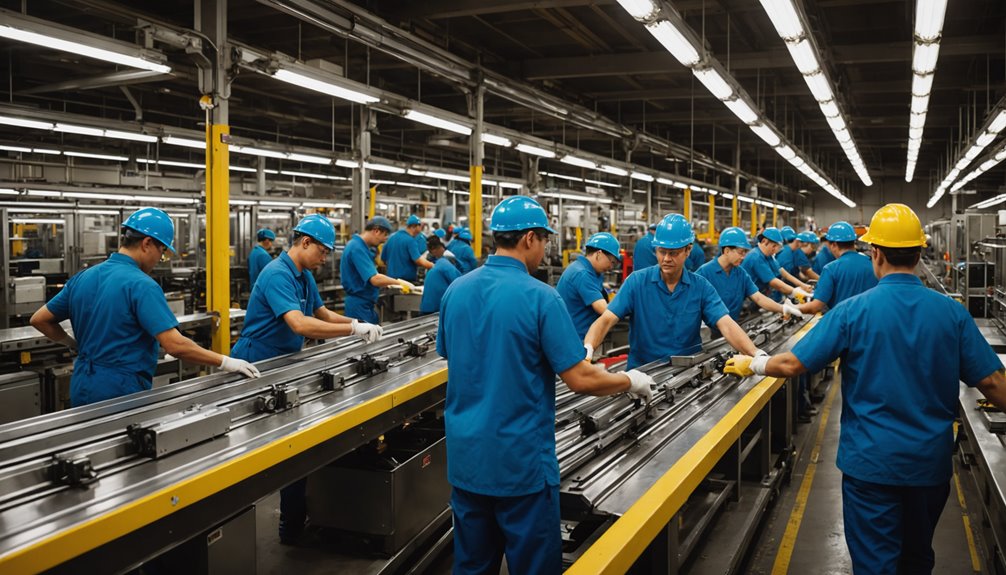
When you think about production strategies, the pull system stands out for its focus on actual customer demand. It minimizes waste and keeps inventory lean, but implementing it isn't always straightforward. You'll find that understanding its principles and tools is essential for success. Are you ready to explore how this approach could transform your operations and align them more closely with customer needs?
Understanding the Pull System Concept
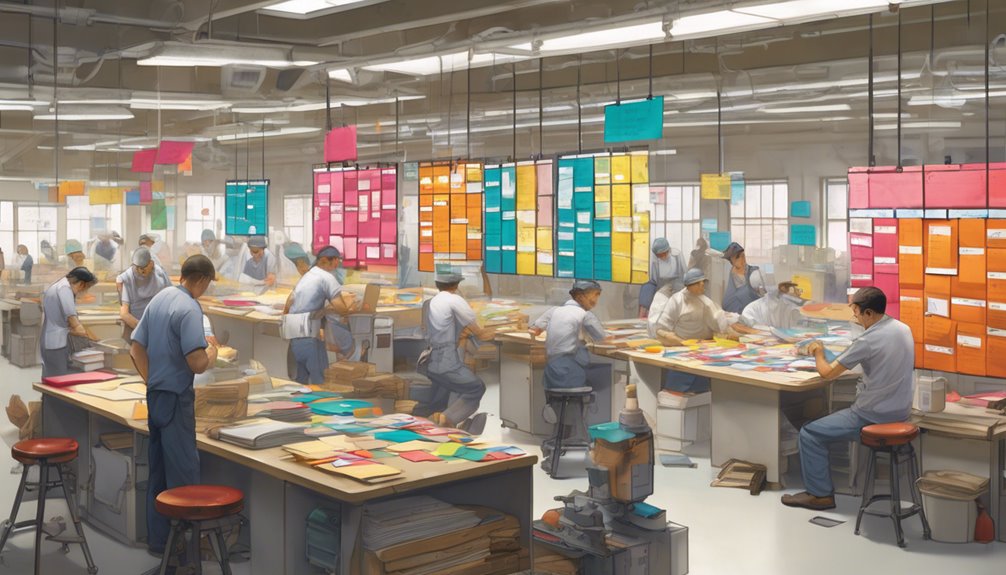
When you think about efficient production, it's essential to understand the pull system concept. This approach emphasizes producing items only when there's demand, rather than pushing goods through the system based on forecasts.
By aligning production with actual customer needs, you minimize waste and inventory costs. You're not just reacting to demand; you're creating a more responsive and flexible workflow.
In a pull system, each step in the process only initiates work when it receives a signal from the next step or the customer. This reduces overproduction and helps maintain a steady flow, ensuring you deliver high-quality products on time.
Ultimately, grasping this concept can transform how you manage resources and meet customer expectations effectively.
Key Principles of Pull Systems
How do pull systems maintain efficiency and responsiveness? They focus on customer demand, ensuring that production aligns with actual needs.
By using a just-in-time approach, you minimize waste and reduce inventory costs. You'll find that pull systems rely on signals, like Kanban cards, to trigger production only when there's a demand, preventing overproduction.
This principle encourages collaboration among teams, promoting transparency and quick responses to changes. Additionally, you'll notice that standardization of processes helps maintain quality while reducing variability.
Emphasizing continuous improvement, you're encouraged to regularly assess and adjust workflows, optimizing efficiency.
Ultimately, these key principles create a streamlined process that adapts to customer needs while maintaining high-quality outcomes.
Benefits of Implementing a Pull System

Implementing a pull system offers numerous benefits that can significantly enhance your operations. First, it aligns production with actual customer demand, reducing excess inventory and minimizing waste. This leads to lower holding costs, meaning you spend less on storage and resources.
You'll also notice improved flexibility, allowing you to adapt quickly to changes in demand without overproducing. Additionally, a pull system fosters better communication among teams, as they must coordinate to ensure smooth workflows.
You'll likely see increased employee engagement, too, as workers take more ownership of their tasks. Overall, adopting a pull system streamlines processes, boosts efficiency, and helps you respond promptly to customer needs, ultimately leading to higher satisfaction and loyalty.
Differences Between Pull and Push Systems
While both pull and push systems are common production strategies, they operate on fundamentally different principles.
In a push system, you forecast demand and produce items based on those estimates, often leading to overproduction and excess inventory. You push products through the supply chain, assuming they'll sell eventually.
On the other hand, a pull system reacts to actual customer demand, producing only what's needed when it's needed. This minimizes waste and keeps inventory levels low. You respond to customer orders, ensuring that production aligns closely with real-time needs.
Understanding these differences helps you choose the right approach for your business, optimizing efficiency and responsiveness to market changes. By doing so, you improve your overall production strategy.
Tools and Techniques for Pull Systems

To effectively manage a pull system, you'll want to utilize various tools and techniques that enhance responsiveness and efficiency.
Kanban boards are invaluable; they visualize workflows, making it easier to track progress and manage tasks. You might also consider using Just-In-Time (JIT) inventory practices to minimize excess stock and ensure materials arrive only as needed.
Additionally, applying value stream mapping helps identify waste and streamline processes. Cross-training employees can further improve flexibility, allowing team members to adapt to fluctuating demands.
Lastly, implementing automated alerts for inventory levels can keep your system running smoothly. By incorporating these tools and techniques, you'll create a more responsive pull system that meets customer needs effectively. Furthermore, aligning these practices with continuous improvement initiatives can enhance overall operational efficiency.
Steps to Implement a Pull System
Establishing a pull system requires careful planning and execution to ensure it aligns with your operational goals. Begin by assessing your current processes, identifying bottlenecks, and understanding customer demand.
Next, select appropriate tools and techniques, such as Kanban boards, to visualize workflow and manage inventory levels effectively. Train your team on the principles of the pull system, emphasizing the importance of collaboration and communication.
Implement small changes gradually, allowing time for adjustments and feedback. Monitor performance metrics to measure the impact of your new system and make necessary refinements.
Lastly, maintain a continuous improvement mindset, encouraging team members to suggest enhancements. This proactive approach will help you sustain an efficient pull system that meets evolving demands.
Challenges in Adopting a Pull System

Implementing a pull system can significantly enhance efficiency, but it's not without its hurdles. One major challenge is resistance to change. Employees may be accustomed to traditional methods, making it tough for you to motivate them to adopt new practices.
Additionally, you might face issues with supplier alignment; if suppliers aren't on board, your pull system can falter. Another hurdle is understanding demand fluctuations. If you misjudge these, you could end up with stockouts or excess inventory.
Training your team effectively is crucial, yet time-consuming. Lastly, you'll need to invest in technology to track inventory and streamline processes, which can strain budgets. Addressing these challenges head-on is key to successfully transitioning to a pull system.
Case Studies: Successful Pull System Implementation
While many organizations face challenges when adopting a pull system, several have successfully navigated these obstacles and reaped significant benefits.
For example, a leading automotive manufacturer streamlined its production by implementing a pull system that reduced lead times and minimized excess inventory. They engaged employees in the process, fostering a culture of continuous improvement.
Another case involved a consumer goods company that utilized real-time data to align production with customer demand, significantly enhancing responsiveness. By training staff and integrating technology, they achieved a seamless flow of materials.
These examples show that with commitment and the right strategies, you can transform your operations, cut costs, and ultimately satisfy your customers more effectively.
Measuring Success in Pull Systems
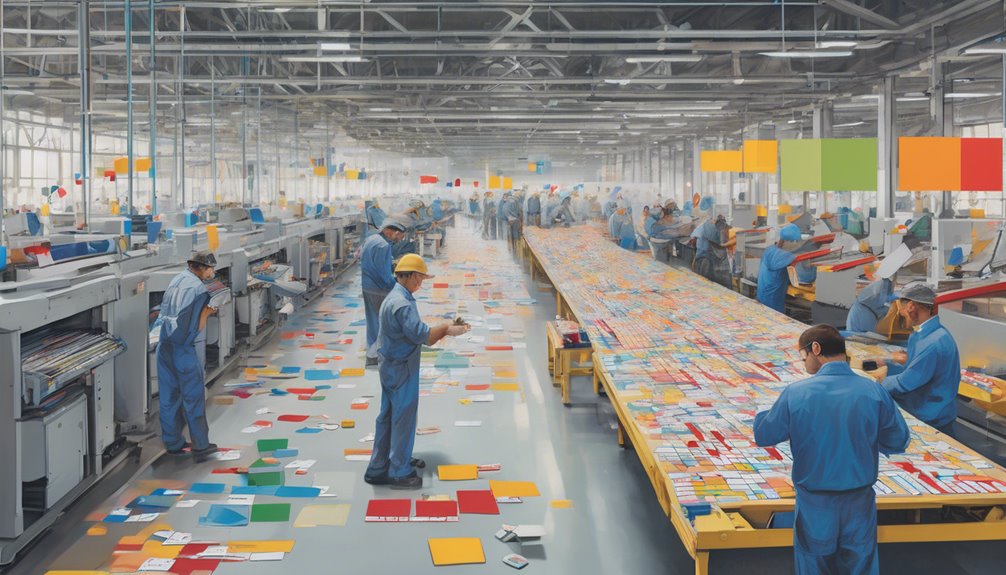
To effectively measure success in pull systems, organizations should focus on key performance indicators (KPIs) that reflect operational efficiency and customer satisfaction.
Start by tracking lead times, as shorter lead times indicate a responsive system. Monitor inventory levels to ensure they align with customer demand, avoiding overstock and stockouts.
You should also evaluate cycle times, which can help identify bottlenecks and areas for improvement. Customer feedback is crucial, so measure satisfaction through surveys or Net Promoter Scores.
Additionally, analyze the rate of on-time deliveries to gauge reliability. By consistently reviewing these KPIs, you can make informed decisions, enhance processes, and ultimately achieve a more effective pull system that meets both organizational goals and customer expectations.
Future Trends in Pull Systems and Lean Manufacturing
Success in pull systems relies on continuous improvement and adaptation to changing market conditions.
As you look ahead, expect to see increased integration of technology, like IoT and AI, enhancing your ability to predict demand more accurately. This tech-driven approach will streamline your processes and reduce waste, pushing you toward even greater efficiency.
Additionally, sustainability will play a crucial role; you'll focus on reducing your carbon footprint while maintaining productivity.
Collaboration across supply chains will also deepen, fostering transparency and responsiveness.
Finally, employee engagement will be key; empowering your team to contribute ideas will drive innovation.
Embracing these trends won't only improve your pull systems but also position you competitively in an ever-evolving marketplace.
Conclusion
In conclusion, embracing a pull system can transform your production process by aligning it closely with actual customer demand. By minimizing waste and excess inventory, you'll enhance efficiency and foster collaboration among your teams. While challenges may arise during implementation, the benefits—like improved quality and responsiveness—are well worth the effort. As you look to the future, staying ahead of trends in lean manufacturing will further solidify your success in this dynamic environment.