

Have you noticed how cluttered communication can slow down operations? Lean Visual Management offers a streamlined approach to enhance clarity and efficiency. By using visual tools, you can quickly identify and address issues without sifting through endless emails or reports. This method not only empowers your team but also encourages a culture of improvement. But how do you start implementing it effectively? Let's explore the key principles and tools that can transform your processes.
Understanding Lean Visual Management

When you embrace Lean Visual Management, you're not just organizing your workspace; you're enhancing communication and efficiency. This approach focuses on making information visible and easily accessible to everyone involved in the process.
By using visual tools like charts, color-coded labels, and dashboards, you create a shared understanding of workflows and objectives. You'll find that issues become more apparent, allowing for quicker problem-solving. Instead of sifting through endless emails or reports, your team can identify bottlenecks and areas for improvement at a glance.
Lean Visual Management also fosters collaboration, as everyone stays informed and aligned. Ultimately, it's about streamlining processes, reducing waste, and driving a culture of continuous improvement throughout your organization. Additionally, leveraging Lean principles can significantly enhance operational efficiency and the overall effectiveness of visual management practices.
Key Principles of Lean Visual Management
Lean Visual Management hinges on several key principles that drive its effectiveness. First, you should focus on clarity. Visuals need to be straightforward, helping everyone understand processes at a glance.
Next, consistency is crucial; using standardized visuals fosters familiarity and reduces confusion. Additionally, you'll want to prioritize accessibility. Place visuals where they're easily seen to ensure they support daily operations.
Another principle is real-time information; keep data current so decisions can be made swiftly. Lastly, engage the team; involving everyone in creating and maintaining visuals boosts ownership and accountability.
Benefits of Implementing Lean Visual Management

Implementing Lean Visual Management offers numerous benefits that can significantly enhance your organization's efficiency and communication.
By making information more accessible and visible, you'll empower your team to identify issues quickly and take corrective action. This transparency fosters a culture of accountability, where everyone understands their role in achieving goals.
Moreover, it streamlines decision-making processes, as clear visuals minimize misunderstandings. You'll also see improvements in productivity, as employees can focus on high-priority tasks instead of searching for information.
Additionally, Lean Visual Management encourages collaboration, allowing teams to engage in discussions based on real-time data.
Essential Tools and Techniques
To effectively implement Visual Management, you'll need a set of essential tools and techniques that facilitate clear communication and streamline processes.
Start with visual boards, which display key metrics, tasks, and progress, keeping everyone informed at a glance. Use color coding to signify status—red for issues, green for on track.
Incorporate flowcharts to illustrate processes, helping teams identify bottlenecks quickly. Checklists ensure consistency in tasks, while standardized work templates guide employees through their responsibilities.
Don't forget about dashboards; they aggregate data visually, allowing for real-time performance monitoring.
Lastly, consider using sticky notes for brainstorming and agile project management, making it easy to adapt as necessary.
These tools create a culture of transparency and collaboration, driving continuous improvement.
Steps to Implement Lean Visual Management

Three key steps will guide you in successfully adopting Lean Visual Management in your organization.
First, assess your current processes to identify areas needing improvement. Engage your team to gather insights about what visual tools could enhance communication and efficiency.
Next, choose appropriate visual management tools, like dashboards, charts, or color coding, to display critical information. Make sure these tools are easily accessible and user-friendly.
Finally, implement and regularly review your visual management system. Gather feedback from your team to understand what's working and what isn't. Adjust your approach as needed to ensure continuous improvement.
Overcoming Challenges in Visual Management
While Lean Visual Management offers significant benefits, organizations often face challenges during its implementation. You might struggle with resistance to change, as employees can be accustomed to traditional methods. To overcome this, engage your team early in the process, explaining the benefits and encouraging feedback.
Another common hurdle is lack of training; without proper education, staff may not fully grasp visual tools. Providing hands-on training can help bridge this gap.
Additionally, ensure that visual management systems are tailored to your specific needs—generic solutions often fall short.
Finally, keep the momentum going by regularly reviewing and updating your visual tools, making adjustments as necessary. By addressing these challenges head-on, you can create a more effective visual management environment.
Case Studies and Success Stories
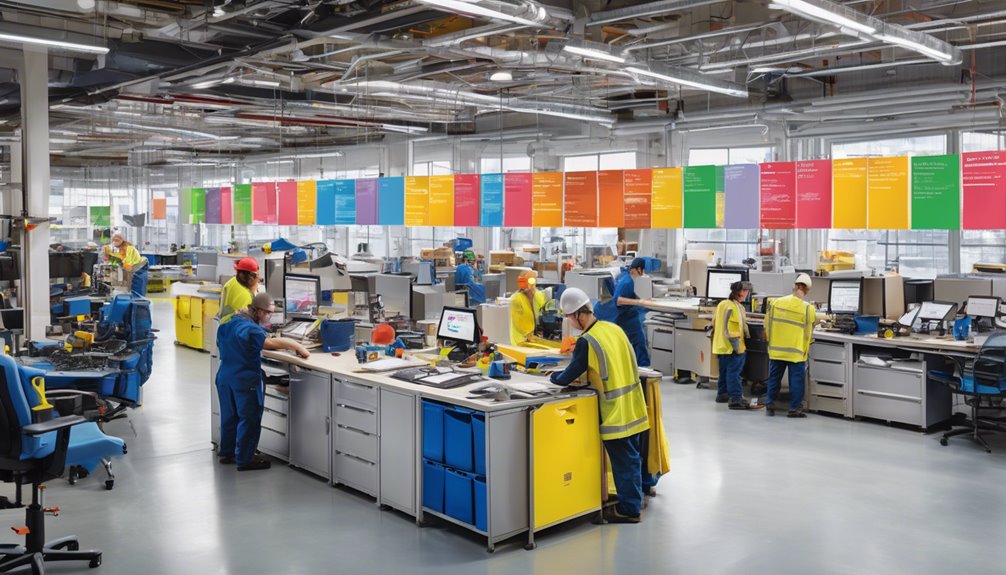
Numerous organizations have successfully adopted Lean Visual Management, transforming their operations and boosting efficiency.
For instance, a manufacturing company implemented visual boards to track production metrics. You'd see immediate improvements in team communication and accountability.
Another case involved a healthcare facility using color-coded charts to streamline patient flow, reducing wait times significantly.
You can also take inspiration from a retail company that utilized visual cues to enhance inventory management, leading to a noticeable drop in stockouts.
By studying these success stories, you'll discover how visual management fosters a culture of continuous improvement.
Embracing these techniques could be the key to unlocking your organization's potential and driving sustainable growth.
Conclusion
Incorporating Lean Visual Management can transform your team's operations and communication. By embracing visual tools and fostering a culture of continuous improvement, you'll empower your employees and enhance collaboration. As you implement these strategies, remember to stay adaptable and address any challenges that arise. The benefits—improved efficiency, accountability, and productivity—will be well worth the effort. Get started today, and watch your organization thrive as you leverage the power of visual management!