

When it comes to improving efficiency and quality in your organization, Lean Manufacturing and Six Sigma each offer distinct approaches. You might find Lean focuses on waste reduction and speed, while Six Sigma targets defect reduction through data analysis. But how do these methodologies truly differ, and which one suits your needs best? Understanding their nuances could be the key to unlocking higher performance and customer satisfaction.
Overview of Lean Manufacturing

Lean manufacturing is all about maximizing value while minimizing waste. You focus on enhancing efficiency by streamlining processes and eliminating non-value-added activities.
This approach encourages you to identify areas where resources are wasted, whether it's time, materials, or labor. By employing techniques like value stream mapping, you can visualize workflows, making it easier to spot bottlenecks and inefficiencies.
You'll also engage your team, promoting a culture of continuous improvement. Empowering employees to contribute ideas can lead to innovative solutions and a more agile production environment. Ultimately, lean manufacturing isn't just about cutting costs; it's about creating a more responsive and effective organization that delivers higher quality products to your customers while maximizing resource utilization. Additionally, integrating Lean principles with Six Sigma can further enhance operational efficiency and quality.
Overview of Six Sigma
Six Sigma is a data-driven methodology aimed at improving processes by reducing defects and variability. It focuses on understanding customer needs and delivering high-quality products and services.
You'll use statistical tools and techniques to identify the root causes of problems and eliminate them. By analyzing data, you can pinpoint areas for improvement within your organization.
The approach involves a structured framework, often represented by the DMAIC process: Define, Measure, Analyze, Improve, and Control.
As you implement Six Sigma, you'll engage cross-functional teams, ensuring everyone is aligned towards common goals. This methodology relies heavily on statistical analysis to enable data-driven decision-making.
Ultimately, this methodology empowers you to create more efficient processes, enhance customer satisfaction, and drive business growth while minimizing waste.
Key Differences Between Lean and Six Sigma
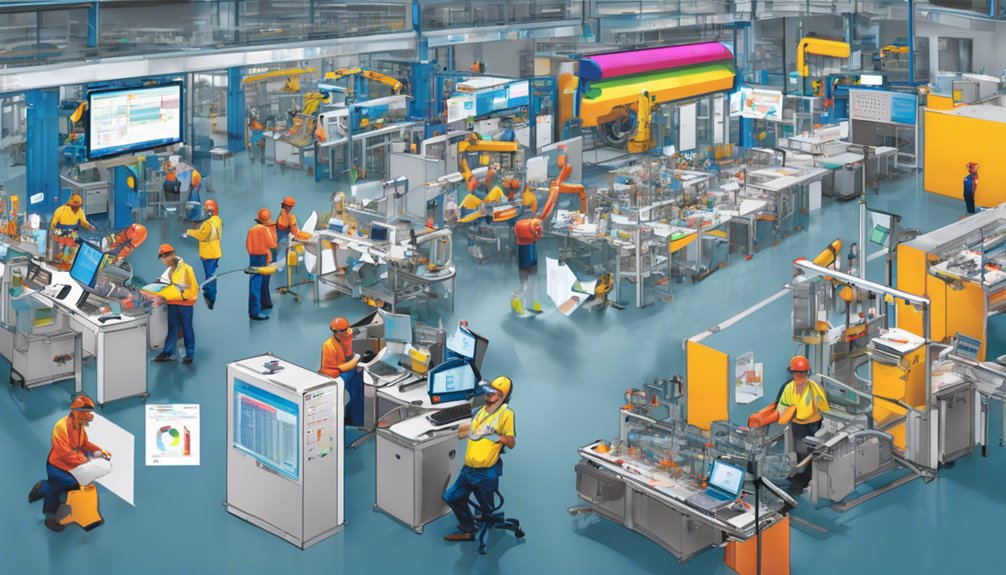
While both methodologies aim to enhance efficiency and quality, they differ significantly in their approach and focus.
Lean manufacturing concentrates on eliminating waste and streamlining processes. It emphasizes speed and flow, helping you deliver value to your customers faster.
On the other hand, Six Sigma zeroes in on reducing defects and improving quality through data-driven decision-making. It uses statistical tools to identify and eliminate variations that cause errors.
While Lean encourages a culture of continuous improvement, Six Sigma promotes a structured problem-solving approach.
In essence, if you're looking to enhance process flow, Lean is your go-to. But if you want to minimize errors and improve product quality, Six Sigma is the better choice.
Understanding these distinctions can guide your implementation strategy. Additionally, the integration of lean principles can further enhance overall efficiency and effectiveness in your processes.
Benefits of Lean Manufacturing
When you adopt lean manufacturing, you can unlock a range of benefits that significantly enhance your operations.
First, you'll streamline processes, reducing waste and increasing efficiency. This means your team can focus on value-added activities, leading to faster production times.
You'll also foster a culture of continuous improvement, empowering employees to identify and solve problems proactively. With reduced lead times, you can respond more swiftly to customer demands, boosting satisfaction.
Moreover, lean practices can lower operational costs, allowing for better resource allocation. You'll likely see improved product quality as well, since lean emphasizes consistency and standardization.
Ultimately, embracing lean manufacturing can create a more agile, responsive, and profitable business environment for you and your organization. Additionally, the integration of Lean Six Sigma can further enhance your operational efficiency and quality outcomes.
Benefits of Six Sigma
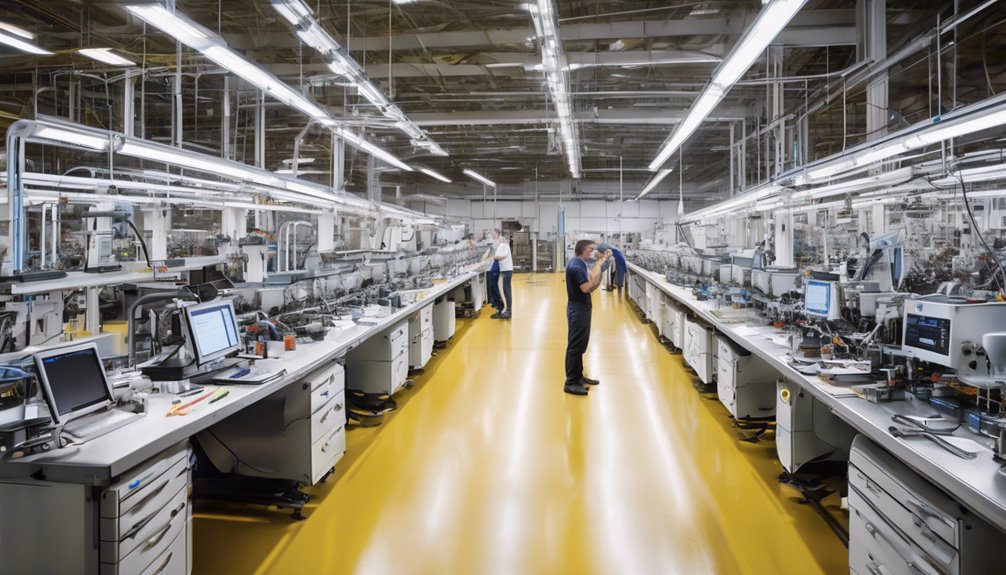
By implementing Six Sigma, you can significantly enhance your organization's quality and performance. This methodology focuses on reducing defects and minimizing variability in processes, leading to more consistent outcomes.
You'll notice improved customer satisfaction as you deliver higher-quality products and services. Moreover, Six Sigma promotes a data-driven approach, enabling you to make informed decisions that drive efficiency.
As you adopt Six Sigma, you'll foster a culture of continuous improvement within your team. This approach empowers employees, encourages collaboration, and enhances problem-solving skills.
Additionally, by streamlining processes, you'll likely see cost reductions, which can improve your bottom line. Overall, embracing Six Sigma can transform your operations and position your organization for long-term success. Furthermore, the integration of Lean Six Sigma helps in eliminating waste and enhancing efficiency, making your processes even more effective.
Integrating Lean and Six Sigma for Optimal Results
Integrating Lean and Six Sigma can lead to remarkable improvements in your organization's efficiency and quality. By combining Lean's focus on waste elimination with Six Sigma's emphasis on reducing variation, you create a powerful approach to process improvement.
Start by mapping your processes to identify areas where waste and defects overlap. Then, apply Lean tools to streamline workflows while utilizing Six Sigma techniques to analyze data and drive decisions.
This synergy not only enhances productivity but also boosts customer satisfaction by delivering higher quality products or services. Remember, both methodologies share a common goal: continuous improvement. Additionally, their successful implementation fosters a culture of continuous improvement within organizations, enhancing customer satisfaction and providing a competitive advantage.
Conclusion
In conclusion, Lean Manufacturing and Six Sigma each offer unique strengths that can significantly boost your organization's efficiency and quality. By understanding their key differences and benefits, you can choose the right approach for your needs. Moreover, integrating both methodologies can lead to even greater improvements, combining the strengths of waste reduction and defect elimination. Embracing these strategies not only enhances operational performance but also elevates customer satisfaction, setting your organization up for long-term success.