
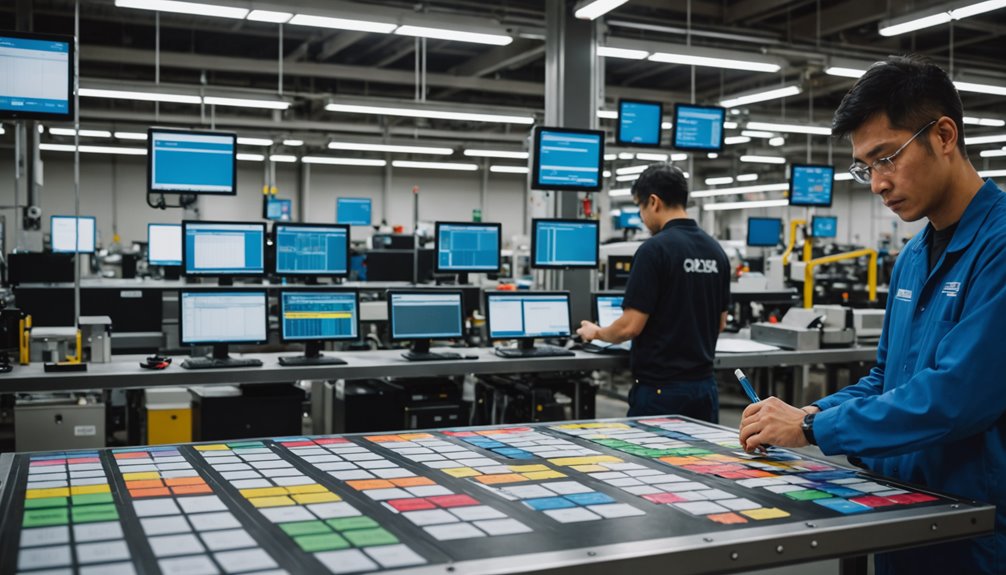
Lean Jidoka integrates lean principles with automation to enhance manufacturing quality by empowering teams to stop production and address defects immediately, thereby improving efficiency and fostering continuous improvement.
Lean Jidoka is a powerful approach that combines lean principles with automation to enhance quality in manufacturing. By allowing your team to stop production when they spot defects, you empower them to tackle problems head-on. This not only improves product quality but also boosts efficiency. But what are the real benefits of integrating this methodology into your organization? Let's explore the principles and steps to make it work for you.
Understanding the Concept of Lean Jidoka

Lean Jidoka, which combines the principles of lean manufacturing with the concept of automation, empowers you to enhance quality while minimizing waste.
This approach focuses on building quality into your processes, allowing you to identify and rectify issues immediately. By integrating automation, you can streamline operations and reduce the burden on your workforce, enabling them to concentrate on more complex tasks.
Lean Jidoka encourages you to create systems that not only detect defects but also halt production when problems arise. This proactive stance helps you maintain high standards and prevent defects from reaching customers.
Ultimately, embracing Lean Jidoka means fostering a culture of continuous improvement, where every team member actively participates in enhancing efficiency and quality throughout the organization. The integration of Lean principles with Six Sigma methodologies can further enhance your ability to improve processes and reduce variations.
The Principles of Jidoka in Lean Manufacturing
While many manufacturing processes prioritize efficiency, the principles of Jidoka emphasize the importance of quality and problem-solving.
At its core, Jidoka empowers you to stop production when a defect occurs, allowing you to address issues immediately rather than letting them compound. This principle encourages you to build quality into every step of the process, fostering a culture of continuous improvement.
Additionally, Jidoka promotes automation with a human touch, meaning machines are designed to assist you in identifying and resolving problems. By integrating these principles, you create a more resilient production environment where each worker feels responsible for quality.
Ultimately, Jidoka isn't just about fixing problems; it's about preventing them from happening in the first place.
Benefits of Implementing Lean Jidoka

Implementing Lean Jidoka brings significant advantages to your manufacturing processes, as it not only enhances quality but also fosters a culture of accountability among your team.
By empowering employees to stop production when issues arise, you encourage proactive problem-solving and prevent defects from escalating. This leads to higher quality products and reduced waste, ultimately boosting customer satisfaction.
Additionally, Lean Jidoka helps streamline operations by identifying bottlenecks and inefficiencies, allowing you to allocate resources more effectively.
You'll also notice improved employee engagement, as team members feel valued and responsible for the quality of their work.
Steps to Integrate Jidoka Into Your Organization
Building on the benefits of Lean Jidoka, integrating it into your organization requires a structured approach. Start by assessing your current processes to identify areas for improvement.
Engage your team by providing training on Jidoka principles, emphasizing the importance of quality and autonomy. Next, implement visual management tools to highlight workflow and bottlenecks.
Encourage employees to stop the process when issues arise, fostering a culture of problem-solving. Establish feedback loops to continuously refine your practices and empower your workforce to take ownership.
Finally, set clear metrics to measure success and celebrate achievements to motivate your team. By following these steps, you'll create a sustainable framework for Jidoka that enhances quality and efficiency across your organization.
Challenges in Adopting Lean Jidoka

Adopting Lean Jidoka can pose several challenges that organizations must navigate effectively.
First, you might face resistance from employees who are accustomed to traditional processes. Change can be daunting, so fostering a culture of openness is crucial.
Next, integrating automation with human oversight requires a balanced approach. You'll need to ensure your team is well-trained to utilize the new tools effectively.
Additionally, aligning Lean Jidoka principles with existing workflows can be complex. You may encounter difficulties in identifying the right metrics to measure success, making it essential to establish clear objectives.
Lastly, securing management support is vital, as their commitment drives the initiative. Overcoming these challenges is key to realizing the full potential of Lean Jidoka in your organization.
Case Studies: Successful Implementation of Lean Jidoka
While many organizations face hurdles when embracing Lean Jidoka, several have successfully navigated these challenges to reap significant benefits.
For instance, a manufacturing company implemented automated quality checks, allowing employees to focus on problem-solving rather than repetitive tasks. This not only increased efficiency but also reduced defects by 30%.
Another case involves a healthcare provider that integrated Lean Jidoka principles in its patient care process. By empowering staff to halt procedures when issues arose, they improved patient safety and satisfaction ratings dramatically.
Additionally, the combination of Lean and Six sigma methodologies can further enhance process optimization, enabling organizations to achieve even greater operational excellence.
You can draw inspiration from these examples to tailor Lean Jidoka to your organization's needs.
Conclusion
Incorporating Lean Jidoka into your organization can transform your production processes. By prioritizing quality and empowering your team to address issues immediately, you'll not only enhance efficiency but also foster a culture of continuous improvement. While challenges may arise during adoption, the benefits far outweigh them. Embrace Lean Jidoka, and watch your operations streamline, waste reduce, and employee engagement soar. It's time to take the leap and integrate this innovative approach for lasting success.