
It is more important than ever to strive for excellence and dependability in the dynamic world of international business. The ISO 9000 family of standards is at the center of this endeavor, serving as a lighthouse that directs businesses toward unmatched quality and efficiency. Developed by the Technical Committee of the International Organization for Standardization, this cornerstone of quality management is more than just a set of rules; it is a philosophy that transforms corporate culture itself.
ISO 9000 reveals the route to excellence in everything from the finer points of supply chain management to the complex processes involved in manufacturing. It changes how firms run by encompassing environmental management, compliance assessment, and auditing management systems. It promotes a culture of continuous improvement and overall quality management by rigorous gap analysis and adherence to legal and regulatory obligations.
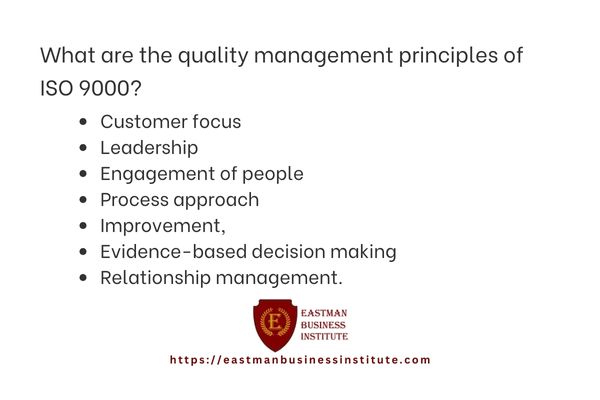
This essay dives deep into the realm of ISO 9000, examining how it affects job satisfaction, staff training, and the seven quality management principles that serve as the foundation for this revolutionary standard. When we peel back the layers, we see that ISO 9000 is about more than just passing the final inspection or creating quality manuals—it’s about ingraining a quality policy and system into an organization’s core values.
Come along on this journey to see how the ISO 9000 family of standards is changing business, improving customer happiness, and becoming the global standard for quality control.
More Things To Know About ISO 9000

Comprehending ISO 9000
Organizations can use the framework provided by ISO 9000 to apply and uphold the principles of successful quality management. Customer focus, leadership, employee involvement, process approach, and continuous development are some of these guiding concepts.
ISO 9000 is a set of requirements that enterprises must fulfill in order to become certified, not a certification in and of itself.
It’s crucial to remember that ISO 9000 certification is a statement of an organization’s dedication to quality management rather than a guarantee of the caliber of its goods or services.
The Objective and Significance of ISO 9000
International standards known as ISO 9000 offer recommendations for putting in place a successful quality management system.
Meeting and exceeding customer expectations and improving customer satisfaction are the goals of ISO 9000.
Businesses may create and maintain effective processes, enhance the quality of their products, and guarantee consistency in the provision of goods and services by adhering to the ISO 9000 standards.
Understanding client needs and continuously monitoring and improving processes to suit those needs are key components of ISO 9000.
Organizations can show their dedication to quality and obtain a competitive edge in the market by putting ISO 9000 into practice.
ISO 9000’s Past
The genesis and development of ISO 9000 can be tracked via its history. An international collection of standards called ISO 9000 is centered on quality management systems.
When businesses realized how important it was to satisfy customer demands and keep improving their procedures, the idea of quality management started to gain traction in the 1950s.
The International Organization for Standardization (ISO) created the ISO 9000 series in the 1980s as the demand for standardization increased. The series gave firms a framework for setting up and keeping up efficient quality management systems.
Obtaining an ISO certification has become a means for businesses to stand out from the competition and show their dedication to quality. In an ever-evolving business environment, ISO 9000 has developed over time to embrace new technology and best practices, ensuring that enterprises remain relevant.
Notable Modifications Across Versions
If you look into the history of ISO 9000, you’ll see that the standards have undergone significant modifications throughout time. The constant and dependable delivery of goods and services is the goal of these ISO quality standards.
The emphasis on continuous improvement is one of the major modifications made to ISO 9000. While the current versions prioritize the installation of quality management systems that support continuous improvement, the earlier versions placed more emphasis on adhering to management system standards.
This modification signifies a mentality shift, acknowledging that firms ought to aim for continuous enhancement instead of merely fulfilling the bare minimum. Businesses that adopt this strategy can improve customer happiness, boost productivity, and maintain their competitiveness in the rapidly changing global market.
ISO 9000 Component Elements
The three primary elements are:
- Basics and Terminology of ISO 9000:2015
- ISO 9001:2015 Standards – ISO 9004:2018 for Long-Term Achievement
A framework for creating and sustaining quality management systems in businesses is provided by these elements.
ISO 9000:2015 Essentials and Terminology
It is essential to comprehend the foundations and lexicon of ISO 9000:2015 in order to apply this quality management system standard in an efficient manner. ISO 9000:2015 is a globally acknowledged standard for quality management that outlines the requirements for a system.
The core values of ISO 9000:2015 include people involvement, leadership, customer focus, and continuous development. These guidelines give businesses a foundation for satisfying customers’ needs and raising customer satisfaction levels.
The terminology and definitions in ISO 9000:2015’s lexicon are pertinent to quality management systems in their context. Using this terminology guarantees that important ideas in the ISO 9000:2015 standard are understood and communicated clearly.
ISO 9001:2015 Certification Needs
Understanding the requirements of ISO 9001:2015, which are the components of ISO 9000, is necessary for the efficient implementation of the ISO 9000 quality management system standard.
The criteria of ISO 9001:2015 provide a framework for certified enterprises to create and administer efficient quality management systems (QMS). The goal of these specifications is to achieve customer satisfaction via ongoing development.
The emphasis placed by ISO 9001:2015 on customer focus—wherein enterprises must recognize and satisfy customer requirements—is one of its main features.
The development of a systematic approach to quality management, which incorporates the use of risk-based thinking and a process-based approach, is another crucial prerequisite.
In order to make sure they accomplish the goals set forth and keep refining their procedures, organizations must also measure and monitor their performance.
ISO 9004:2018: Towards Perpetual Achievement
You should frequently consult ISO 9004:2018 for information on the elements of ISO 9000 in order to guarantee long-term success with its implementation. This standard offers important guidance on reaching and upholding quality management requirements.
The following three essential elements—highlighted in ISO 9004:2018—can help ensure the long-term success of your company:
- Process of Continuous Improvement: ISO 9004:2018 places a strong emphasis on the value of enhancing your company’s procedures, goods, and services over time. You may raise customer satisfaction and promote long-term success by implementing an organized and proactive improvement strategy.
- Leadership and Commitment: Maintaining excellent management standards requires strong leadership and dedication from upper management. Leaders are encouraged by ISO 9004:2018 to create a clear vision, define goals, and cultivate an environment that promotes continuous development across the board.
- Stakeholder Engagement: Long-term success depends on including stakeholders, such as clients, staff members, vendors, and the general public. Building trusting relationships with stakeholders, being aware of their needs, and considering their input into decision-making processes are all encouraged by ISO 9004:2018.
Procedure for ISO 9000 Certification
To obtain certification, you must complete a number of phases in this process.
Along with the time and money required to obtain ISO 9000 certification, you need also be aware of the function of certifying bodies.
How to Become Certified in ISO 9000
Creating a quality management system that satisfies ISO 9000 criteria is the first stage. This entails making sure that your policies, processes, and procedures are documented and compliant with ISO 9000 standards.
The quality management system must then be successfully implemented across your entire firm. This include educating your staff members on the system, carrying out internal audits to find areas in need of development, and, if required, implementing remedial measures.
Following system implementation, you can go on to the certification procedure. This include deciding on a certifying authority, going through an audit, and proving that you are in accordance with ISO 9000 standards.
Certification Bodies’ Function
The next stage to completing the ISO 9000 certification procedure is to get in touch with a certifying organization after your quality management system has been implemented effectively.
An impartial institution known as a certification body evaluates your quality management system’s compliance with ISO quality assurance criteria.
Their job is to assess the documentation, methods, and procedures in your company to make sure they adhere to the necessary standards. The certifying authority will carry out audits and offer suggestions for enhancements.
The certification body will provide your company with a certificate verifying your compliance with ISO 9000 requirements after it has met them.
This accreditation boosts your company’s credibility and reputation in the market by proving to your stakeholders and consumers that you have improved your quality management system consistently.
The Price and Duration of Certification
You must take the time and expense of ISO 9000 certification into account before moving further with the process. The ISO 9000 certification process necessitates a time and money commitment.
The size and complexity of your company, as well as the certification body you select, all affect how much certification will cost. The expenses usually consist of consultancy fees, registration fees, and the price of making the required adjustments to comply with ISO 9000 requirements.
Although the duration of the certification procedure varies, the overall process usually takes several months to complete. This include getting paperwork ready, carrying out internal audits, and going through external audits carried out by the certifying authority.
It’s crucial to thoroughly assess the time and financial commitments prior to starting the ISO 9000 certification process.
Advantages of Certification in ISO 9000
Organizations can get a number of benefits by putting ISO 9000 standards into practice, including better customer satisfaction, increased operational efficiency, and increased market reputation.
Benefits of ISO 9000 certification include improved overall satisfaction, consistent quality, and dependable goods and services for customers and stakeholders.
Advantages for Companies
The ISO 9000 certification will assist your firm in many ways.
By putting the ISO standard into practice, you can create a clear quality management system and make sure that your goods and services continuously live up to client expectations. As a result, customers are more satisfied because their needs and demands are constantly met.
Following ISO 9000 gives you a competitive advantage in the market because it certifies your dedication to quality and ongoing progress. Additionally, it makes it possible to improve resource use, cut down on waste and errors, and streamline processes—all of which enhance productivity and save costs.
Additionally, collaboration and communication inside your company are enhanced by ISO 9000 certification, which promotes a culture of quality and accountability.
Advantages for Clients and Partners
As an ISO 9000 certified company, your dedication to quality and ongoing development directly benefits your stakeholders and clients. You can make sure that your company is focused on satisfying consumer expectations and producing high-quality products by putting ISO 9000 standards into practice. In addition to raising consumer satisfaction, this fosters client loyalty and trust.
Obtaining ISO 9000 certification strengthens your reputation in the industry by proving your commitment to producing dependable and consistent results. By putting the needs of the client first and keeping an approach that is customer-focused, you not only fulfill ISO 9000 regulations but also provide your company a competitive edge. Your capacity to continuously deliver high-quality goods and services will give your stakeholders and customers confidence and will result in long-term success and growth.
| Why it Matters | Benefits of ISO 9000 Certification |
|---|---|
| Enhanced client satisfaction | Happy clients are more likely to stick with you and refer others to your goods and services. |
| Gaining a competitive edge and strengthening relationships are achieved through comprehending and fulfilling client expectations. | Providing high-quality items: High-quality products safeguard your brand’s reputation by not only satisfying consumer demands but also lowering the possibility of product recalls and failures. |
ISO 9000 in Various Sectors
ISO 9000 guarantees the implementation of quality control procedures in the industrial sector to provide dependable and uniform products.
By establishing standardized procedures to improve customer satisfaction, service sectors gain from ISO 9000 certification.
ISO 9000 can be used by the public sector as well to increase citizen service delivery efficiency and effectiveness.
ISO 9000 Implementation in Manufacturing
The implementation of ISO 9000 in the manufacturing sector guarantees procedures that are consistently high-quality and efficient. An internationally recognized quality management system called ISO 9000 assists producers in setting up and keeping efficient quality control procedures. Manufacturers may improve their production processes, lower faults, and satisfy customers by putting ISO 9000 standards into practice.
This system highlights the value of ongoing improvement and offers a framework for managing quality. Manufacturers can set quality goals, put quality control measures in place, and continuously assess and evaluate their processes to find areas for improvement with the help of ISO 9000.
Additionally, manufacturers can enhance production, decrease waste, and streamline their processes with the aid of ISO 9000. Manufacturers may guarantee that their goods regularly satisfy regulatory criteria and client requirements by complying to ISO 9000 standards.
ISO 9000 Implementation in Service Sectors
Enhancing quality control and raising customer satisfaction can be achieved in service sectors through the implementation of ISO 9000. A set of quality management guidelines known as ISO 9000 is applicable to a number of businesses, including those that provide services. Service sectors may create a strong quality management system that guarantees consistent provision of high-quality services by putting ISO 9000 into practice.
This system has procedures for tracking and evaluating customer satisfaction, recognizing and resolving customer complaints, and consistently enhancing the quality of services provided. Service businesses can use ISO 9000 as a framework to set precise goals, create effective procedures, and give staff with the training they need to satisfy clients.
ISO 9000 Implementation in the Public Sector
Applying ISO 9000 in the public sector allows you to use the standards to enhance quality control across a range of sectors. Not only is ISO 9000 applicable to the private sector, but it may also be successfully implemented in government agencies and organizations.
Public sector organizations can improve their quality management procedures and provide citizens with better services by implementing ISO 9000 as a management system. A framework for setting quality goals, keeping an eye on procedures, and continuously enhancing performance is provided by ISO 9000. It assists organizations in the public sector in streamlining their processes, cutting down on inefficiencies, and raising customer satisfaction.
Applying ISO 9000 may guarantee constant and excellent service delivery in any public sector industry, including healthcare, education, transportation, and others.
Issues and Debates Regarding ISO 9000
Numerous people have expressed dissatisfaction with the standard, arguing that it is overly bureaucratic and prioritizes paperwork over real quality improvement.
ISO 9000’s supporters contend that it offers a framework for reliable operations and satisfied clients.
Common ISO 9000 Criticisms
Managing complaints and disputes is a crucial part of implementing ISO 9000 in your company. Despite offering a structure for efficient quality management, ISO 9000 is frequently criticized.
The strict and bureaucratic audit management procedure mandated by ISO 9000 is the subject of one critique. Some contend that an organization’s lack of adaptability and inventiveness can result from an emphasis on policies and procedures.
The possibility that ISO 9000 does not entirely meet customer expectations is another critique. While ISO 9000 offers principles for quality management, it might not cater to the unique requirements and preferences of customers.
It is vital to take into account these critiques and respond accordingly in order to guarantee that the implementation of ISO 9000 satisfies the particular needs of your company and its clientele.
Reactions to Complaints
You can address the frequent critiques of ISO 9000 by putting customer-centricity and flexibility-promoting initiatives into practice.
An international organization’s management system standard with an emphasis on quality assurance is called ISO 9000.
A common complaint about ISO 9000 is that it is overly inflexible and bureaucratic, which stifles creativity and flexibility. As a result, companies can take a more adaptable stance by tailoring the standard to match their own requirements and operational procedures. More flexibility and reactivity to shifting market conditions are made possible by this.
One other critique of ISO 9000 is that it prioritizes internal compliance over addressing client needs. Organizations can solve this by making customer-centricity a top priority, aggressively soliciting and incorporating consumer feedback, and matching customer expectations with quality management procedures.
The prospects for ISO 9000
A number of significant themes that will shape quality management systems in the future are emerging as the ISO 9000 certification continues to change.
The first trend is the growing emphasis on thinking strategically about risks. To guarantee better results, organizations must now identify, evaluate, and manage risks in their quality management systems.
In order to establish a more comprehensive approach to quality management, the second trend involves integrating ISO 9000 with other management systems, such as environmental or health and safety regulations.
The importance of leadership engagement in advancing quality efforts is the third trend. The establishment of a quality culture inside a company requires the active participation of top management.
The use of technology, such as automation and data analytics, to boost the efficacy and efficiency of quality management systems is the fourth trend.
The fifth and final trend is the move toward a more customer-centric strategy, in which businesses concentrate on comprehending and satisfying the requirements and expectations of their clients.
These patterns are a reflection of how ISO 9000 certification is developing as well as how quality management systems are placing a greater focus on risk management, customer satisfaction, and continuous improvement.
Possible Modifications and Advancements to ISO 9000 Standards
In order to satisfy the demands of businesses aiming to obtain ISO certification and to adjust to the ever-changing business environment, ISO 9000 requirements are always developing.
The inclusion of risk management concepts in the ISO 9000 framework is one possible modification that might enable businesses to proactively detect and reduce risks that could have an influence on quality.
An additional trend is the growing focus on sustainability and social responsibility as a result of mounting pressure on businesses to conduct their operations in an ethical and environmentally responsible way.
It’s possible that the standards will be updated to take into account digitalization and technological improvements, making ISO 9000 applicable in the modern era.
Common Questions and Answers (FAQs)
What Is the Price of ISO 9000 Certification?
What is the price of ISO 9000 certification? The price of ISO 9000 certification varies based on your organization’s size and complexity, among other things. For an accurate quote, it is best to speak with a certifying organization.
Is There Any Particular Sector to Which ISO 9000 Does Not Apply?
ISO 9000 may not be appropriate in some businesses because of their particular traits or legal constraints. To ascertain whether ISO 9000 certification is appropriate for your particular industry, think about conducting study and speaking with specialists.
Can Customer Satisfaction Be Increased by ISO 9000 Certification?
Obtaining ISO 9000 certification will help you increase customer satisfaction. It facilitates process improvement, consistent quality assurance, and the identification and meeting of client needs. Increased consumer loyalty and trust may result from this.
What Possible Difficulties Could an ISO 9000 Certification Process Present?
You could run into issues with lack of understanding, resistance to change, and difficulty putting new procedures into practice during the ISO 9000 certification process. It is imperative to tackle these obstacles in order to guarantee a successful certification.
Does Every Organization Need to Be Certified to ISO 9000?
No, not all firms are required to be certified to ISO 9000. Nonetheless, there are a lot of advantages it can offer, like increased credibility, client happiness, and efficiency. Examine the benefits and determine whether this is the best option for your company.
| Related Term | Definition |
|---|---|
| Manufacturing Processes | [Definition of Manufacturing Processes goes here] |
| Quality System | [Definition of Quality System goes here] |
| Standard for Quality Management | [Definition of Standard for Quality Management goes here] |
| Technical Committee | [Definition of Technical Committee goes here] |