

Calculating cycle time is crucial for optimizing your production process. It helps you understand how efficiently your operations run. To get started, you need to measure the total time for a complete cycle and the number of units produced. But there are factors that can skew your results. Let's explore the steps and considerations that will ensure you get an accurate picture of your cycle time.
Understanding Cycle Time: Definition and Importance

Cycle time is a key metric in any production or service process, representing the total time it takes to complete a single cycle of operation.
Understanding cycle time is essential for optimizing efficiency and identifying bottlenecks in your workflow. When you monitor this metric, you can gauge how effectively resources are utilized and pinpoint areas for improvement.
A shorter cycle time often leads to increased productivity and customer satisfaction, as you can deliver products or services faster. Conversely, a longer cycle time can highlight issues in your process that need addressing.
Steps to Calculate Cycle Time
To effectively calculate cycle time, you'll need to gather key data from your production or service process.
Start by determining the total time taken to complete one full cycle, from the initiation of the process to its completion. Next, count the number of units produced during that same time frame.
Once you've got these two figures, use the formula: Cycle Time = Total Time / Number of Units. This will give you the average time it takes to produce one unit.
Make sure to consider any breaks or downtimes that might affect your calculations.
Finally, review your results to ensure they accurately reflect your operations, allowing for any necessary adjustments in future calculations.
Factors Affecting Cycle Time
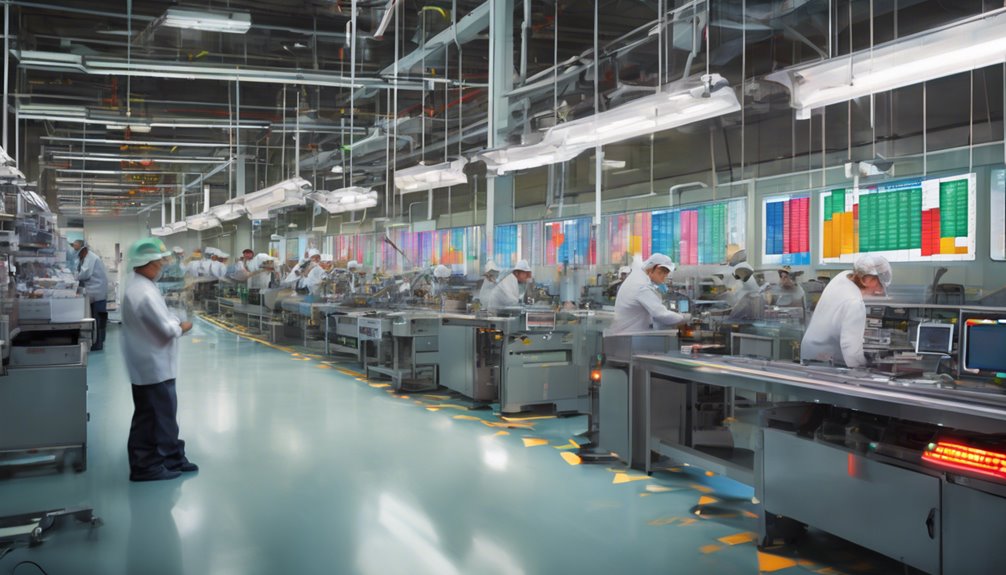
Several factors can significantly influence cycle time in your production or service process.
First, the complexity of tasks plays a vital role; more intricate tasks often take longer to complete.
Next, the efficiency of your equipment affects how quickly you can move through each stage. If machines break down frequently, expect delays.
Additionally, workforce skills and experience can impact speed; well-trained employees typically perform faster.
Another factor is the availability of materials; delays in receiving supplies can stall your entire process.
Finally, the organization of your workspace can affect flow; a cluttered area can lead to wasted time. Furthermore, implementing data-driven decision-making can enhance efficiency by identifying bottlenecks and optimizing processes.
Practical Examples of Cycle Time Calculation
Understanding how to calculate cycle time is crucial for streamlining your processes, especially when you consider real-world applications.
For example, if you're assembling a product and it takes 30 minutes to complete one unit, your cycle time is 30 minutes. If you produce 12 units in an 8-hour shift, you can also calculate the cycle time by dividing the total time (480 minutes) by the number of units (12), which gives you 40 minutes per unit. This discrepancy can highlight areas needing improvement.
In a service industry, if it takes 15 minutes to serve a customer, that's your cycle time.
Strategies for Reducing Cycle Time

While many factors can influence cycle time, implementing effective strategies can significantly reduce it.
Start by streamlining your processes; identify and eliminate bottlenecks that slow down production. Use technology to automate repetitive tasks, enhancing efficiency and freeing up your team for more critical work.
Regularly review and optimize workflows by gathering feedback from your team, which can uncover hidden issues. Cross-training employees also helps ensure flexibility, allowing you to quickly adapt to changes in demand.
Lastly, set clear goals and track performance metrics. This way, you'll not only monitor cycle time but also motivate your team to continuously improve. Additionally, fostering a culture of continuous improvement is essential for sustaining these efforts over time.
Conclusion
In conclusion, calculating cycle time is essential for improving your production efficiency. By understanding the definition, following the steps, and considering the factors that affect cycle time, you can gain valuable insights into your operations. Remember, practical examples can guide you, and implementing strategies to reduce cycle time will enhance your overall productivity. Stay proactive in reviewing your results, and don't hesitate to make adjustments to ensure you're operating at your best.