
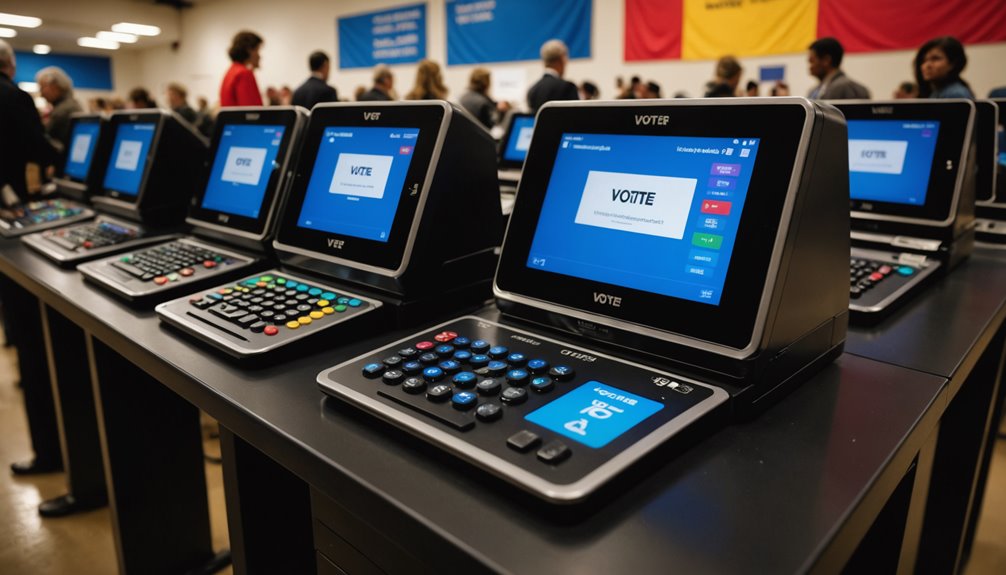
When you think about voting today, Electronic Voting Machines (EVMs) likely come to mind. They promise speed and accuracy, but they also bring some serious challenges. Cybersecurity threats and the absence of a paper trail can make you question their reliability. As you consider these factors, you might wonder how EVMs really impact voter turnout and trust in elections. Let's explore what all this means for the future of voting.
Understanding the Basics of EVM Technology
EVM technology, or Ethereum Virtual Machine technology, serves as the backbone of decentralized applications on the Ethereum blockchain.
You can think of it as the environment where all Ethereum smart contracts run, executing code and managing state transitions. The EVM is designed to be platform-independent, meaning you can deploy applications without worrying about underlying hardware.
When you interact with Ethereum, you're actually communicating with the EVM, which processes transactions and ensures security. Each operation has a specific gas cost, helping to manage resources effectively.
By understanding the EVM's role, you can better appreciate how decentralized applications function, paving the way for innovation and development in various sectors.
Advantages of Electronic Voting Machines
While traditional voting methods have served us for decades, electronic voting machines (EVMs) offer significant advantages that enhance the electoral process.
First, they streamline the voting experience, reducing wait times and making it easier for you to cast your vote. EVMs also minimize human errors associated with paper ballots, ensuring a more accurate tally.
With built-in accessibility features, these machines cater to voters with disabilities, promoting inclusivity. Additionally, EVMs enable quicker results, allowing you to know the outcome of elections much sooner.
The security measures in place, such as encrypted data, help protect against tampering, giving you confidence in the system.
Challenges and Concerns Surrounding EVMs

Despite their advantages, electronic voting machines (EVMs) face several challenges and concerns that can undermine public confidence in the electoral process.
One major issue is the vulnerability to hacking and cyberattacks, which raises doubts about the integrity of the results. You might also worry about the lack of a paper trail, making it difficult to verify votes if discrepancies arise.
Additionally, technical malfunctions can occur, leading to delays and confusion at polling stations. Voter education is another concern; many people may not be familiar with how to use EVMs effectively.
Lastly, the perceived lack of transparency in the technology can exacerbate fears of manipulation. Addressing these challenges is crucial to ensuring trust in EVMs and the democratic process.
The Impact of EVMs on Voter Turnout
When it comes to voter turnout, electronic voting machines (EVMs) can significantly influence people's willingness to participate in elections.
You might find that EVMs simplify the voting process, making it quicker and more accessible. With user-friendly interfaces, they reduce confusion and help you cast your vote with confidence.
Moreover, EVMs can minimize long lines, which often discourage voters from waiting at polling stations. If you know your vote will be counted accurately and efficiently, you're more likely to head to the polls.
However, it's crucial to recognize that while EVMs can boost turnout, public trust in these machines plays a vital role. When you feel secure in the voting process, your likelihood of participating increases significantly.
Cybersecurity Risks Associated With EVMS
EVMs offer a streamlined voting experience, but they also introduce significant cybersecurity risks that can't be overlooked.
As you rely on electronic voting machines, you should be aware that these systems can be vulnerable to hacking, malware, and other cyber threats. Attackers might exploit weaknesses in software or hardware, potentially altering votes or compromising voter data.
Additionally, the lack of robust security protocols can make it difficult to detect breaches. You might also encounter issues with outdated technology, which can further increase vulnerabilities.
It's crucial to advocate for stronger security measures and regular audits to protect the integrity of elections. By understanding these risks, you can better appreciate the importance of safeguarding your vote and the electoral process.
Transparency and Trust in the Electoral Process
Although technology can enhance the voting process, transparency and trust remain essential to ensuring that citizens feel confident in the outcome of elections.
You need to see clear protocols in place that allow for independent audits and verifications of votes cast. When you can access information about how votes are counted and reported, it builds your trust in the system.
Open communication from election officials helps alleviate concerns and promotes civic engagement. If citizens feel they can trust the electoral process, they're more likely to participate.
By embracing transparency, election authorities can foster a sense of ownership among voters, ensuring that everyone feels their voice matters.
Ultimately, trust in the electoral process is vital for a healthy democracy.
The Future of EVMs in Global Elections

As the world increasingly embraces digital solutions, the future of electronic voting machines (EVMs) in global elections looks promising yet complex.
You'll likely see advancements in security measures, ensuring that your vote remains confidential and tamper-proof. Innovations like blockchain could enhance transparency, providing you with a verifiable voting process.
However, challenges like accessibility and public trust still loom large. It's crucial that governments invest in education about EVMs to alleviate fears and build confidence among voters.
Additionally, international collaboration will play a key role in standardizing EVM technology, making it easier for you to navigate elections across borders.
As you engage in the democratic process, these developments may reshape your voting experience for the better.
Conclusion
In conclusion, while Electronic Voting Machines offer significant benefits like efficiency and accuracy, it's crucial to address the challenges they present. You need to stay informed about cybersecurity risks and the importance of transparency to ensure the electoral process remains trustworthy. As technology evolves, so must our commitment to safeguarding elections. By prioritizing voter education and robust security measures, we can enhance the integrity of EVMs and encourage greater participation in the democratic process.