

You might find the Drum Buffer Rope methodology intriguing as a way to optimize your production processes. By synchronizing operations around a single constraint, you can improve efficiency and responsiveness to demand. Understanding its components and benefits is vital. But what does it take to implement DBR effectively in your organization? Let's explore how this approach can transform your workflow.
Understanding the Theory of Constraints

When you delve into the Theory of Constraints (TOC), you'll discover that it's not just a management philosophy but a powerful approach to optimizing processes.
TOC focuses on identifying the single most critical limiting factor—constraint—that hinders your organization's performance. By concentrating on this constraint, you can streamline operations and improve efficiency.
You'll learn to exploit the constraint fully, ensuring it operates at maximum capacity. Next, you'll subordinate other processes to support the constraint, aligning resources and efforts accordingly.
Finally, once you've elevated the constraint's capability, you'll need to identify the next one, creating a continuous improvement cycle. This method not only enhances productivity but fosters a culture of problem-solving and innovation within your team.
The Components of Drum Buffer Rope
Drum Buffer Rope (DBR) is a key component of the Theory of Constraints that harmonizes production processes.
The three main components of DBR include the "Drum," the "Buffer," and the "Rope." The Drum sets the pace for production, defining the optimal rate at which the system should operate.
The Buffer acts as a safety net, ensuring that there's enough work in progress at critical points to prevent disruptions.
Finally, the Rope connects the Drum to the rest of the production system, controlling the release of materials based on the Drum's pace.
Together, these components create a synchronized flow, balancing production efficiency and responsiveness to demand while minimizing waste.
Understanding these elements is essential for effective implementation.
How DBR Improves Production Flow

By effectively aligning the components of Drum Buffer Rope, production flow sees significant enhancements.
You'll notice that the drum, acting as the constraint, sets the pace for production, ensuring that resources are utilized efficiently. The buffer, strategically placed before the constraint, protects against variability, allowing for a smoother flow. This setup minimizes bottlenecks and keeps work in progress at optimal levels.
You'll find that the rope synchronizes the release of materials, preventing overproduction and reducing waste. As a result, your team can focus on meeting customer demands without the chaos of excessive inventory.
Ultimately, DBR streamlines processes, boosts productivity, and fosters a culture of continuous improvement within your organization. Embracing this approach can lead to a more agile and responsive production environment.
Implementing DBR in Your Organization
Implementing Drum Buffer Rope (DBR) in your organization can transform your production processes significantly.
Start by identifying your system's constraint or bottleneck; this is your drum. Next, establish a buffer to protect your drum from disruptions. This buffer should be strategically placed to ensure a smooth flow of materials and information.
After that, set your production schedule to align with the drum's output, ensuring that downstream processes are synchronized. Train your team on the DBR methodology, emphasizing the importance of adhering to these new processes.
Lastly, monitor performance regularly and adjust as needed. By following these steps, you'll create a more efficient production environment that responds better to demand fluctuations and minimizes waste.
Benefits of the Drum Buffer Rope Methodology

When you adopt the Drum Buffer Rope methodology, you'll discover a range of benefits that enhance your production efficiency.
First, it simplifies scheduling by focusing on the constraint, ensuring that resources are utilized effectively.
You'll also find that it reduces lead times, as the buffer protects against variability, allowing for smoother operations.
This methodology fosters better communication across teams, as everyone aligns towards a common goal of optimizing throughput.
Additionally, you'll notice improved product quality, since the focus on constraints helps to minimize bottlenecks and errors.
Overall, DBR empowers you to respond quickly to changes in demand, making your organization more agile and competitive in the marketplace.
Embracing this approach can lead to significant improvements in your overall performance.
Case Studies: Successful DBR Implementation
As organizations seek to enhance their production processes, many have turned to the Drum Buffer Rope (DBR) methodology with remarkable success.
For instance, a manufacturing company reduced lead times by 30% after implementing DBR, allowing them to respond to customer demands more swiftly.
Another case involved an assembly line where the introduction of DBR led to a 25% increase in throughput without adding resources.
A service provider also benefited, decreasing service delivery times significantly by synchronizing workflows.
These examples highlight how tailored DBR strategies can transform operations across various industries.
Common Challenges in Adopting DBR
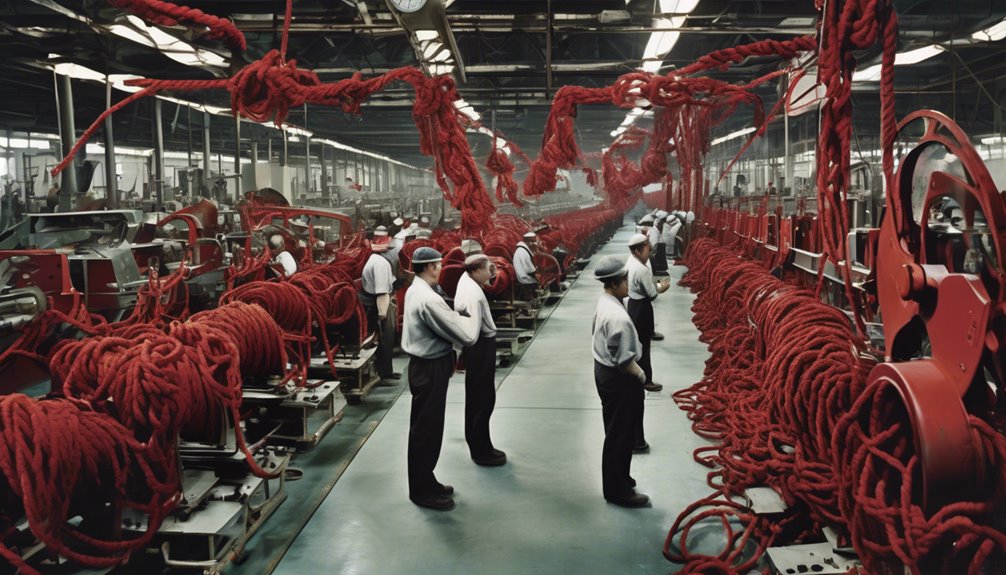
While many organizations have seen impressive results from Drum Buffer Rope (DBR) implementation, adopting this methodology isn't without its hurdles. One common challenge you might face is resistance to change; employees may be hesitant to abandon established processes.
Moreover, aligning your team around the DBR principles can be difficult, particularly if there's a lack of understanding about its benefits. You may also encounter issues with data accuracy, as DBR relies heavily on real-time metrics to manage flow effectively.
Additionally, insufficient training can lead to misapplication of the methodology, undermining your efforts. Lastly, integrating DBR with existing systems may present technical challenges, requiring time and resources to ensure a smooth transition.
Addressing these hurdles is crucial for successful DBR adoption.
Future Trends in Manufacturing and DBR
With the rapid evolution of manufacturing technologies, companies are increasingly looking to Drum Buffer Rope (DBR) as a flexible solution to enhance their operations.
You'll notice that as automation and data analytics become more prevalent, integrating DBR will help you streamline processes and respond to market demands swiftly.
The rise of Industry 4.0 means you can leverage real-time insights to adjust your buffers dynamically, ensuring optimal flow.
Additionally, as supply chains grow more complex, DBR can aid in balancing production and inventory, reducing waste and costs.
Moreover, implementing Lean Six Sigma principles alongside DBR can further enhance efficiency by systematically removing inefficiencies and focusing on quality improvement.
Embracing these trends won't only improve efficiency but also foster a culture of continuous improvement, making your organization more competitive in an ever-changing landscape.
Conclusion
In conclusion, Drum Buffer Rope is a powerful methodology that can transform your production processes. By focusing on your system's constraints and balancing efficiency with demand responsiveness, you can streamline workflows and improve overall performance. Implementing DBR might come with challenges, but the benefits far outweigh them. As you embrace this approach, you'll not only enhance productivity but also position your organization for future success in an ever-evolving manufacturing landscape.