
Agile Scrum Master Training teaches how Scrum Masters guide teams to success through Agile methodologies and the Scrum framework, boosting productivity and fostering continuous improvement.
Updated: April 2026

As you explore Agile Scrum Master Training, you’ll discover how pivotal a Scrum Master is in steering teams toward success. You’ll learn about the Agile methodologies and the key elements of the Scrum framework. The skills you gain can significantly impact team dynamics and project outcomes. What you might find surprising is how these principles not only enhance productivity but also foster a culture of continuous improvement. What’s next on this journey?
Understanding Agile Methodologies
Agile methodologies are designed to enhance flexibility and responsiveness in project management, allowing teams to adapt quickly to changes.
By focusing on iterative development, you’ll find that delivering small, incremental improvements keeps your team aligned and engaged. You’ll emphasize collaboration, enabling everyone to contribute ideas and feedback throughout the process.
This approach encourages regular reflection, allowing your team to identify areas for improvement and adjust plans accordingly. You’ll also prioritize customer satisfaction by delivering functional products early and often, ensuring that you’re meeting user needs effectively.
Embracing Agile principles helps you foster a culture of continuous improvement, encouraging innovation and accountability among team members, ultimately leading to successful project outcomes.
This adaptability is key to thriving in today’s fast-paced business environment.

The Role of a Scrum Master
In an Agile framework, the Scrum Master plays a pivotal role in guiding the team through the Scrum process. You facilitate communication and collaboration, ensuring everyone understands their responsibilities and the project’s goals.
You serve as a coach, helping team members embrace Agile principles and practices. By removing obstacles that hinder progress, you empower the team to focus on delivering quality results.
You also protect the team from external distractions and interruptions, allowing them to maintain productivity. Monitoring the Scrum events, you ensure they’re productive and time-boxed.
Ultimately, your role is to foster a culture of continuous improvement, encouraging teams to reflect, adapt, and evolve for better performance in future sprints.
Key Components of Scrum Framework
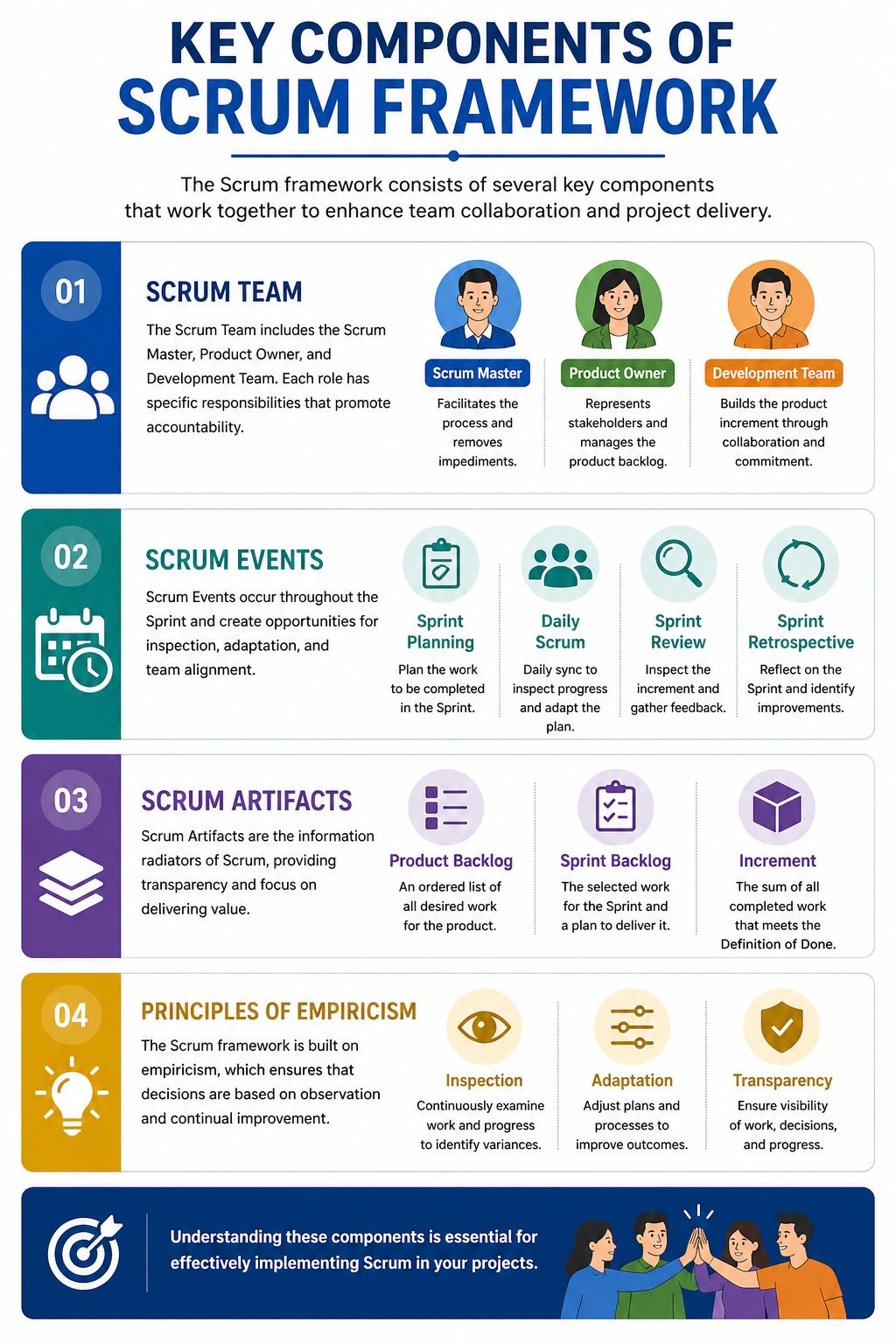
The Scrum framework consists of several key components that work together to enhance team collaboration and project delivery.
First, you have the Scrum Team, which includes the Scrum Master, Product Owner, and Development Team. Each role has specific responsibilities that promote accountability.
Next, there are Scrum Events, such as Sprint Planning, Daily Scrum, Sprint Review, and Sprint Retrospective, which facilitate regular communication and adaptation.
Additionally, you’ll encounter Scrum Artifacts, including the Product Backlog, Sprint Backlog, and Increment, which provide transparency and focus on delivering value.
Finally, the principles of empiricism guide the framework, emphasizing inspection, adaptation, and transparency.
Understanding these components is essential for effectively implementing Scrum in your projects.
Benefits of Agile Scrum Master Training
Although many organizations adopt the Scrum framework, not everyone understands the advantages of having a trained Scrum Master. By investing in Agile Scrum Master training, you’ll enhance your ability to lead teams effectively and foster a collaborative environment.
You’ll learn to facilitate Scrum ceremonies, ensuring they run smoothly and productively. This training also equips you with the skills to help teams identify and overcome obstacles, driving continuous improvement.
Additionally, you’ll gain insights into stakeholder management, enabling you to align project goals with business objectives. Ultimately, a certified Scrum Master can significantly increase team productivity and morale, leading to successful project outcomes.
As a result, your organization will benefit from improved efficiency and a stronger competitive edge in the market.

Essential Skills for Scrum Masters
A trained Scrum Master brings more than just knowledge of the framework; they must also possess a unique set of skills to effectively guide their teams.
Strong communication is essential, as you’ll need to convey ideas clearly and listen actively to team members. Conflict resolution skills are crucial, enabling you to address and mediate disagreements promptly.
You should also have a solid understanding of Agile principles, ensuring the team adheres to the methodology. Facilitation skills allow you to lead meetings efficiently, encouraging collaboration and engagement.
Lastly, adaptability is key; you’ll often need to adjust your approach based on team dynamics and project needs.
Career Opportunities Post-Training
Once you’ve completed your Agile Scrum Master training, a wealth of career opportunities opens up.
You can step into roles such as Scrum Master, Agile Coach, or Project Manager, all of which are in high demand across various industries. Companies are actively seeking professionals who can guide teams in agile practices and enhance project efficiencies.
You might also consider positions in product management or consulting, where your skills can drive innovation and collaboration.
Additionally, many organizations value Scrum Masters in leadership roles that require cross-functional team coordination.
As you gain experience, you’ll find the potential for advancement into senior management or strategic planning positions, further solidifying your career path in agile methodologies.
Conclusion
In conclusion, Agile Scrum Master training equips you with the skills to lead effective teams and drive project success. By understanding Agile methodologies and mastering the Scrum framework, you’ll enhance your ability to facilitate collaboration and overcome challenges. With the essential skills you gain, you’ll be ready to navigate diverse team dynamics and create a culture of continuous improvement. Embrace this opportunity, and you’ll open doors to exciting career opportunities in the Agile landscape.

Frequently Asked Questions
What is the Agile Scrum Master Training program about?
The Agile Scrum Master Training program is designed to help learners understand Agile principles, Scrum frameworks, and the responsibilities of a Scrum Master. It focuses on leading teams effectively, improving collaboration, and supporting successful project delivery in fast-paced business environments.
Who should enroll in Agile Scrum Master Training?
This training is ideal for aspiring Scrum Masters, project managers, team leaders, business analysts, product owners, and professionals who want to strengthen their Agile knowledge. It is also valuable for anyone seeking to transition into Agile-focused roles.
Is the Agile Scrum Master Training course offered online?
Yes, the program is available through an online learning format, allowing students to study at their own pace. This flexible structure is helpful for working professionals and busy learners who need convenient access to training materials.
What skills can be learned in Agile Scrum Master Training?
Students can learn Scrum ceremonies, sprint planning, team facilitation, backlog management, conflict resolution, stakeholder communication, and continuous improvement techniques. These skills help teams stay organized, productive, and focused on delivering value.
How can Agile Scrum Master Training support career growth?
Completing this training can improve professional credibility, build in-demand Agile leadership skills, and create opportunities in industries that value project efficiency, collaboration, and modern product development practices.